Memorial Day 2026
Today is Memorial day. 99.9% of you reading this know that, but do you know the history behind the day?
As always, it’s best to start with a definition. Originally called Decoration Day, Memorial day is a US federal holiday dedicated to honoring and mourning U.S. military personnel who died while serving in the armed forces. It is not a day to honor everyone who served, that is Veteran’s day.
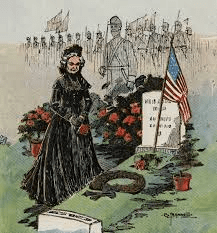
So, when did it start? In the waning years of the US Civil War it became a common practice to decorate the graves of fallen Union troops. This was a random and localized tradition. In 1868, General John A. Logan, leader of the Grand Army of the Republic (an organization of Union veterans), proclaimed May 30 as Decoration Day in General Order no. 11.The order called for nationwide observance, transforming various local memorial traditions—such as those observed in Waterloo, New York, and Southern states—into a standardized national holiday. The date was chosen because springtime flowers would be in bloom across the country.
Headquarters Grand Army of the Republic
General Order No.11
WASHINGTON, D.C., May 5, 1868
i. The 30th day of May, 1868, is designated for the purpose of strewing with flowers or otherwise decorating the graves of comrades who died in defense of their country during the late rebellion, and whose bodies now lie in almost every city, village, and hamlet church-yard in the land. In this observance no form of ceremony is prescribed, but posts and comrades will in their own way arrange such fitting services and testimonials of respect as circumstances may permit.
We are organized, comrades, as our regulations tell us, for the purpose among other things, “of preserving and strengthening those kind and fraternal feelings which have bound together the soldiers, sailors, and marines who united to suppress the late rebellion.” What can aid more to assure this result than cherishing tenderly the memory of our heroic dead, who made their breasts a barricade between our country and its foes? Their soldier lives were the reveille of freedom to a race in chains, and their deaths the tattoo of rebellious tyranny in arms. We should guard their graves with sacred vigilance. All that the consecrated wealth and taste of the nation can add to their adornment and security is but a fitting tribute to the memory of her slain defenders. Let no wanton foot tread rudely on such hallowed grounds. Let pleasant paths invite the coming and going of reverent visitors and fond mourners. Let no vandalism of avarice or neglect, no ravages of time testify to the present or to the coming generations that we have forgotten as a people the cost of a free and undivided republic.
If other eyes grow dull, other hands slack, and other hearts cold in the solemn trust, ours shall keep it well as long as the light and warmth of life remain to us.
Let us, then, at the time appointed gather around their sacred remains and garland the passionless mounds above them with the choicest flowers of spring-time; let us raise above them the dear old flag they saved from dishonor; let us in this solemn presence renew our pledges to aid and assist those whom they have left among us a sacred charge upon a nation’s gratitude, the soldier’s and sailor’s widow and orphan.
ii. It is the purpose of the Commander-in-Chief to inaugurate this observance with the hope that it will be kept up from year to year, while a survivor of the war remains to honor the memory of his departed comrades. He earnestly desires the public press to lend its friendly aid in bringing to the notice of comrades in all parts of the country in time for simultaneous compliance therewith.
iii. Department commanders will use efforts to make this order effective.
By order of
JOHN A. LOGAN, Commander-in-Chief
N.P. CHIPMAN, Adjutant General
Official: WM. T. COLLINS, A.A.G.
Official recognition of Decoration Day as a holiday spread among the states, beginning with New York in 1873. By 1890, every union state had adopted it. While the day originally commemorated Union Civil War dead exclusively. It wasn’t until the Blue Gray reunion in 1913 that Confederate dead were included – at least in the North. It was expanded to all war dead after WWI.
It wasn’t until 1967 that Memorial Day became Memorial Day officially, though the name had been used on and off since 1889, and in 1968 it was moved from 30 may to the last Monday in May. 1971 saw Memorial Day become an official federal holiday.
You will see lots of claimants to the position of the original Decoration/Memorial day. As an historian, one particularly well versed in military related history, I find nearly all the claims problematic in one way or another. Waterloo NY held the title for a while, and though they did have one of the earliest, they were not first. Some sources cite Columbus Georgia. General Logan himself says Columbus was one of the inspirations, but the local widows were only continuing a local tradition of decorating all graves in the spring.
The best contender in my opinion is Charleston South Carolina. A group of newly freed slaves gave proper burials to Union soldiers who died in the infamous Andersonville prison camp. Most of the Union troops who died in that particular hell-hole were dumped in a mass grave. A crowd of 10,000—mostly Black residents—gathered for a parade featuring 3,000 school children, Union regiments, and ministers, concluding with floral tributes to the fallen.
So, what can you do to commemorate those who gave the Last Full Measure of Devotion?
You can read the speech that President Lincoln gave when he attended the consecration of the Soldiers’ National Cemetery in Gettysburg, Pennsylvania.
Four score and seven years ago our fathers brought forth on this continent, a new nation, conceived in Liberty, and dedicated to the proposition that all men are created equal.
Now we are engaged in a great civil war, testing whether that nation, or any nation so conceived and so dedicated, can long endure. We are met on a great battle-field of that war. We have come to dedicate a portion of that field, as a final resting place for those who here gave their lives that that nation might live. It is altogether fitting and proper that we should do this.
But, in a larger sense, we can not dedicate — we can not consecrate — we can not hallow — this ground. The brave men, living and dead, who struggled here, have consecrated it, far above our poor power to add or detract. The world will little note, nor long remember what we say here, but it can never forget what they did here. It is for us the living, rather, to be dedicated here to the unfinished work which they who fought here have thus far so nobly advanced. It is rather for us to be here dedicated to the great task remaining before us — that from these honored dead we take increased devotion to that cause for which they gave the last full measure of devotion — that we here highly resolve that these dead shall not have died in vain — that this nation, under God, shall have a new birth of freedom — and that government of the people, by the people, for the people, shall not perish from the earth.
Abraham Lincoln
November 19, 1863
At 1500EDT today, there is a national moment of silence.
There is a tradition that I follow every Memorial Day Weekend – or in the days surrounding it depending on the weather – of cleaning war dead headstones in some local cemeteries. It started when I was a kid in Germany. My dad would take me to some of the American cemeteries and we would look after the graves. It is something I have done every year I could since.