Pistol Review: Smith and Wesson Airweight Revolvers
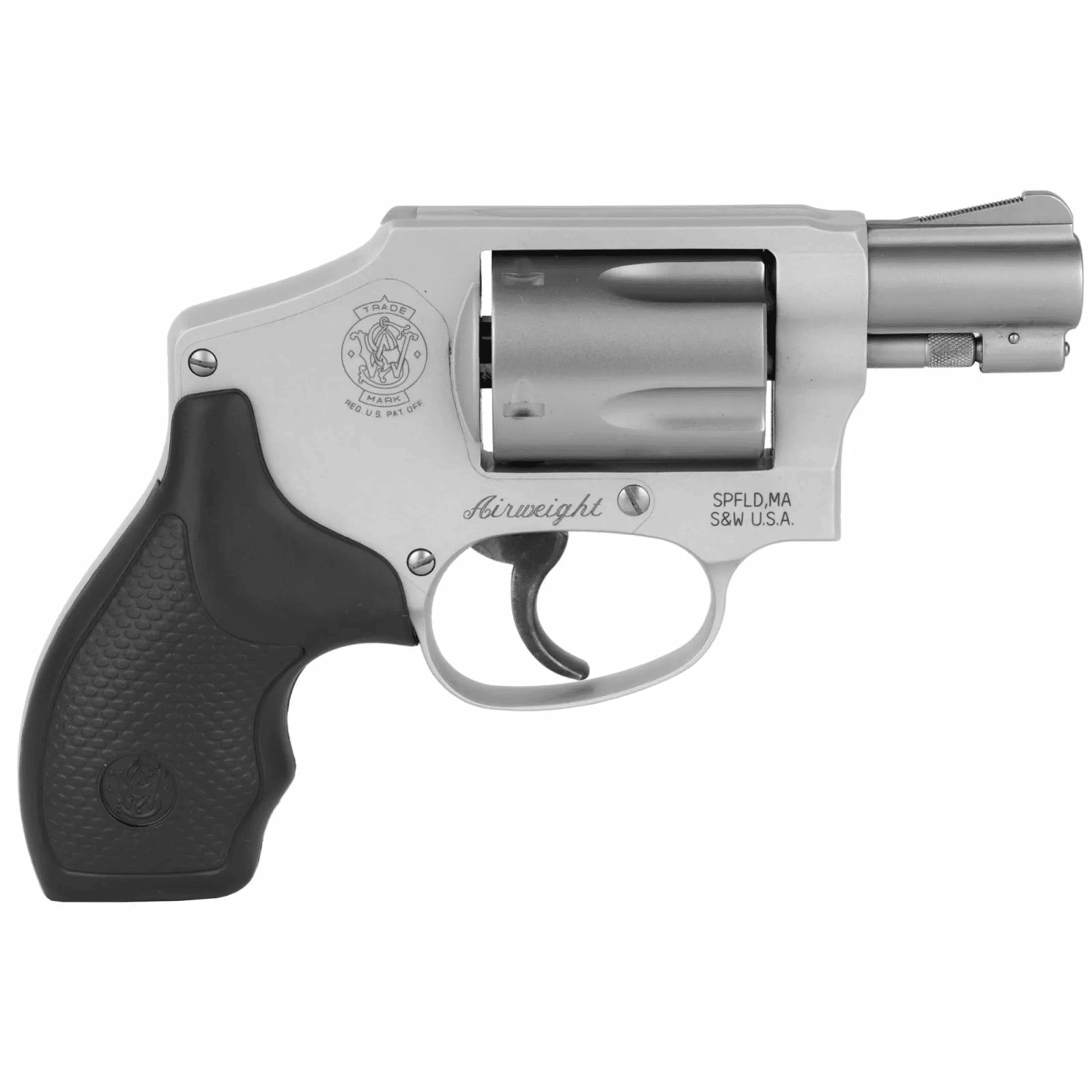
The Spawn just purchased a new S&W 642 Airweight and this editor got a chance to mess with it. After shooting it, a review is in order.
As usual, we’ll take a look at what the pistol is first.
The 642 and the sister 442 are 5 shot, 1.8″ barrelled double action revolvers chambered in .38 spcl. They weigh – depending on trim – around 15 ounces. Both models have a shrouded hammer. The 642 is bright aluminum framed with a stainless cylinder and barrel. The 442 has a blacked out aluminum frame and carbon steel cylinder and barrel.
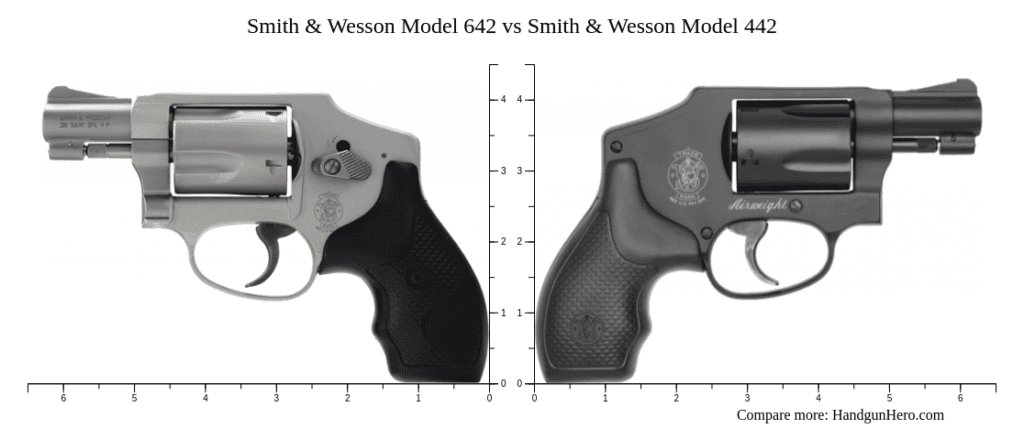
Both are proofed to fire +P ammo. Some models have an internal locking mechanism that requires a key as an additional safety feature. The version tested for this review did not have the internal lock.
Fit and finish is what you would expect for a revolver in this price range – around $575 for the base 642 and $525 for the base 442. Performance Center models run a couple of hundred bucks more. That is to say the machining is well done, there are no extraneous marks anywhere. The finish on the aluminum is evenly applied. The grips fit well, with no gaps or overlap.
The cylinder latch works smoothly. The cylinder crane swings out nicely and has a sturdy feeling. The ejector star slides easily, with no hitches or binding and returns properly.
Trigger pull on the test example averaged 11.75 lbs on the trigger scale. I know that may seem high, but this is a double action only revolver meaning every trigger pull cocks the hammer before releasing it. The pull was smooth, but there is a bit of stacking near the break. It wasn’t bad, but it was noticeable. There are several aftermarket spring kits that can reduce both pull weight and stacking but they can introduce their own issues.
Accuracy is about what you would expect from a snubby wheel gun – not spectacular. The test gun averaged 2.75 inch groups at 10 meters from the bench. Is that terrible? Not for a deep concealed defensive gun. Shooting fast from a draw opened those groups up a bit to 3.25 inches on average. None of the usual accuracy tricks seemed to improve it. The almost non-existent rear sight and very short sight radius makes longer range precision almost impossible. That said, I was able to put all 5 on an IPSC target at 25 meters. They were all over the target, but all were hits.
Before we get into what this gun is – and isn’t – in the spirit of full disclosure, I need to note that I am not a revolver guy. Do they have their place? I guess, particularly in the hunting space. For self-defense though, there are better – much better – choices.
I suppose I also need to let you all know that this is not the first Airweight that has passed through my hands. I have had several – more than a dozen – over the years, all of them either purchased from or traded to me by new women shooters.
Typically, less-than-knowledgeable spouses or boyfriends pushed them on their unsuspecting female counterparts. I know and reject nearly all the arguments that are put forward for this kind of gun for beginner women shooters. The Airweights and all the other ultra-light weight sub-compact snubbie revolvers are not beginner guns and anyone – anyone – that says they are should not be listened to.
So, lets talk about what this gun is and isn’t. As I said in the previous paragraph, there isn’t a Snubbie on the market that I would consider a beginner gun. The Airweight is no exception. This gun is snappy in the hand with standard .38 spcl and is downright uncomfortable to shoot with +P ammo. One of the loads used for testing was the Buffalo Bore .38 spcl +P Heavy Outdoorsman load. It fires a 158 grain bullet at right around 1000 fps. This load was outright painful to shoot.
Ok, all the caveats out of the way, this gun is a well put together, nicely finished pistol. The action is smooth and well sorted – other than the stacking mentioned earlier. It shoots well enough for defensive purposes. It is relatively easy to conceal but is a bit wider than most double stack autos. Overall dimensions – other than width – are similar to the Glock 43.
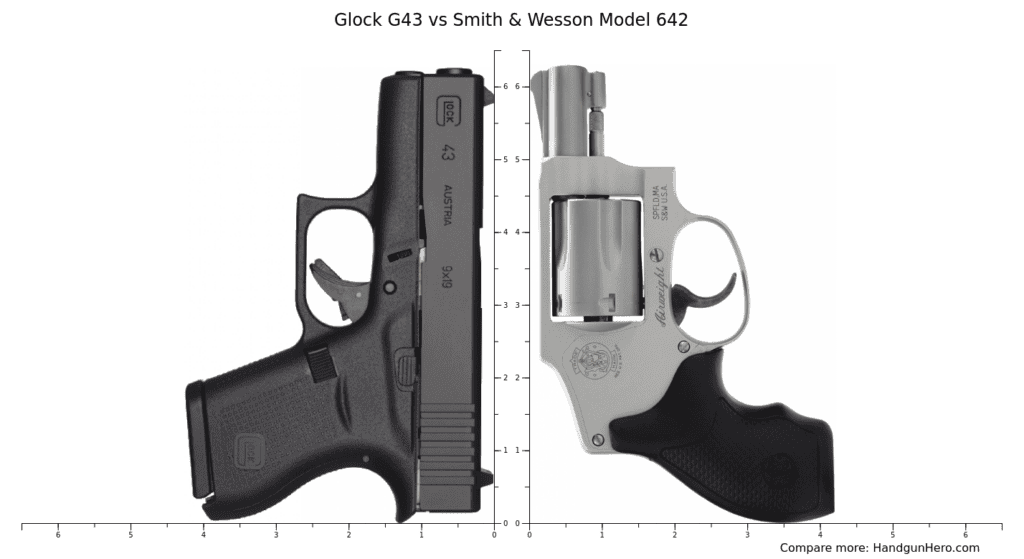
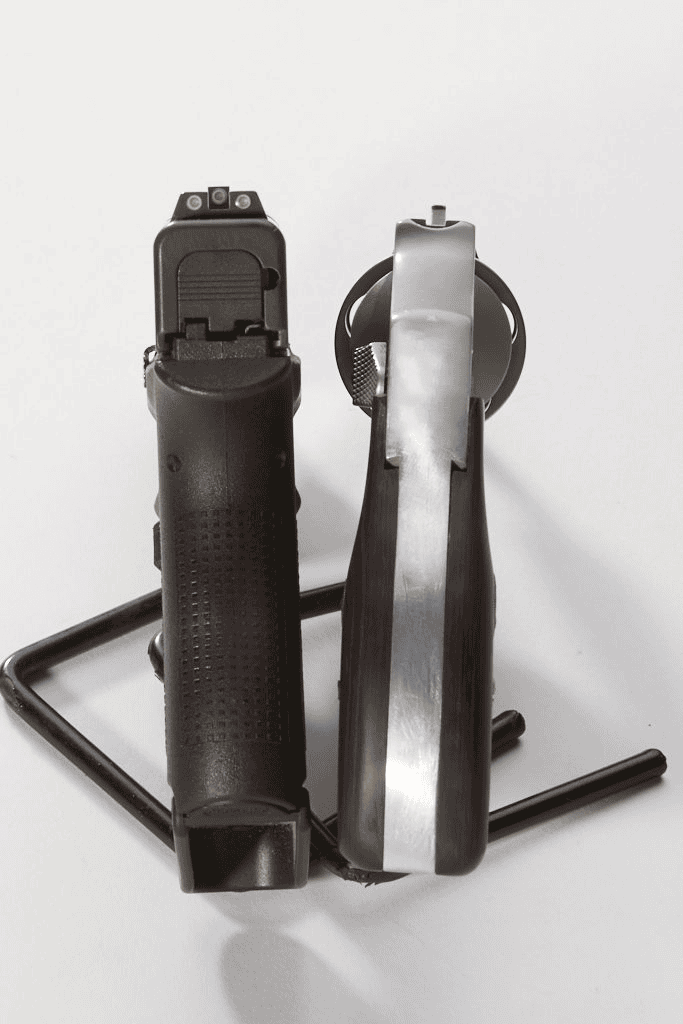
Here are the drawbacks that I see. First, the trigger pull is heavy. Then, it only holds 5 rounds. The flush mag for the Glock 43 holds 6+1. The 43X, which is my EDC carry, holds 10+1. Reloading a revolver, particularly under stress, is not the fastest evolution. Even with a speed loader, it is far quicker to swap mags on an autoloader than reload a revolver. And do not bring up Jerry Miculek to me. You are not Jerry, and you never will be.
So, who is the Airweight for? An experienced shooter who is willing to put in the work.
I suppose for a certain segments of the gun owning population, there is a certain romanticism about carrying a wheel gun. I have a buddy that lets everyone know when he is carrying his Fitz special but says nothing when he carries any of his autoloaders. And yes, he puts in the work.