Operation Market Garden
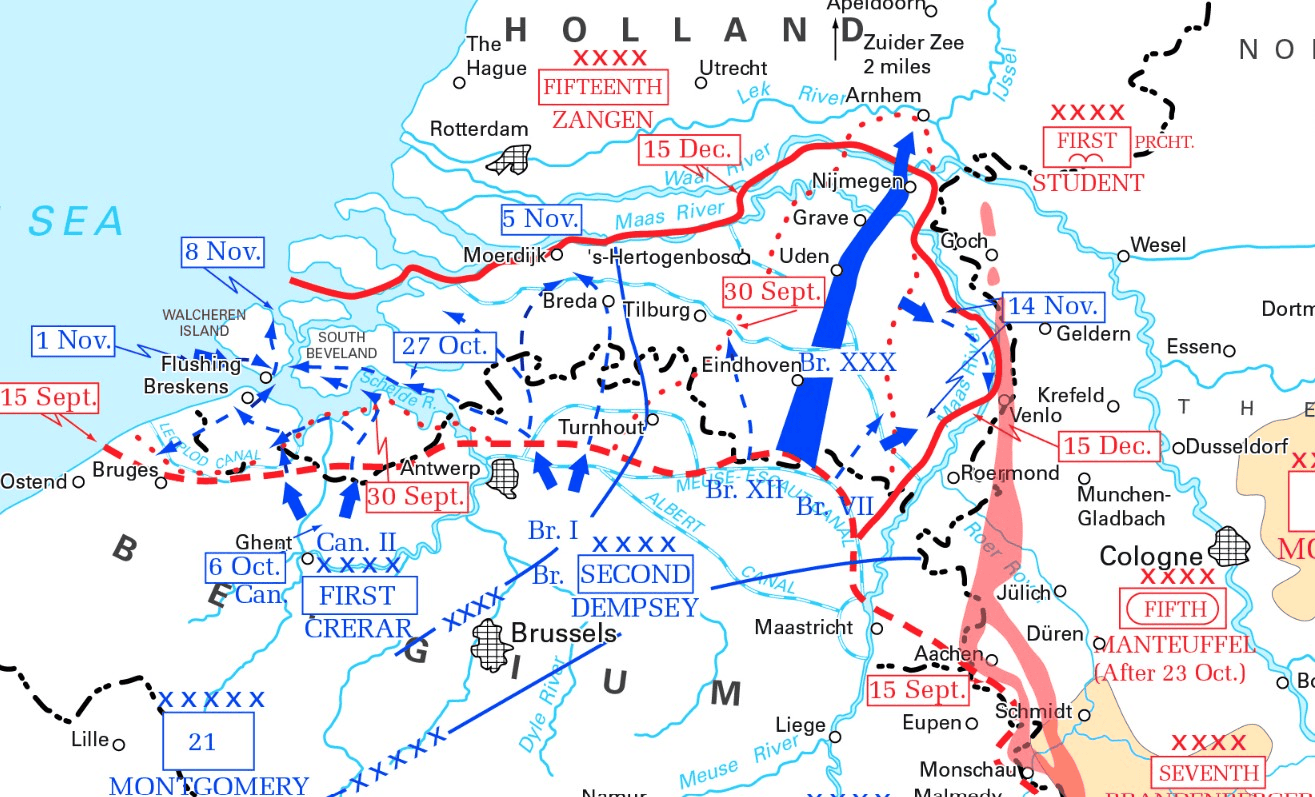
Today marks the start of Market Garden, Montgomery’s “single thrust” into Germany. The plan envisioned several parachute drops to capture key Dutch bridges over the Meuse river near the town of Eindhoven, the Waal at Nijmegen and the lower Rhine at Arnhem followed by British Armored and mechanized units. More than 41,000 paratroopers from the U.S., British, and Polish armies jumped into 5 different drop zones to secure bridges over rivers in German-occupied Netherlands and open a fast route into Germany. It was the largest Airborne operation in history.
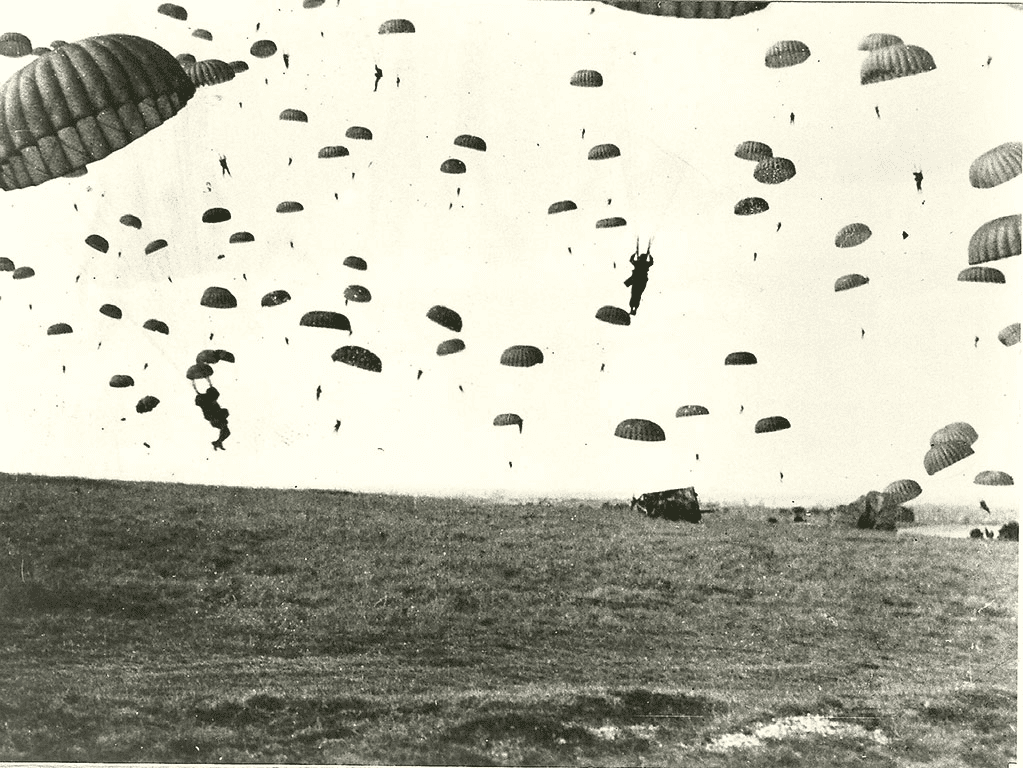
50,000 troops and 800 tanks of the British XXX Armored Corps filled in behind them. The land forces advanced from the south along a single road partly surrounded by flood plain on both sides. The plan anticipated that they would cover the 62 miles (100 km) from their start at the Belgian–Dutch border to the Arnhem bridge across the Lower Rhine in 48 hours.
It was a strategic failure.
While the 82nd (Meuse) and 101st (Waal) eventually captured their objectives despite the obstacles place in their path by Monty and his planners – more on that later – the British 1st Airborne and the Polish brigade failed to secure the bridge at Arnhem. Worse, the British armored advance started missing phase lines almost immediately.
Montgomery, early in the war, was very successful in set-piece battles like those at El Alamein and the early battles in Sicily and the Italian peninsula. He was not one to take advantage of enemy weakness without considerable preparations and that cost the Allies first in the immediate aftermath of D-Day and later in the Falaise pocket. One of Monty’s objectives on D-day was the city of Caen. It took him until mid July to secure the city. He later claimed he was fixing the Germans in place to lighten the pressure on the American beaches. The claim was unsupported by any of the planning documents.
Back to Market Garden.
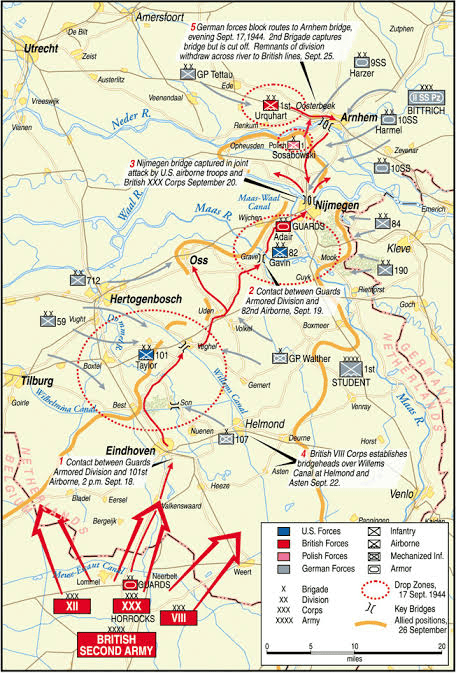
The plans for the operation were extremely complex and required nearly everything to go right for the Allies. But Monty and his staff insisted on placing extra obstacles in the way. One of those obstacles? Not dropping the Airborne units directly on their objectives. The 82nd was dropped 6 miles from the Bridges at Grave and Nijemen, the 101st several miles from the bridges at Son and Best and worst of all, the British and Poles being dropped 8-12 miles from their objectives. To compound matters, the Brits were dropped in two waves, several hours apart.
There were other failures. Intelligence, both photographic and human, that pointed to a couple of SS panzer units being in the Arnhem area refitting. Being inconvenient for Monty, it was all ignored much to the dismay of the Brits and Poles at Arnhem.
By the end of the operation on 25 September, the overall objective: a bridgehead over the Rhine at Arnhem was incomplete. Some 17,000 Allied troops were killed, injured or captured.
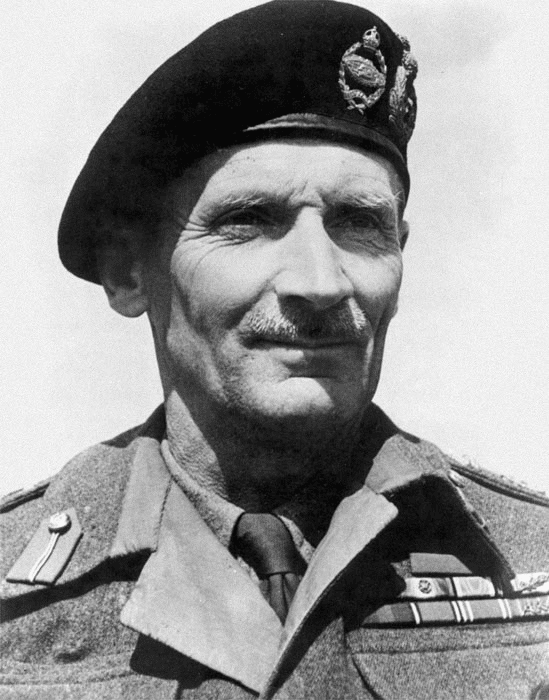
Montgomery claimed the operation was 90% successful. It was, but also was not. Perhaps 90% of the objectives were met, but the single objective, the one Monty used to justify the entire thing, was not. That makes the entire operation a failure. I am not the only one of that opinion. Author of the official US history, Charles MacDonald, stated that the operation “accomplished much of what it had been designed to accomplish. Nevertheless, by the merciless logic of war, Market Garden was a failure.”
The British official history of the campaign noted that the operation failed, but won “a valuable salient and a bridgehead over the Waal.” The official history conceded that these “had no immediate effect on the Allies advance into Germany.”
The German official history stated that “In terms of the Allies’ original objectives, the operation was a total failure”; it failed to cut-off German forces in the Netherlands, failed to flank to the West Wall, and ended any possibility that the war could end before the end of the year. The reasons for these failures are stated to have primarily been poor terrain, bad weather conditions, and faulty intelligence. However, the history conceded that the German counter-objectives (“to hem in the Allied troops south of the Lower Rhine and to destroy them there”) were likewise not met.
Post war historians have had their say as well. Carlo D’Este wrote “What had begun with high optimism had turned into a military disaster”, and that despite the heroics at Arnhem bridge, the operation “failed to establish a bridgehead north of the Rhine”. D’Este argued that this resulted in a stalemate through winter, which saw lengthy attritional battles that obtained little significant territory and caused high casualties. Responsibility for the failure “began with Eisenhower and extended to Montgomery, Brereton, Browning, and, on the ground side, Dempsey and Horrocks, neither of whom … galvanised their tank units while there was still time to have seized and held Arnhem bridge”. D’Este notes that Montgomery’s admission of a mistake was unique: “the only admission of failure by a senior Allied commander.
Rick Atkinson wrote that while “one-fifth of the Netherlands had been liberated … the rest would endure another nine months of occupation”, which resulted in 16,000 civilian deaths. Atkinson stated that the terrain captured “led nowhere”, and that the operation failed to achieve its objectives due to “an epic cock-up [of] poor plan[ing] with deficient intelligence, haphazard execution, and indifferent generalship”
Michael Reynolds wrote that “With the war still in progress, it was inevitable that Market Garden would be presented to the British and American people as a victory”, but stated also: “In reality, it was a strategic failure” that failed to obtain the desired objectives. Reynolds stated “The salient achieved led nowhere and was to prove extremely costly in the coming months”, and that “The seven [British commanders] most directly involved … bear responsibility for the failure of the Operation. It is also clear that, whilst the German commanders were prepared to take all necessary measures and risk to win the battle, even to point of using men untrained in ground warfare, their British adversaries were [not]”
John Warren wrote that “the greatest airborne operation of the war” had “ended in failure”, which had seen “all objectives save Arnhem … won, but without Arnhem the rest were as nothing.”
Monty would not suffer from the failure. At least not in the short term. He remained in command of the British forces, and later – during the Battle of the Bulge – would be once again given command of US troops. After the Bulge, and some ridiculous comments about American troops, Monty was shunted aside. Not even Churchill could protect him anymore. Post-war he suffered the most galling loss for a man of his temperament – his reputation.