The American Revolution… how it all began… Part 9
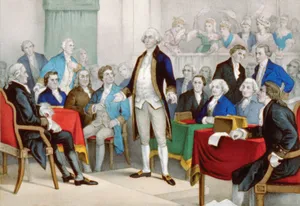
Featured image: George Washington (middle) surrounded by members of the Continental Congress, lithograph by Currier & Ives, c. 1876.
The day after the “Tea Party”, Admiral Montague quipped,”Well boys, you have had a fine pleasant evening with your Indian caper, haven’t you. But mind, you have got to pay the fiddler yet.” The payment for the act came from Lord North in the form of several Parliamentary acts starting with the “Boston Port Bill” effectively closing the port of Boston to all shipping hoping to starve them into submission.
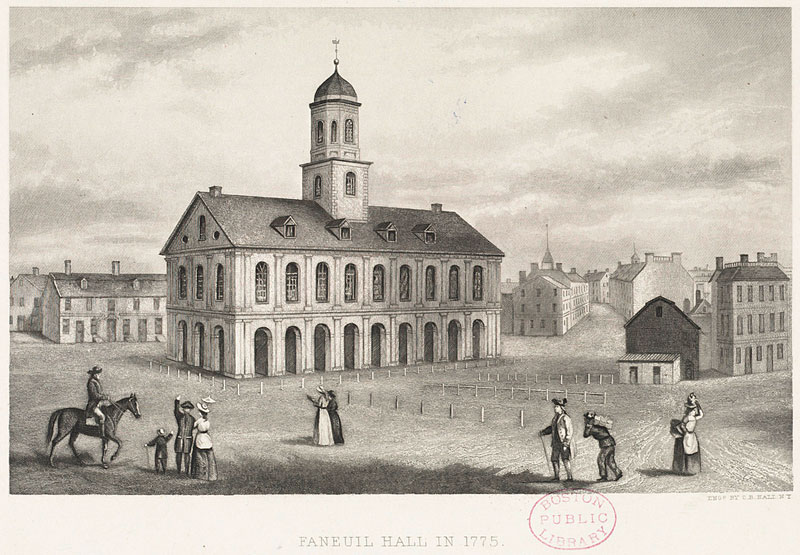
News of the Port Bill reached Boston on May 11, 1774, the Committee for Correspondence asked for an immediate meeting at Faneuil Hall in Boston. The conservatives wanted to pay for the tea, but the radicals wanted NO reconciliation with Great Britain saying that to pay for the tea would be a step backwards and they were willing to “abandon their city to flames” rather than to pay for the tea. They claimed the blow was aimed at Boston because, “there lie the VITALS of American freedom”, and should Britain prevail colonial liberty could be annihilated in one blow. George Washington asked the question, should Americans, “supinely sit and see one province after another fall prey to despotism”?
The Port Bill went into effect June 1, 1774 sparking demonstrations throughout the colonies such as those that greeted the Stamp act earlier. Contrary to Lord North’s expectations, he only succeeded in unifying the colonies making Bostonian’s martyrs to American liberty. His plan of “starving Boston” went down to ignominious defeat as the other colonies sent quantities of food stuffs into Boston, thereby nullifying Lord North’s infamous plan.
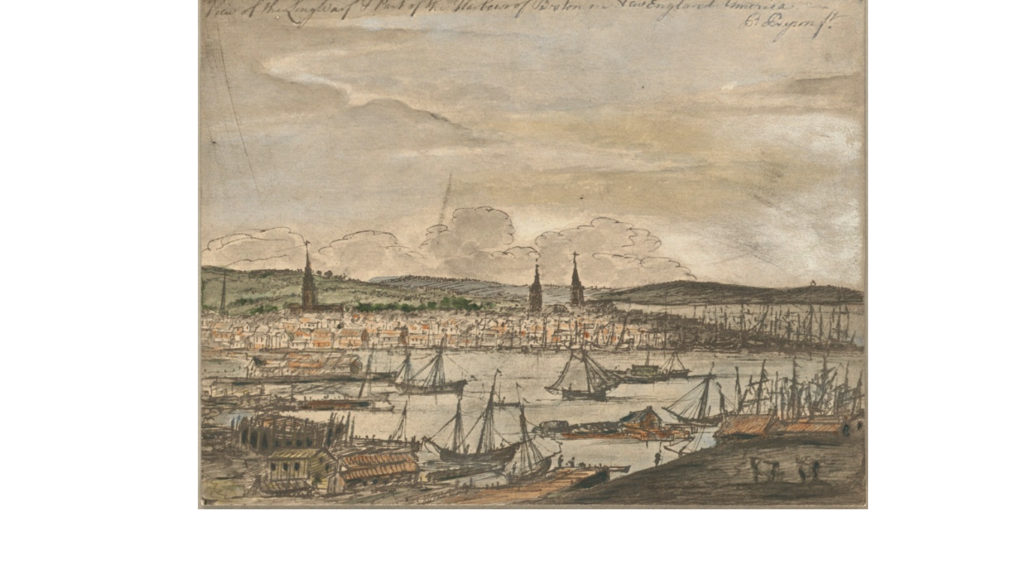
The “Quartering Act of 1774 went into effect June 2, 1774 allowing troops to be quartered in Boston thereby increasing the number of British troops in the city of Boston.
This was followed by the Massachusetts Government Act effective July 1, 1774; it stated that representatives elected by the citizenry of the colony could not select its own councilors, the Crown would appoint councilors. Boston patriot Doctor Joseph Warren said, “the same power that can take away our right of selecting councilors by our own representatives can take away from the other colonies the right of choosing even representatives.”
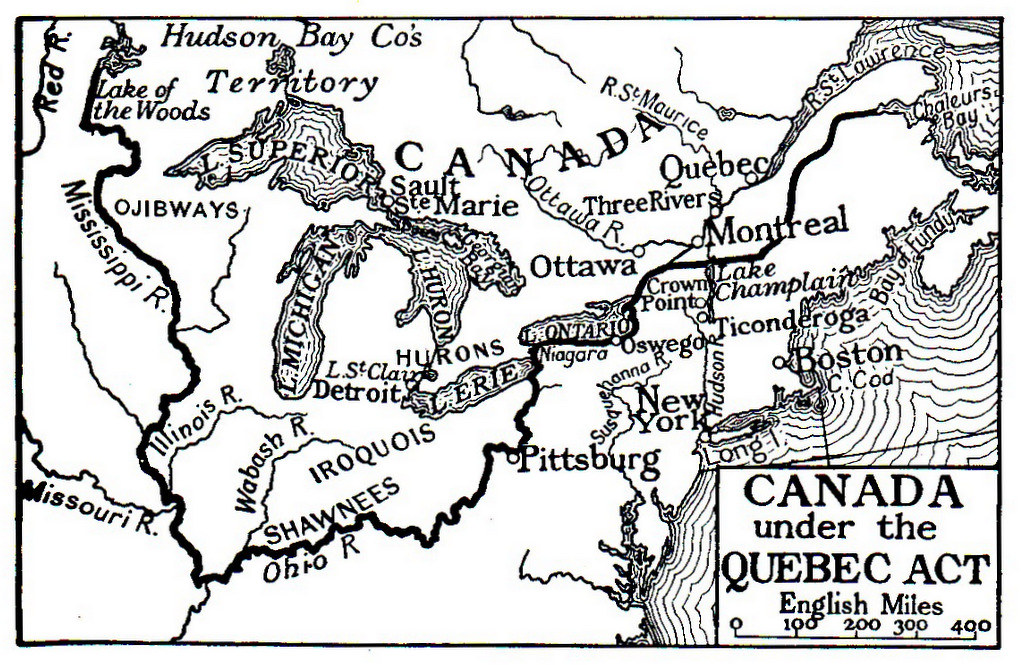
In the eyes of many colonials, the final blow was the Quebec Act, the legalization of Catholicism in Canada and the extension of Canada’s southern boundaries to the Ohio River. This in effect, closed much of the country north of the Ohio River to colonial Americans and obliterated the land claims of many including George Washington, Patrick Henry and others making the stock of the Vandalia company worthless.
Together, the acts made the First Continental Congress that convened in the city of Philadelphia in September of 1774 a reality. The conservative representatives expected to find nothing but “fire breathing radicals” from the New England contingent, but were taken by surprise by the shrewd Yankee delegates who acted as meek as lambs instead of the boisterous levelers and upstarts they expected.
By contrast, it was the Virginia and Carolina planters that surprised the more sedate members with their fire-eating deportment. It was Christopher Gadsden who advocated that the troops under General Gage in Boston be attacked before reinforcements could arrive from England. It was the Virginia contingent that kept the Congress from becoming a roaring fire by keeping the complaints against the Crown before 1763 at bay by confining the Congress to offenses beginning with George Grenville’s administration.
Joseph Galloway and John Dickinson headed up the conservative members, hoping to offer a plan of reconciliation with Great Britain be appealing directly to the King for a Grand Council subservient to Parliament with veto powers by the Grand Council. This plan fell to the side with the adoption of the Suffolk Resolves allowing the radicals to expunge his plan from the journals of the Congress.

The Suffolk Resolves set forth non- importation of British goods; that no colonial products be exported to Britain; there be no obedience to the Coercive acts; withhold taxes until the duly elected Massachusetts government be recognized; and that military readiness be enacted in the colonies. The First Continental Congress endorsed the Resolves on September 17, 1774.
Many of the radicals believed as did the Tories that the boycott of goods to Britain would not bring the British government to accept any kind of reconciliation with the Americans. John and Samuel Adams believed that war was inevitable, that there needed to be a readiness to go to war with Britain. John Adams said to Patrick Henry, “I expect no redress, but, on the contrary, increased resentment and double vengeance. We must fight”!!! Patrick Henry believed that, “the next gale from the north will bring to our ears the clash of resounding arms”. It was not long after, that the thoughts of these men would be fulfilled.