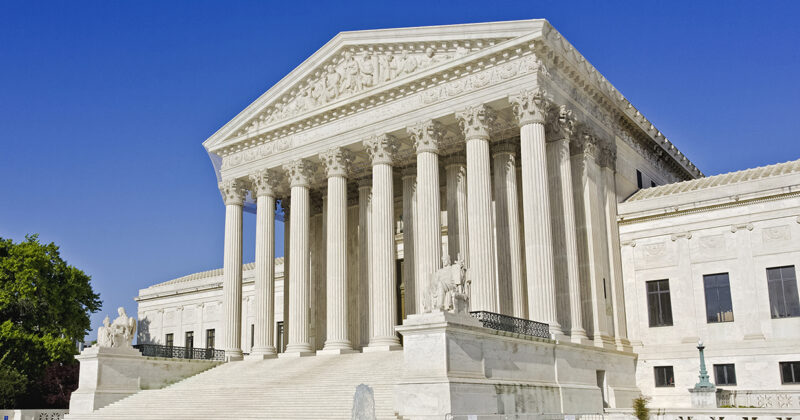
SCOTUS Round Up
We’re on the last two days of the current Supreme Court term. As I noted in today’s RNN 4 opinions dropped this morning, and we’re about to take a look at them.
First up is HEWITT v. UNITED STATES. I quote directly from the opinion for attribution because it gets a bit involved: JACKSON, J., delivered the opinion of the Court with respect to Parts I, II, and III, in which ROBERTS, C. J., and SOTOMAYOR, KAGAN, and GORSUCH, JJ., joined, and an opinion with respect to Parts IV and V, in which SOTOMAYOR and KAGAN, JJ., joined. ALITO, J., filed a dissenting opinion, in which THOMAS, KAVANAUGH, and BARRETT, JJ., joined.
The question before the Court in this case has to do with sentencing under the First Step act. That act allows for a more lenient set of sentencing guidelines. This is a technical case involving statutory interpretation. The 5th Circuit – who was reversed – held the plaintiff in this case was not eligible for re-sentencing under the act. Jackson – as evidenced by Alito’s scathing dissent – reached and twisted the plain meaning of statute and SCOTUS precedent to reach her conclusions. I will admit to not reading the entire opinion here, but I did read most of Alito’s dissent.
Next up is MEDINA, DIRECTOR, SOUTH CAROLINA DEPARTMENT OF HEALTH AND HUMAN SERVICES
v. PLANNED PARENTHOOD SOUTH ATLANTIC. Again quoting: GORSUCH, J., delivered the opinion of the Court, in which ROBERTS, C. J., and THOMAS, ALITO, KAVANAUGH, and BARRETT, JJ., joined. THOMAS, J., filed a concurring opinion. JACKSON, J., filed a dissenting opinion, in which SOTOMAYOR and KAGAN, JJ., joined.
This case revolved around the question of whether a private citizen could bring suit over a state’s failure to provide Medicaid funding to a specific provider. The provider in this case was Planned Parenthood. The state of South Carolina stopped funding the abortion service provider and was sued. The case finally made it’s way to the Supremes where Gorsuch – writing for the majority – decided the relevant laws did not allow individual suits. This is a pretty big win for the Pro-Life community.
Our third case is GUTIERREZ v. SAENZ ET AL. Quoting: SOTOMAYOR, J., delivered the opinion of the Court, in which ROBERTS, C. J., and KAGAN, KAVANAUGH, and JACKSON, JJ., joined, and in which
BARRETT, J., joined as to all but Part II.B.2. BARRETT, J., filed an opinion concurring in part and concurring in the judgment. THOMAS, J., filed a dissenting opinion. ALITO, J., filed a dissenting opinion, in which
THOMAS and GORSUCH, JJ., joined.
Sotomayor reverses and remands a 5th Circuit holding that the plaintiff in this case, a convicted murdered, has standing to file a 1983 civil rights action because the state did not allow DNA evidence re-tested and re-introduced as evidence in an appeal. The state of Texas only allows this under certain circumstances.
I suppose this is important with regards to the murderer, but not all that interesting to anyone else.
The final case that dropped today is Riley v. Bondi. ALITO, J., delivered the opinion of the Court, in which ROBERTS, C. J., THOMAS, KAVANAUGH, and BARRETT, JJ., joined in full, and in which SOTOMAYOR, KAGAN, GORSUCH, and JACKSON, JJ., joined only as to Part II–B. THOMAS, J., filed a concurring opinion. SOTOMAYOR, J., filed an opinion dissenting in part, in which KAGAN and JACKSON, JJ., joined in
full, and in which GORSUCH, J., joined except as to Part IV.
This one is an immigration case and again hinges on a technical point of law having to do with whether or not a time deadline – in this case 30 days – was a jurisdictional bar or just a procedural one. For this case, Justice Alito decided it was a procedural bar.
Thomas’ concurrence is the important part here. The language in the applicable immigration law removes all jurisdiction from district and circuit courts until a final overall review by a circuit court.
We’ll look at the rest of the cases a shortly after they drop tomorrow.