Old Punishments To Consider
Your editor was perusing some old books recently and came across two that dealt with old punishments. These books, Old Time Punishments by William Andrews and Curious Punishments of Bygone Days by Alice Morse Earl lay out the common punishments meted out as recently as the 1850s for various offenses. Andrews’ volume is mostly concerned with the punishment of defaulters in England and Scotland. While Earl also looks to the English roots of these punishments, she discusses their applications here in the Colonies and later the US.
I find these punishments instructive and see an application here and now for many of them.
Before we get into the actual punishment devices I feel a note about when and where the punishments were meted out is in order. It is important to note that all of these punishments involve public spectacle. Very little is hidden from view; in fact the opposite is true. The sentence was almost always carried out on market or meeting days. And not just in public, but done in the main square, church yard or marketplace of a town whichever was busiest. They were not done in the evening on a Wednesday, instead they were done at midday on market days or Sundays. Most of the punishments I’ll be discussing included a ‘paper’ stating the infraction. This paper was usually attached to the malefactors head in some way.
I am not going to go into the detail that these authors did, nor am I going to name names, as it were, the way they did. Instead, I am going to give descriptions of some of the punishments I would consider as useful in the modern day and the crimes they should be used for. Let’s get cracking shall we?
Scolds Bridle
The Scolds Bridle – also known as the Branks – was formerly used to punish women who were convicted of being scolds or causing disharmony among the neighbors. It was also – though rarely – used on libelous men.
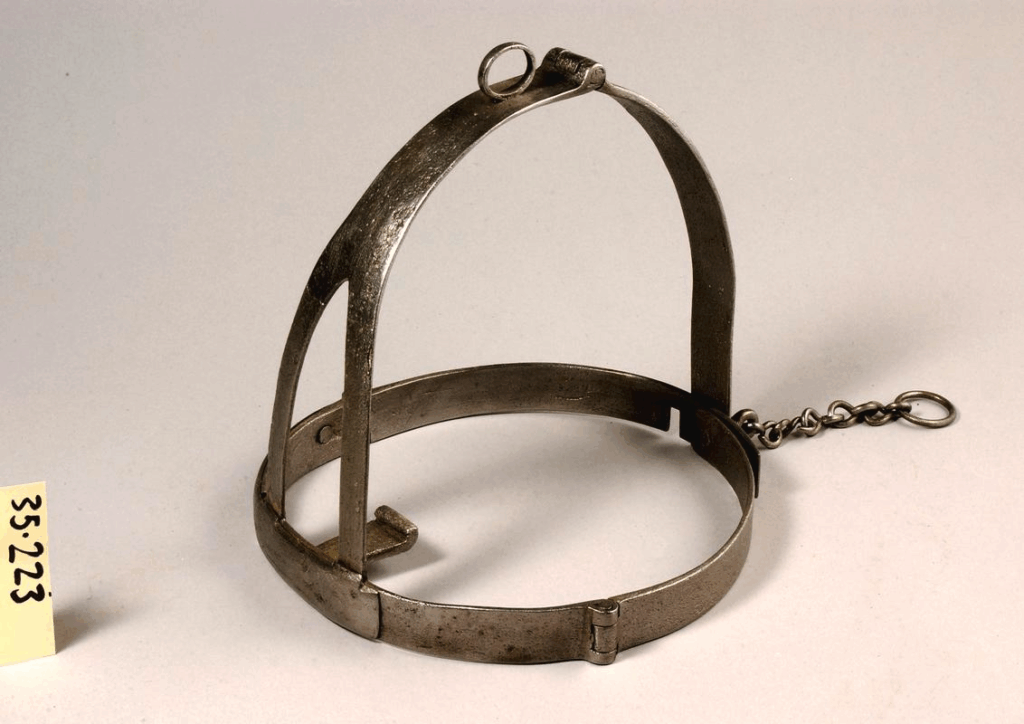
The Bridle went over and around the scold’s head. The tab you see in the example from Museum Wales above went into the scolds mouth and pushed down and back on the tongue. The Scolds Bridle came in many forms but the intent was the same. To cause pain to the offenders mouth and tongue.
The Pillory and the Stocks
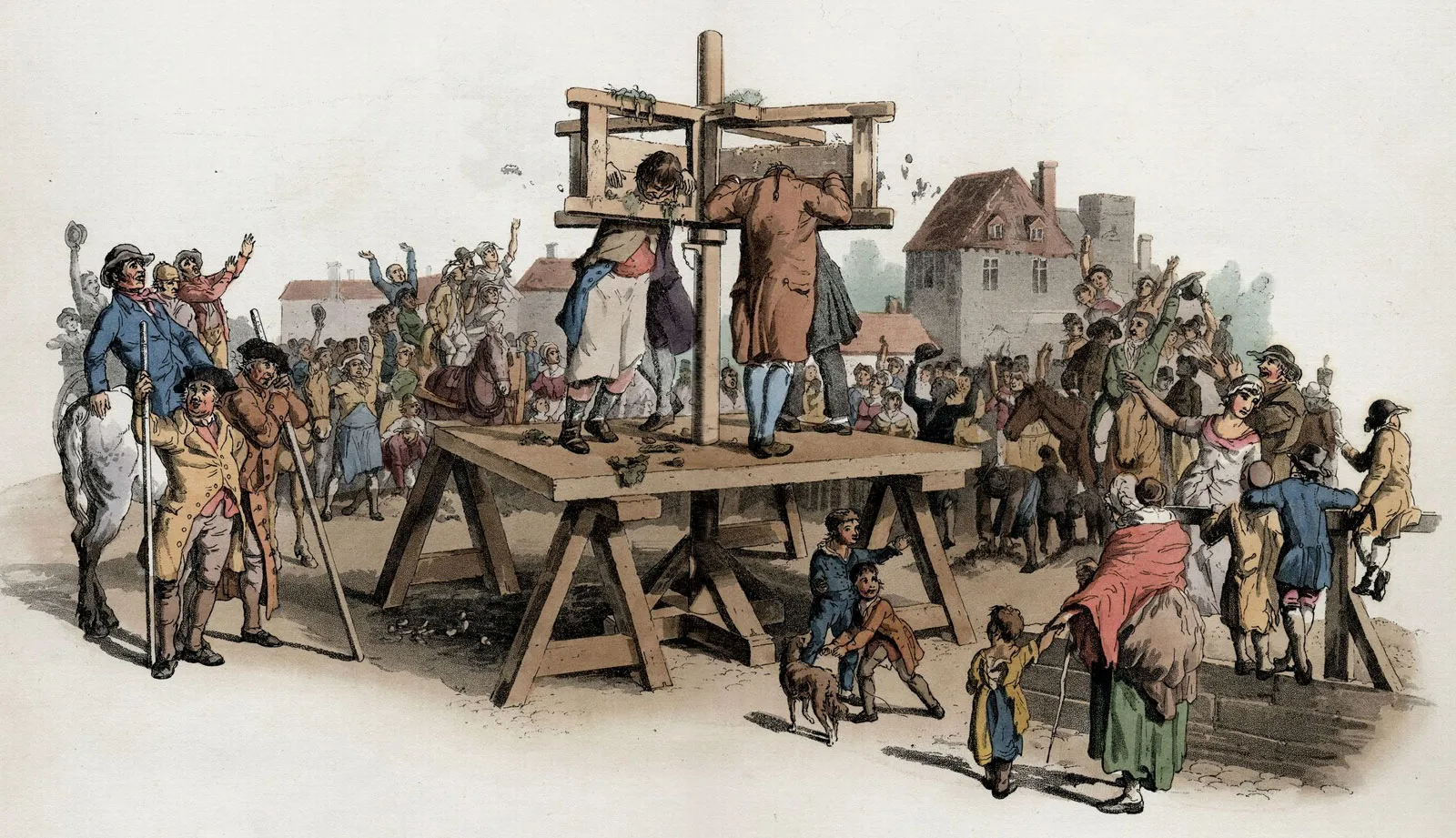
I’m choosing to pair these two. While they are similar, both in construction and use, they are separate devices. Modern use has somewhat confused the two, and the names are often used interchangeably. They were both used to restrain malefactors in a public place and expose them to ridicule and in some cases assault.
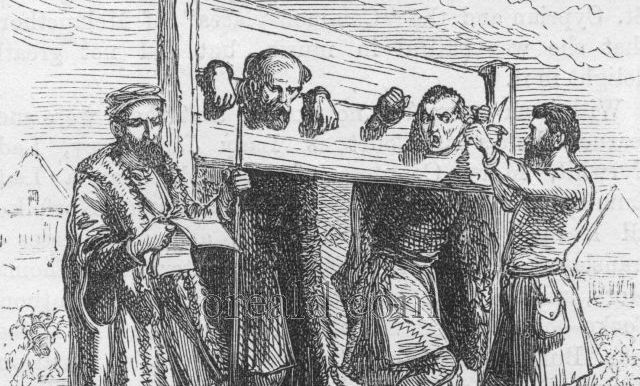
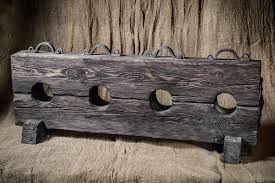
The pillory is a (usually) wooden frame with holes to hold the head and hands of a convict. They could be a fixed or portable fixture. Regardless, they were always used in the public square, market place or Church yard.
The pillory was used for a wide variety of crimes including theft and licentiousness. Both men and women were pilloried. The pillory was typically used as a punishment for more serious crimes, ones that didn’t meet the threshold for the death penalty, because the posture required in the pillory was downright painful after a relatively short period of time. Occasionally, particularly in England, offenders had their ears nailed to the pillory.
The stocks however, considered less physically punishing and were used for minor crimes, as the prisoner was generally seated while in the device. They were also used to restrain offenders for short periods of time prior to trial in lieu of jailing them or when a jail was unavailable.
Both the pillory and the stocks fell out of use here in America sometime in the mid 1800s.
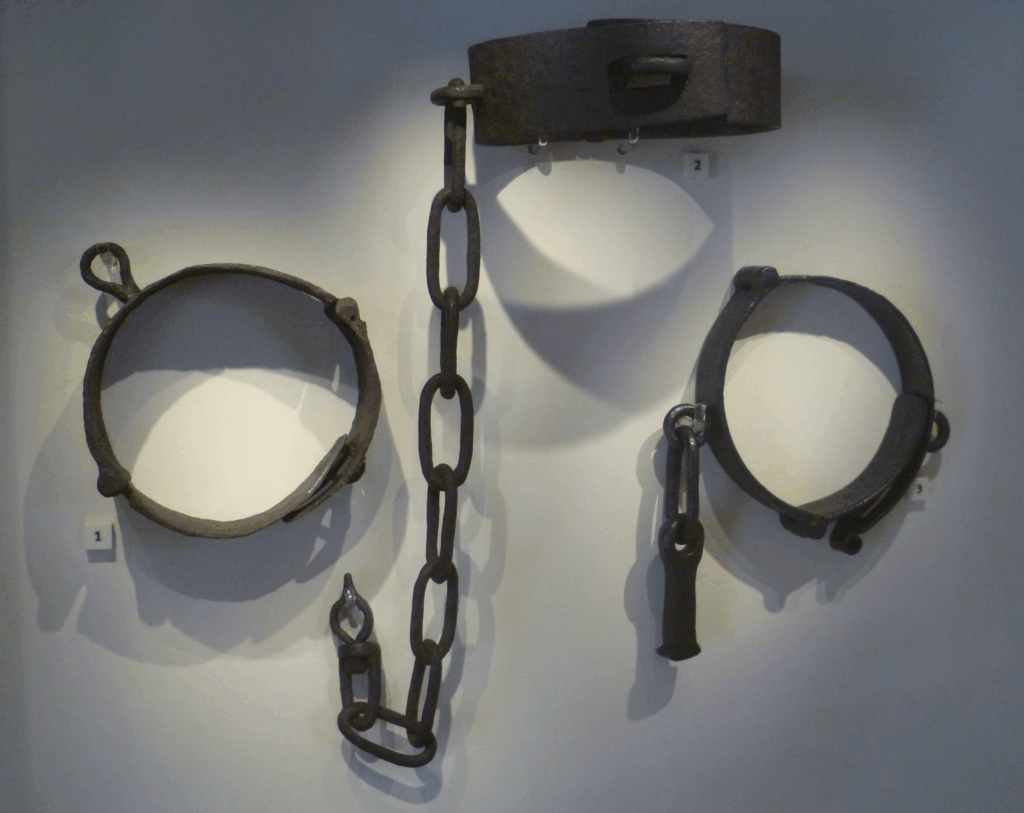
I should mention the jougs here. They were iron collars attached to a wall with a length of chain. The jougs were far less common in America than they were in the UK, specifically Scotland. They were most often attached to the exterior wall of a church near the entrance. They were used to punish those found to be violating church attendance laws or in ‘public houses’ during divine service.
The Drunkards Cloak
The reason for this punishment is pretty self-explanatory. It was used to shame habitual drunkards. It consisted of a barrel with one end knocked out and a hole large enough for the offender’s head cut in the other. They often had holes cut in the side of the barrel for the hands of the victim offender.
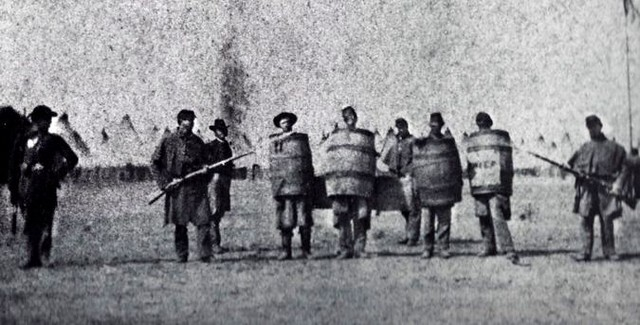
For some reason, the drunkards cloak was a common punishment for defaulters during the Civil war. It fell into disuse as a general punishment shortly after the war ended, but continued as a punishment for drunkenness in the Army for another decade or so.
Whipping/Flogging
Flogging, the practice of applying strokes of a whip, belt or cat-o-ninetails, was fairly common in early America.
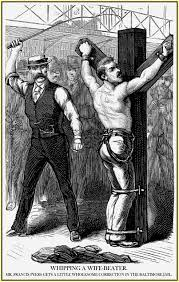
The whipping post could take many forms. Some were built in combination with the pillory, All did the same thing; they immobilized and presented the bare back of the offender to the person doing the flogging.
Petty thieves, adulterers, wife-beaters and some military/naval defaulters were all subject to flogging. The number of lashes was dependent on the severity of the crime. And all floggings were public. Flogging could leave permanent scars if the whip wielder was motivated to do so.
Branding
All manner of crimes were punished with branding. Here in the US, branding was common up until the 1840s. I cannot find any particular reason that branding went out of fashion, just that it did.
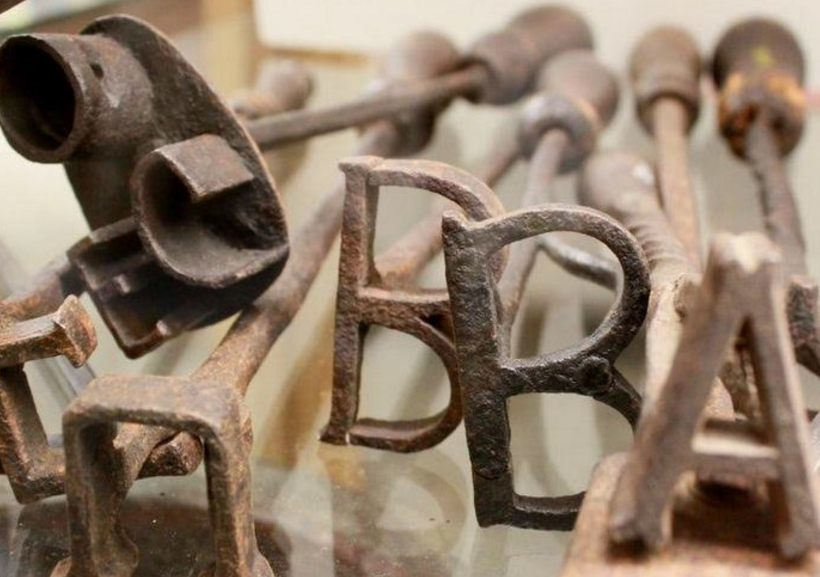
Brands were placed on different parts of the body and used different irons for different crimes. These were also locality dependent. A thief in Virginia might have the letter “t” branded on the fat part of the base of thumb, an adulterer in Massachusetts an “a” branded on a cheek, and someone who habitually caused affray in Pennsylvania might get a design branded on the backs of his hands. The branding may or may not have been part of a public spectacle, it depended on the locale. Regardless, a brand marked the offender for life.
I will mention ear cropping here. Cropping was a relatively common punishment in England and Scotland and was prescribed for a fairly wide variety of offenses. It was less often used here on this side of the pond, though it was used. Quite simply, parts of the ear were cut off to mark a person as convicted of an offense.
There can be no doubt that the popularity of wigs and gloves during that period of time was due to the practices of branding and cropping. Many prominent men and women wore brands or had their ears smallened by the bailiff.
What can these old punishments do for us today? Can we use them or an equivalent to punish offenders now? My answers are a lot and yes respectively.
The public spectacle did much to reduce crime in the past, and I think it could do the same now. Do we need to pillory offenders? Maybe not, but I’m willing to give it a shot. I don’t think branding and cropping are going to pass legal muster, and the scold’s bridle is on shaky legal ground, but a couple of 8-10 hour days spent in a public pillory sure as heck will. Frankly, we need to bring back the public spectacle as a form of punishment.
It wasn’t all that long ago that executions were carried out in the public square. The last public execution was held in 1936. One Rainey Bethea was hanged for a rape/murder in Owensboro Kentucky. Bethea was only tried on the rape charge because Kentucky law at the time required murderers to be put to death in ol’ sparky in the death house at the state pen at Eddyville, while a rape conviction allowed public hanging in the municipality where the crime occurred. Rainey got his neck stretched in Owensboro.
The last public flogging occurred in Delaware in 1952. A serial wife-beater got 20 lashes there.
The pillory was still a form of punishment in Delaware until 1905 despite it having fallen out of use elsewhere in the US. The last recorded use of the pillory as a punishment was in 1902.
Lets face it the current carceral system is failing us. The prisons are nothing more than warehouses for human waste. If we could return to a swifter, more brutalist justice system crime would drop.
If you were running around in some inner city and you saw your cohorts being publicly shamed, I think it might make you think twice. Especially if there was a humiliating aspect to the whole deal.
I have the feeling that a goodly number of offenders would feel the same way. A year or two in prison or 10 hours in a pillory in the public square every weekend for a month? Yeah, I’m taking the pillory.