The American Revolution Part 5
As tensions between the North American colonies and Great Britain continued to rise, the coastal southern colonies began to recruit Loyalists to counter the growing conflict. This marked the movement into the southern colonies whereas the northern colonies had been subject to numerous and continued actions against them. The war was expanding as the British Parliament continued to seek ways to not only tax, but control the growing and expanding conflict. Parliament’s actions continued to exacerbate an already volatile situation causing many in the southern colonies to actively take up opposition to the continued actions of the British Parliament.
January 1, 1776 saw the British Navy shell the Virginia city of Norfolk, a Loyalist stronghold that had seen the Loyalists abandon the city due to encroachments by rebel militias from Virginia and North Carolina. The rebel forces occupied the city and denied the British Navy’s demand for supplies leading to Governor Dunmore’s decision to have the city shelled by British Naval forces.
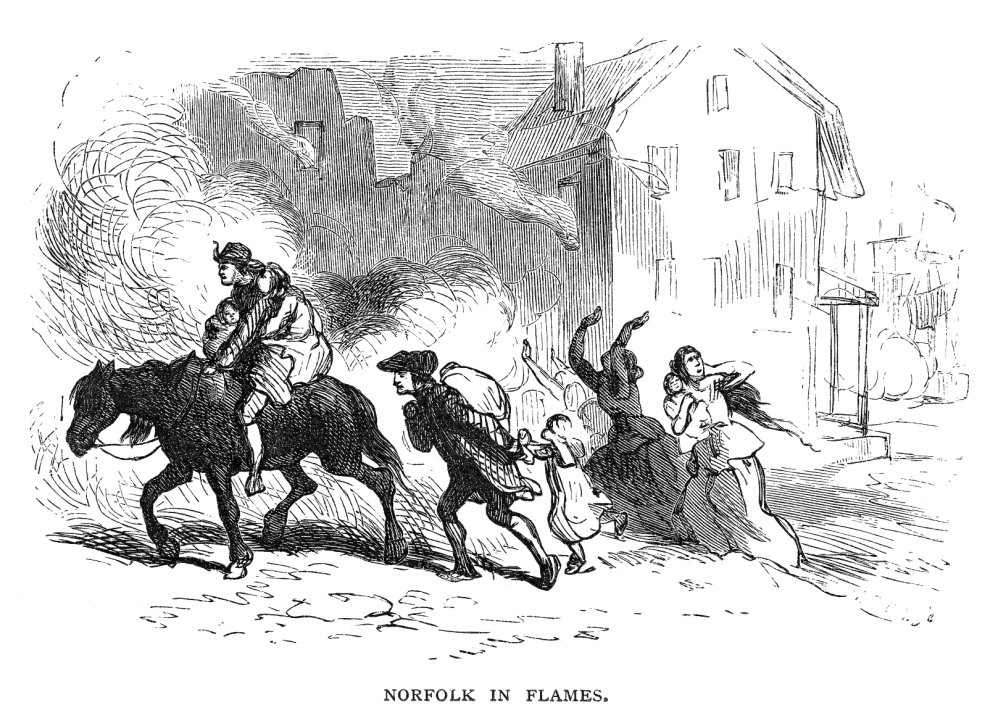
The naval bombardment did damage some of the city, but the American forces finished what the British had started and burned the rest of the town. The American forces destroyed what was left of Norfolk in order to remove what was the last vestige of British control in Virginia.
Patriot forces abandoned the city to man some of the smaller surrounding towns until General Charles Lee came to take command of the Continental Army’s Southern Division.
In an early morning engagement, February 27, 1776, a North Carolina militia unit decimated a Highland Loyalist unit at Moore’s Creek Bridge near present day Wilmington, North Carolina. The engagement, although minor, stymied recruiting efforts of Loyalists sympathizers throughout the southern colonies. As a result of the defeat, Highland Loyalists would never again attempt a Highland sword-wielding charge, destroying the myth of Highland invincibility.
In an effort to supply the British garrison under siege in Boston, a small British Naval contingent battled Patriot forces from Georgia and South Carolina for rice at the Battle of “The Rice Boats”, March 2-3, 1776. The British were able to capture 1,600 barrels of rice, but only after having one of their vessels set ablaze, scattering the British forces.
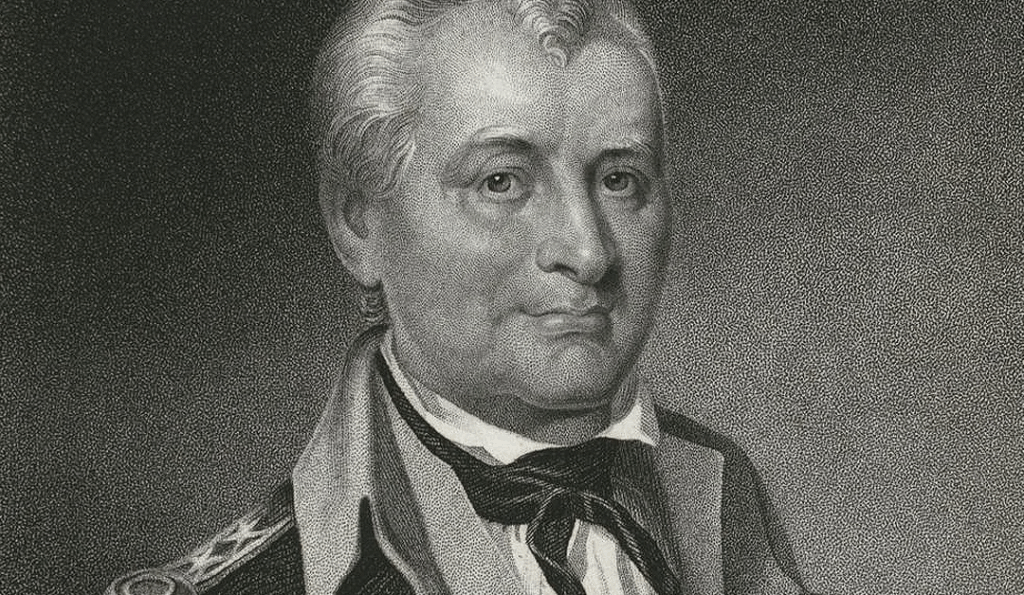
March 3-4, 1776, the Continental Navy raided the British port of Nassau in the Bahamas in an effort to capture a store of gunpowder that was badly needed by the American forces. The raid was not as successful as it was hoped, but the America fleet returned to American waters arriving at New London. Connecticut, April 8, 1776 with 38 casks of gunpowder and other military hardware. Commodore Esek Hopkins would later be dismissed from the Navy January 2, 1778.
March 17, 1776 saw the British Army evacuate Boston due to the Continental Army placing guns on Dorchester Heights a few days earlier. The guns had been freighted from Fort Ticonderoga by Major Henry Knox using oxen and sleds across some 300 miles of wilderness in early January and February of 1776. This was an extraordinary feat that confirmed Knox as a competent officer that was rewarded with an advancement to the rank of Colonel of Artillery.
Canadian sympathizers to the American cause would defeat a force of Loyalist Quebec militia members in the “Battle of Saint- Pierre”, March 25, 1776. This would be the last American victory during its aborted effort to bring Canada into the American Revolution against the British Crown.
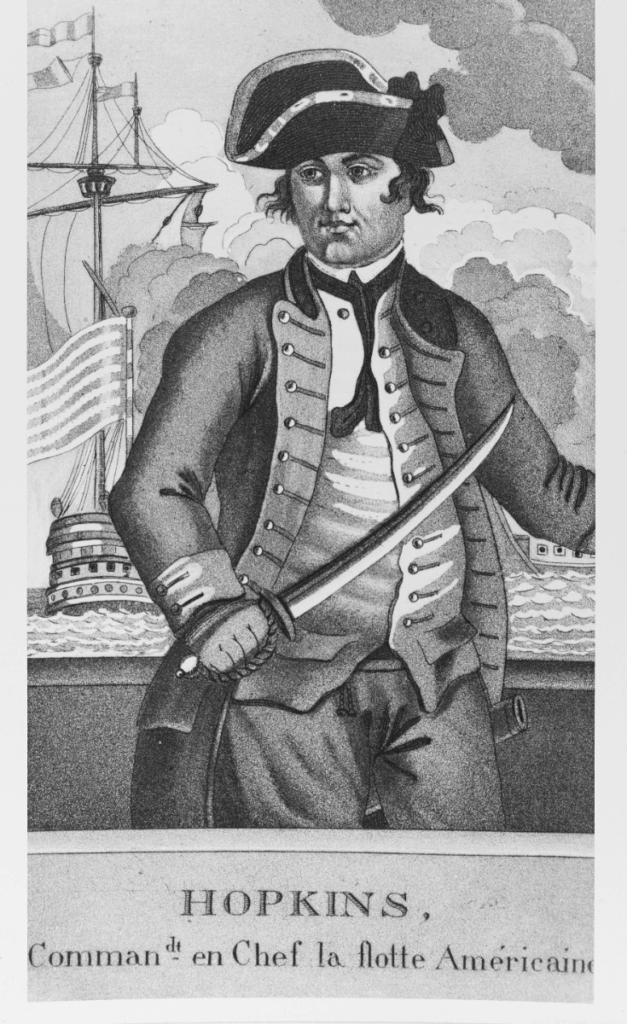
The Battle of Block Island was a minor naval skirmish pitting a contingent of the Continental Navy against several British supply vessels. Commodore Esek Hopkins was successful in capturing HMS Hawk April 4, 1776. What started as a night time encounter on April 6, turned into a fiasco in which the British vessel Glasgow was able to extricate itself and sail to Newport to join a larger contingent of the British Navy. Captain Nicholas Biddle of the Continental Navy would later write of the action, “A more imprudent, ill conducted affair never happened”. The battle would be considered a British victory even though the Americans captured some vital military stores.
A series of military confrontations between British Regulars and Iroquois warriors against Continental Army members May 17-27, 1776, called the “Battle of the Cedars” captured many of the American forces. In negotiations between Brigadier General Benedict Arnold and Captain George Forster of the British Army, many of the Americans were released as part of those negotiations. British prisoners were also to be released, but the Second Continental Congress repudiated the deal and no British prisoners were released, even though the confrontations were deemed a British victory.
A defeat of the Continental Army June 8, 1776 by British forces under the command of Quebec Governor Guy Carleton ended the American invasion of Canada in the “Battle of Trois-Rivieres”.
In May of 1776, the British Navy tried to land on the coast of North Carolina. General Clinton and Admiral Parker were in command of the British operation. Finding the country unsuitable for the kind of operation they desired, they decided to attack the city of Charlestown in South Carolina. On June 28, 1776, British troops landed on what is now called Long Island; they found the water too deep for what they hoped would be a frontal land attack on Sullivan’s Island. Colonel William Moultrie commanded an unfinished fort on the island constructed of sand and palmetto logs. The British began a naval barrage against Moultrie’s fort, but failed as the sand and spongy logs absorbed the British barrage making it totally ineffective. The British Navy withdrew for the effort and returned to New York Harbor. General Charles Lee was in command of the Southern District of the Continental Army, but it was Colonel Moultrie’s fort that saved the day.
The British Navy blockaded the entry to Delaware Bay, the rebels countered by constructing a device to restrict naval vessels from using the channel into the Delaware River called a chevaux-de-frise. This device was made of sharpened logs to penetrate the hull of any vessel that tried to use the shipping channel. In early June, 1776, the American privateer vessel “Nancy” loaded gunpowder and other military stores and began the return to American waters. She was spotted by British Naval vessels June 28, 1776. In the early morning hours of June 29, the Nancy headed for “Turtle Gut Inlet” in heavy fog. She ran aground in the shallows but the larger and heavier British ships could Not enter the shallows, forcing them to fire from a distance, at the grounded Nancy. Captain John Barry of the Continental Navy, later to be called the “Father of the American Navy”, organized the removal of most of the gunpowder in long boats, spiriting the powder ashore on New Jersey’s Cape May and hiding the powder among the sand dunes. To keep the British from capturing the remaining powder, Captain Barry devised a long fuse using a sail loaded with gunpowder for a fuse. An American sailor climbed the mast of the Nancy and removed the American flag. The British, thinking that it was a signal of surrender, approached the grounded vessel as the remaining powder blew up. Killing several British sailors. Thus ended the “Battle of Turtle Gut Inlet”. In 1922 Cape May County filled in the inlet; a small park now commemorates the site of the battle.
Author’s note: A question keeps coming up as to why History is important today. In response to that question, I offer the reasoning of two men, one from Antiquity and one from the early Twentieth Century.
“Not to know what has been transacted in former times is to be always a child. – If no use is made of the labors of past ages, the world must remain always in the infancy of knowledge.”
Marcus Tullious Cicero, Roman orator (106 – 43 B.C.)
“Progress, far from consisting in change, depends on retentiveness. When change is absolute there remains no being to improve and no direction is set for possible improvement: and when experience is retained, as among savages, infancy is perpetual. Those who cannot remember the past are condemned to repeat it.
In the first stage of life the mind is frivolous and easily distracted: it misses in progress by failing in consecutiveness and persistence. This is the condition of children and barbarians, in whom instinct has learned nothing from experience.”
George Santayana, Spanish – American philosopher (December 16, 1863 – September 26, 1952)
Walt Mow 2025