The American Revolution Part 6
July 4, 1776, on this date the former colonies declared their independence from the British Crown. General George Washington would have the declaration read to his assembled troops, July 6, 1776. At this point there was no turning back, it was either defeat the British Crown or be forever a collection of vassal states bound to Great Britain. To this the rebels said NO, with determination!
July 8, 1776 saw the beginnings of the “Battle of Gwynn’s Island”. Lore Dunmore had established a base on the island after the burning of Norfolk with a few British regulars, some loyalists and a small cadre of escaped slaves from the plantations of Virginia. Hunger, smallpox and an unknown fever would decimate Lord Dunmore’s group, rendering many unable to assist in the battle.
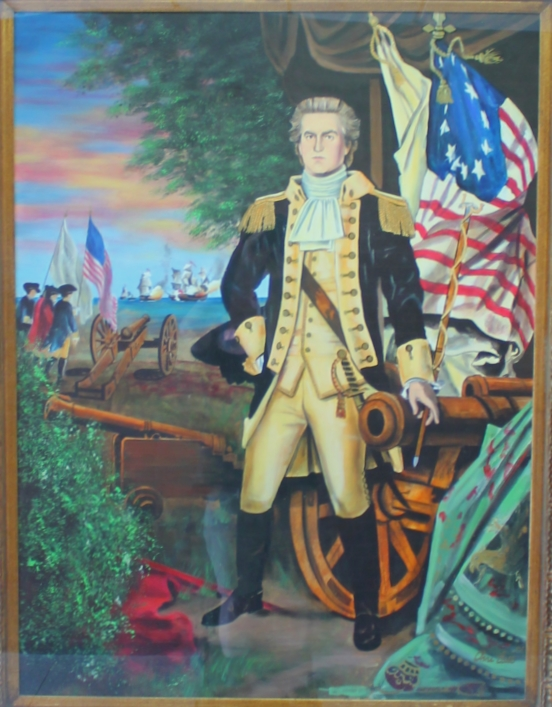

Some members of he Continental Army gathered a few cannon and began a barrage against the forces of Lord Dunmore. Brigadier General Andrew Lewis led patriot forces from Virginia, routing the rag- tag forces of Dunmore to abandon the island on June 10, leaving the patriot forces from Virginia the opportunity to join General George Washington in New York.
Loyalists and a group of Cherokee warriors banded together to wrest control of the backcountry of South Carolina from Patriot sympathizers. Earlier in late 1775, agitators caused the Cherokees to take up arms against the settlers forcing many to gather at Lindley’s Fort near present day Laurens, South Carolina. The small fort was surrounded by Loyalists and Cherokee Indians, but the arrival of 150 militia under the command of Major Jonathon Downs on July 14, 1776, reinforced the contingent of settlers. The next day, the 15th of July, the attackers withdrew, pursued by Major Down’s militia killing several of the loyalists ending the “Battle of Lindley’s Fort”.
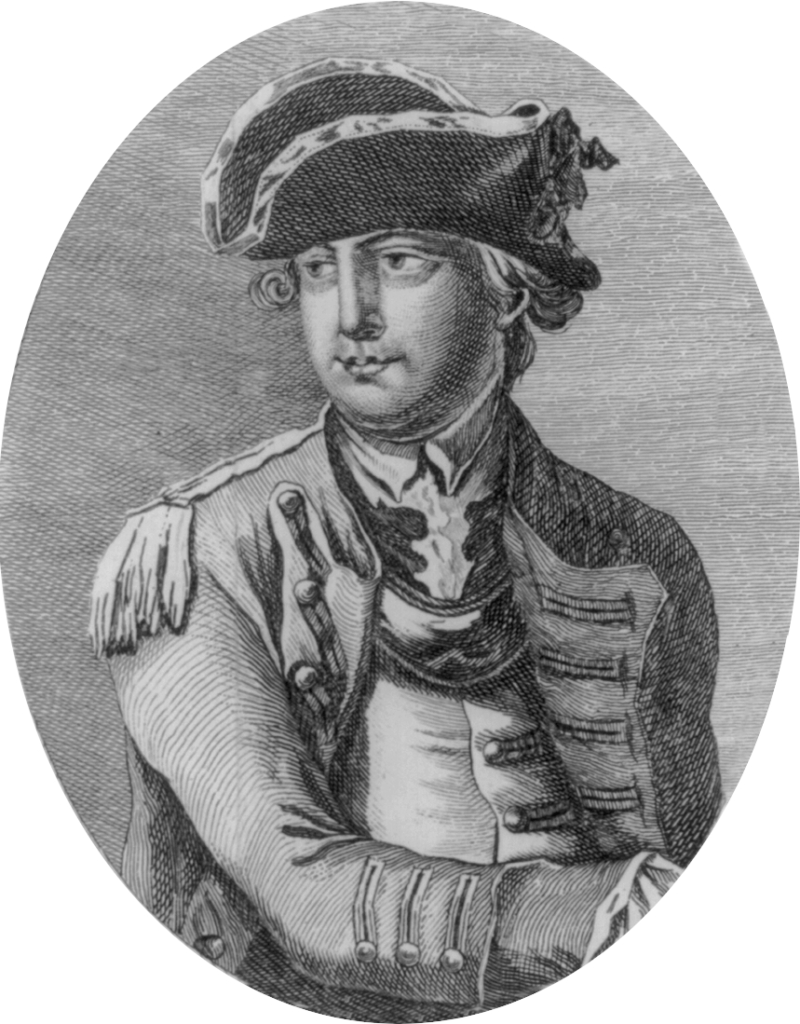
After forcing the British to abandon the besieged city of Boston, General George Washington gathered his army in New York. The Second Continental Congress wanted Washington to fortify and hold New York. General Charles Lee had already determined the city could not be held as the city was surrounded by water making it vulnerable to the British Navy. In July, 1776, the British began to assemble troops on Staten Island and continued to build a large force that eventually totaled some 32,000 troops.
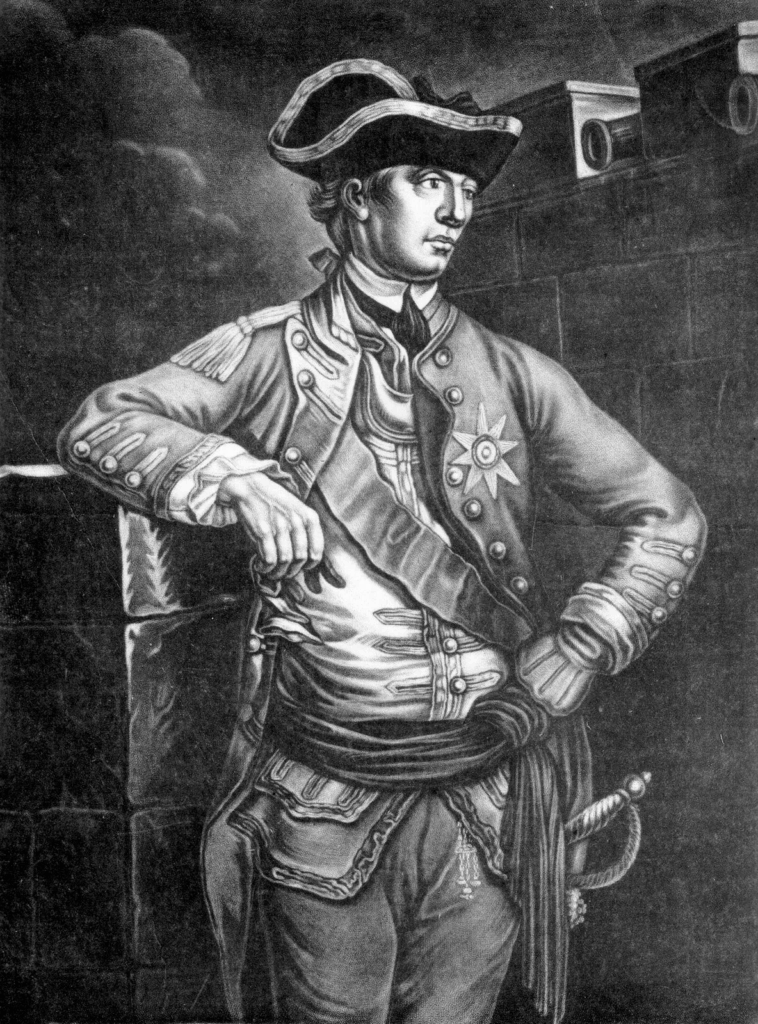
On August 21 General William Howe began to land his forces on Long Island, 5 days later Howe attacked General Washington’s Continental Army on Guan Heights while the bulk of his army slipped through Jamaica Pass in a night march, placing the British in Washington’s rear and flank. In the ensuing confusion, the battle saw the British rout the scattered Americans. Howe, a very cautious commander, possibly fearing a repeat of the fiasco of Breed’s Hill, halted his troops and began to dig fortifications to bottle up the American forces along the east River.
On the afternoon of August 28, Washington ordered Colonel John Glover and his Marblehead militia over from Manhattan Island and sent them to the trenches facing the British. The following day at 16:00 Washington consulted his officers, during that conference, it was decided that Colonel Glover’s Regiment would begin to ferry the Army across the river to Manhattan Island. In what was one of the most successful operations of the war, Glover’s men ferried the army, its cannon and all of the horses across the East River, finishing in a fog on the morning of August 30, 1776 without the loss of even one life. Washington was the last man to board the last boat, arriving on the Island of Manhattan at 07:00. August 30, 1776. In the annals of military history, this is considered to be among the most successful retreats of all time.
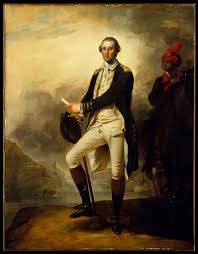
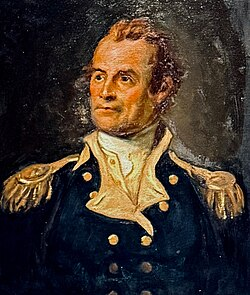
British General Howe, for whatever reason, halted all operations until September 15, 1776. On that date he ordered troops ashore at Kip’s Landing above New York City. Washington had begun to withdraw his Army north to Harlem Heights, leaving the City of New York in the hands of the British Army. The militia that was assigned with patrolling this part of Manhattan Island fled the advancing British, forcing Washington to order Colonel Glover and his Regiment to confront the British.
On September 16, 1776, Washington tasted his first battlefield success of the war, restoring the confidence of the Continental Army that Washington was the man to command the army. In the “Battle of Harlem Heights’, Washington’s Army was successful in driving the British to retreat to their own lines. Unwilling to confront a reinforced British Army, Washington withdrew to his own lines on Harlem Heights.
In a steep walled gorge on the Coweecho River in North Carolina, a Patriot charge using bayonets drove a Loyalist contingent to withdraw in what has been called the “Battle of Coweecho River’. September 19, 1776.
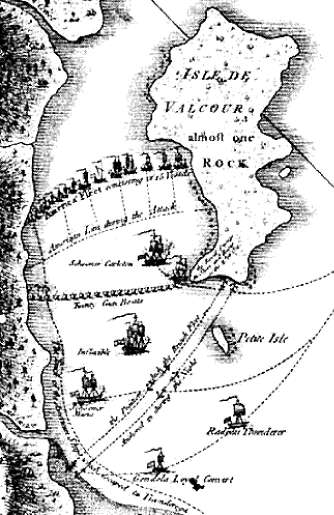
Lake Champlain was the site of a naval battle on October 11, 1776 aptly named “The Battle of Valcour Island”. General Benedict Arnold built a series of small vessels and arranged them between the Island of Valcour and mainland New York. Although a British victory, the battle forestalled a move by General Guy Carleton to advance into the Hudson River. By the time the battle was over, the season had advanced to the point that there could be no advance due to the approaching winter.
A series of British victories between October 22, 1776 and November 20, 1776, including the loss of “Fort Washington” in New York and “Fort Lee” in New Jersey drove the Continental Army in a general retreat across New Jersey.
As the Army approached the Delaware River, General Washington directed his forces to destroy all river craft on the New Jersey shore for a distance of 50 miles up and down the river allowing his troops to cross the river and stopped the British advance. General Howe decided to go into winter quarters and posted Hessian troops at Trenton Under the command of Colonel Johann Rall at Trenton and at Bordentown under the command of Colonel Carl von Donop.
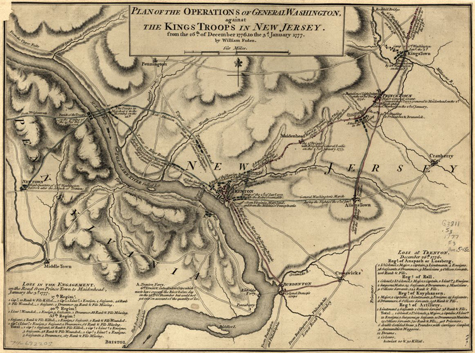
In a daring attack December 26, 1776, Colonel John Glover’s Regiment ferried the Army across the Delaware River in what was later described as a hurricane with large ice flows and high winds. Washington queried of Glover if the attack needed to be canceled, Glover said that, “his boys could handle it”.Washington’s Army defeated the Hessians giving Washington’s battered army a victory. The storm that gave cover to Washington’s daring attack also prevented the Hessian contingent at Bordentown from reinforcing Rall’s troops. Washington feared a massive casualty list, but was pleasantly surprised when he was informed that only 2 men had died, and they died of exposure in the night time march to Trenton. Future President James Monroe was injured in the attack; Hessian casualties were 22 killed, 83 wounded and between 800 and 900 were captured.
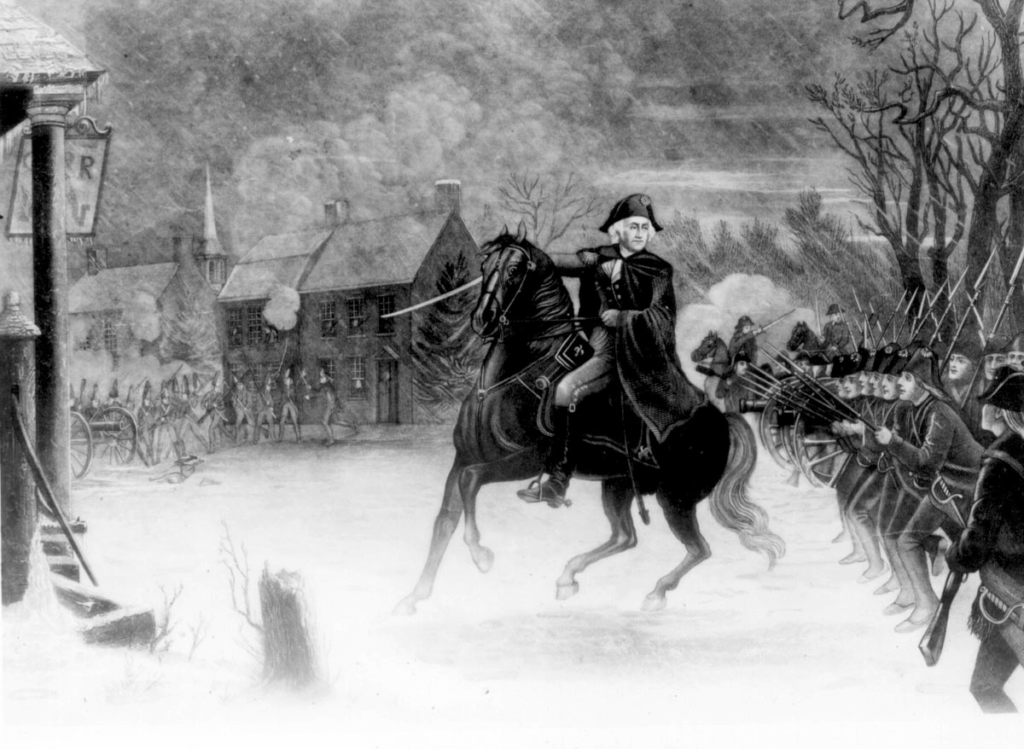
Washington decided to return his army to the Pennsylvania side of the river, and once again, Glover’s men ferried the army, the captured military stores and the prisoners safely across the Delaware.
Thus ended the “Battle of Trenton” bringing to a close the year of 1776 for Washington and his battered Army.
Walt Mow 2025