The American Revolution Part 8
The battle of Sarasota was the culmination of a series of skirmishes and battles that spanned several weeks starting in July 5-6, 1777,with the Siege of Fort Ticonderoga and ending at the battle of Bemis Heights, October 7, 1777. This three month period was crucial in that the struggle for Independence was instrumental in bringing France into this gigantic war of wills between the American public and the British Crown under King George the third.
(Authors Note) There were other battles and conflicts during this time period that added significantly to the overall war effort that this article will highlight as well.
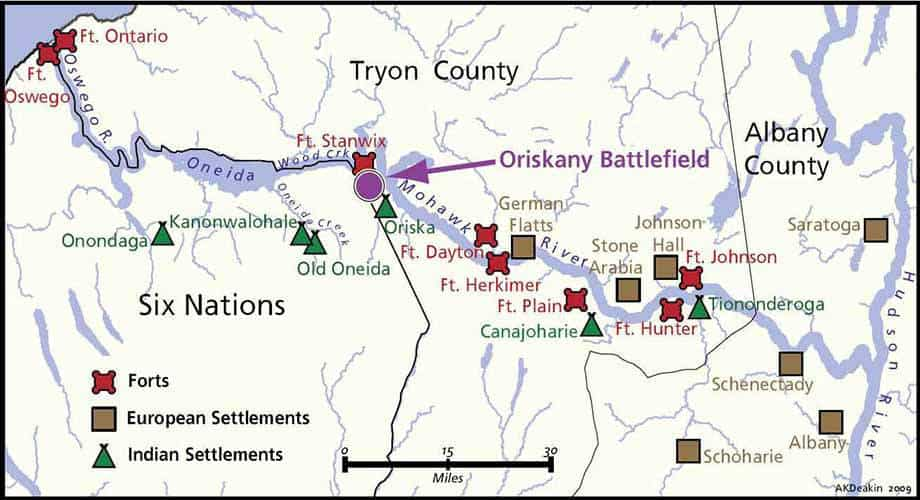
The siege of Fort Stanwix began on August 2, 1777, ending August 23. Fort Stanwix, under the command of Colonel Peter Gansevoort, located at the western end of the Mohawk River Valley withstood several assaults by British regulars, Loyalist soldiers, Hessian troopers and assorted Indian tribes under the command of Brigadier General Barry St. Leger.
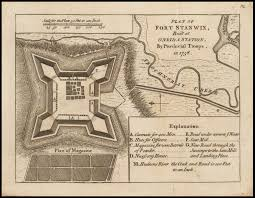
This was a diversionary campaign to support Lieutenant General John Burgoyne’s effort to wrest the Hudson River Valley from the clutches of the Continental Army under the command of General Horatio Gates.
An attempt to relieve the siege by New York militia under the command of Brigadier General Nicholas Herkimer was ambushed August 6 by members of St. Leger’s force at the “Battle of Oriskany”. The siege broke down with the advance of an American force under the command of Major General Benedict Arnold, forcing St. Leger to retreat back to Oswego, New York. Burgoyne would later complain that St. Leger’s retreat was a contributing factor to his defeat at Saratoga.
An amphibious assault on Machias in present day Maine, August 13 and 14, 1777 ended when local militia aided by indigenous Indians thwarted the assault.
The “Battle of Bennington”, an American victory, was part of the overall campaign by British General John Burgoyne to take the Hudson River Valley from the control of the Continental Army. The loss of nearly 1,000 men by the British, plus the fact that supplies and horses were captured deprived Burgoyne of not only men, but draft animals and supplies as well.
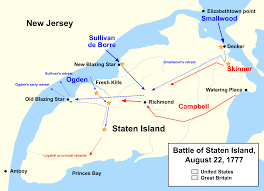
A misguided Major General John Sullivan led a disastrous raid against the British in the “Battle of Staten Island” August 22, 1777 that resulted in the loss of between 180 and 300 men; men that General Washington had wanted to use in an assault on British held Philadelphia. A court martial was held for his actions, but General Sullivan would later be exonerated.
Another failed raid conducted by Brigadier General Samuel Parsons against British Loyalists called the “Battle of Setauket”, occurred on August 22, 1777.
The “Battle of Iron Hill” pitted elements of the Continental Army and American militia against German troops under the command of Brigadier General William Maxwell were routed in what became a running gun battle until the Americans ran out of ammunition forcing them to retire. An unnamed German officer described the American force thus, “Your soldiers are very good men, so good as any brave men in the world, but your officers my good colonel, your officer”… he left the rest of his comment unsaid.
In a grueling 11 hour battle at “Brandywine Creek”, the largest contingent of American forces under Major General George Washington numbering some 14,600 fought the army of British General Sir William Howe’s 15,500 troops September 11, 1777. German Lieutenant General Wilhelm von Knyphausen’s attack on the left of the American line left General Washington’s retreating troops very nearly captured with Washington himself in danger of capture.
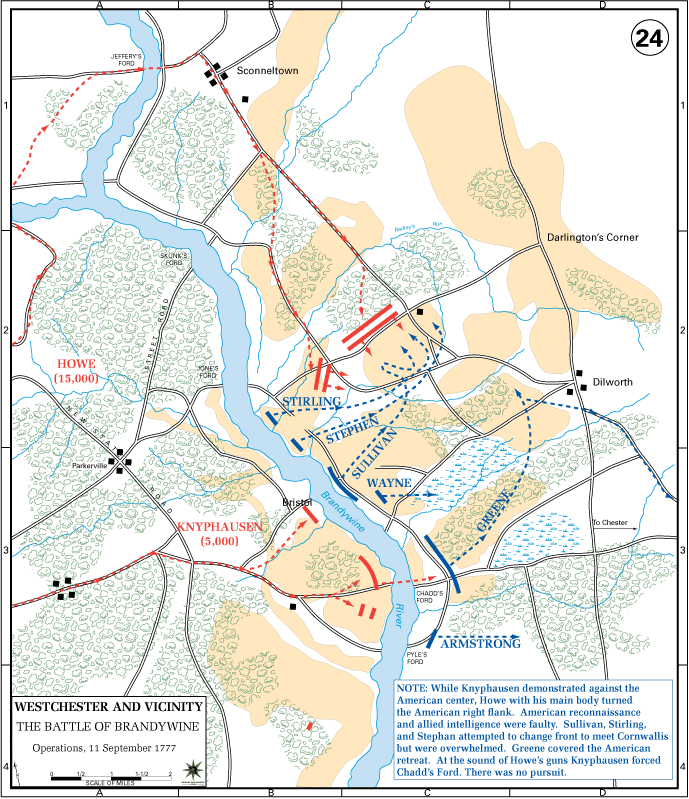
The actions of Polish General Casimir Pulaski while defending Washington’s rear also aided in Washington’s escape. The resulting defeat allowed the British to capture the city of Philadelphia on September 26, 1777.
ON September 16, 1777, a skirmish called “The Battle of the Clouds” resulted in Washington’s army retreating ahead of a hard charging British army. In what was later described as a cloud burst, wet cartridges and deep mud not only slowed the British advance, but stalled it allowing Washington to successfully withdraw.
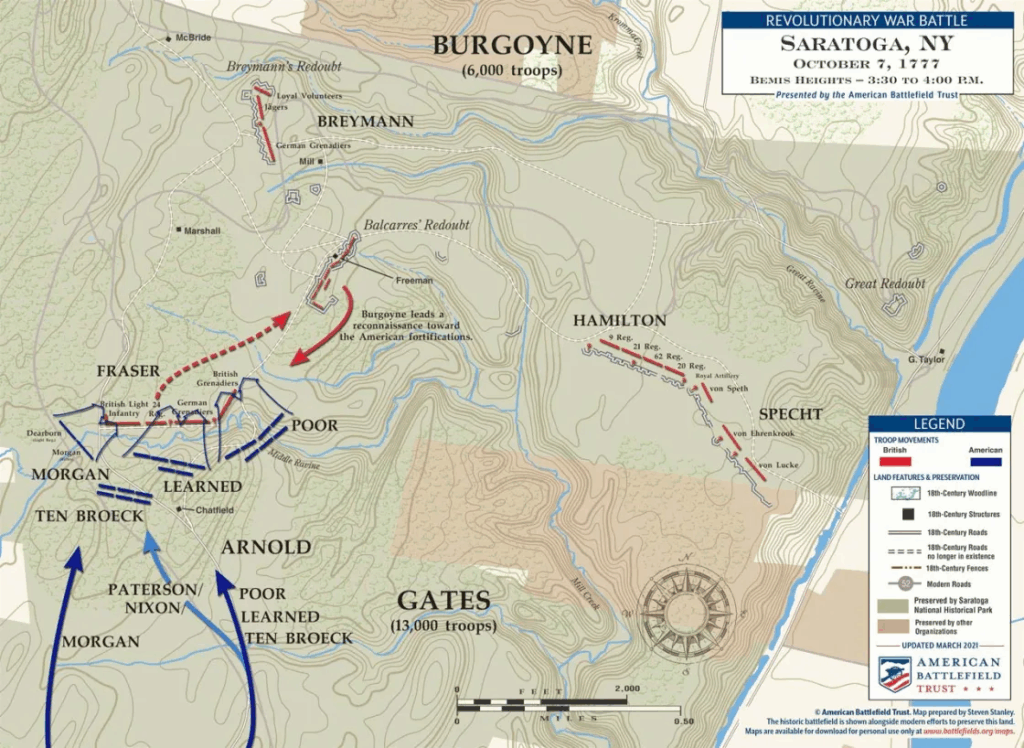
The British strategy to separate New England from the rest of colonial America forced the two battles of Saratoga, New York. The first, the “Battle of Freeman’s Farm” was a tactical victory for the British but with heavy losses on September 19, 1777.
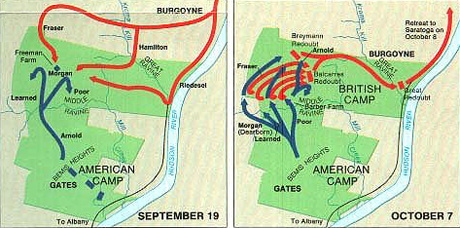
Burgoyne, expecting reinforcements by General William Howe did not materialize, forcing Burgoyne to attempt a win against the Continental Army at the “Battle of Bemis Heights” on October 9, 1777. The resulting defeat not only gave the American forces the field, but forced Burgoyne’s army to surrender the gains of September 19. On October 17, 1777, Burgoyne surrendered what was left of his army to General Horatio Gates.
British General Sir Henry Clinton attempted to relieve Burgoyne’s battered army with the capture of forts in the Hudson River Highlands on October 6 and the seizure of Kingston on October 13, 1777, but his efforts were too late to save Burgoyne’s fatally flawed campaign.
This was a major turning point in the war as it was the deciding factor in the Franco-American Alliance. No longer was it necessary for France to forward military supplies to the Continental Army in a piecemeal clandestine fashion, but openly and in greater quantities.
Walt Mow 2025