The American Revolution Part 9
The Battle of Red Bank occurred on October 22, 1777 pitting 400 Continental Army members against some 1,200 Hessian troops. The Hessian force under the command of Colonel Carl von Donop first sent an ultimatum to Colonel Christopher Greene; “The King of England orders his rebellious subjects to lay down their arms.”. Donop warned that if they stood to battle no quarter whatever would be given, to which Colonel Greene promptly replied, “We ask no quarters. nor will we give any”.
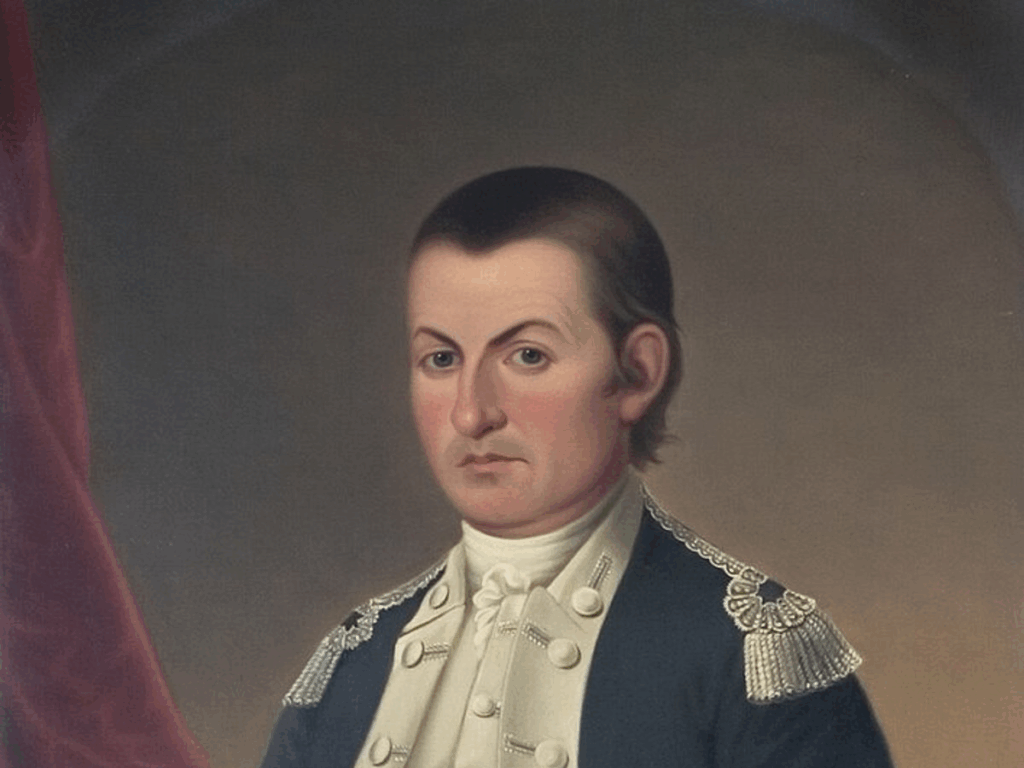
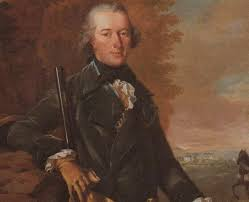
Donop’s troops had been repulsed at the Second Battle of Trenton and Donop felt humiliated. He said “We will change the name from Fort Red Bank to Fort Donop. Either that shall be Fort Donop or I shall be dead”.
American gun boats from the Continental and Pennsylvania Navy provided support fire to the Fort as it was under attack by the Hessians. Colonel Donop was wounded in the battle and died 3 days later from his wounds. Although the fort would fall to British forces a month later, it provided Washington’s Army the protection it needed in order to pull back to defensive positions west of Philadelphia.
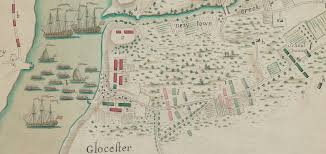
By Michel Capitaine du Chesnoy, Cartographer & aide-de-camp to marquis de Lafayette.
“The Battle of Gloucester”, an overnight encounter, November 25-26, 1777, was the first American command for the Marquis de Lafayette; his orders were to scout the British Armies camp. He did so but also attacked the pickets of a Hessian unit driving them to retreat to the larger camp of British troops. The British counter attack forced Lafayette to retreat back to General Greene’s encampment while only losing 1 dead and 5 wounded while British casualties numbered 20 dead, 20 wounded and 20 captured.
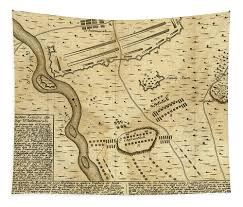
“The Battle of White Marsh” would be the last major encounter between American and British forces in 1777. The battle was a series of skirmishes that spanned 4 days from December 5, to December 8, 1777. General Sir William Howe decided to call off the engagement without a decisive action against Washington’s Army. The Americans lost nearly 200 men either killed, wounded or captured while Howe suffered near 80 killed or wounded plus nearly 270 either missing or deserted. When Howe returned to Philadelphia, Washington marched his men into winter quarters at Valley Forge.
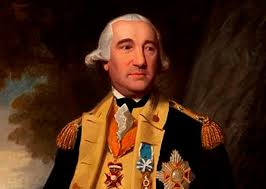
A most unlikely hero emerged from the winter of 1777-78; one Baron von Steuben. A fraudulent resume concocted by Silas Dean and Benjamin Franklin helped von Steuben to become a major contributor to the success of the Continental Army. His military treatise titled, “Regulations for the Order and Discipline of the troops of United States” would transform the Continental Army into a force to be reckoned with; one that could contend with Britain’s highly vaunted Army.
The “Battle of Matson’s Ford”, December 11, 1777 pitted Pennsylvania militia against a British foraging force only to be overrun by the much larger British force. The British pushed on finding a contingent of Continental Army foragers near Matson’s Ford. The Americans crossed the Schuylkill River, dismantled the temporary bridge leaving the British with no chance to engage the Continentals. The British left the area the next day in order to continue to forage elsewhere.
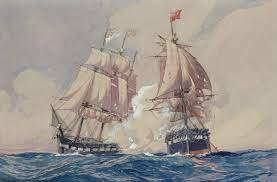
March 7, 1778 a naval engagement off Barbados pitted the USS Randolph against HMS Yarmouth. The much larger British vessel commanded by Captain Nicholas Vincent in a twenty minute battle not only sank the USS Randolph, but its skipper, Captain Nicholas Biddle was killed, he went down with his ship.
The “Battle of Quinton’s Bridge”, March 18, 1778 happened by the British luring a company of New Jersey militia into a trap by feigning a retreat, then cutting off the attacking militia. The retreating militia in trying to return to their former positions along the creek drowned in the confusion.
In what has been called the “North Channel Naval Duel” Captain John Paul Jones of the USS Ranger captured the British Sloop of War Drake, captained by George Burton. Although the British Navy gave chase to Jones, they never were able to close with the elusive Jones.
The “Battle of Crooked Billet” was fought May 1, 1778 as British Major John Simcoe caught Brigadier General John Lacey and 3 regiments of Pennsylvania militia sleeping. In the confusion that resulted, the British caused significant damage forcing Lacey to retreat into neighboring Bucks County, Pennsylvania.
In a failed effort to trap a contingent of Continental forces under the command of the Marquis de Lafayette, British troops attacked a group of militia, leaving Lafayette and his small force to escape using a little known road May 20, 1778 during the “Battle of Barren Hill” Although the British attack did not succeed as planned, it left the British in command of the field.
Two raids against communities around “Mount Hope Bay” by British troops, on May 25 and 31, 1778 captured and destroyed military stores that had been cached in the towns by elements of the Continental Army.
A raid on the frontier settlement of Cobleskill, New York, May 30, 1778 by Loyalist militia and members of the Iroquois tribe was an effort by the British government to use the Indian tribes against settlements in western New York and Pennsylvania.
The French – American Treaty of February 1778 forced the British to begin a defensive war in America.
British General Sir Henry Clinton was ordered to abandon Philadelphia with his army and return to New York.
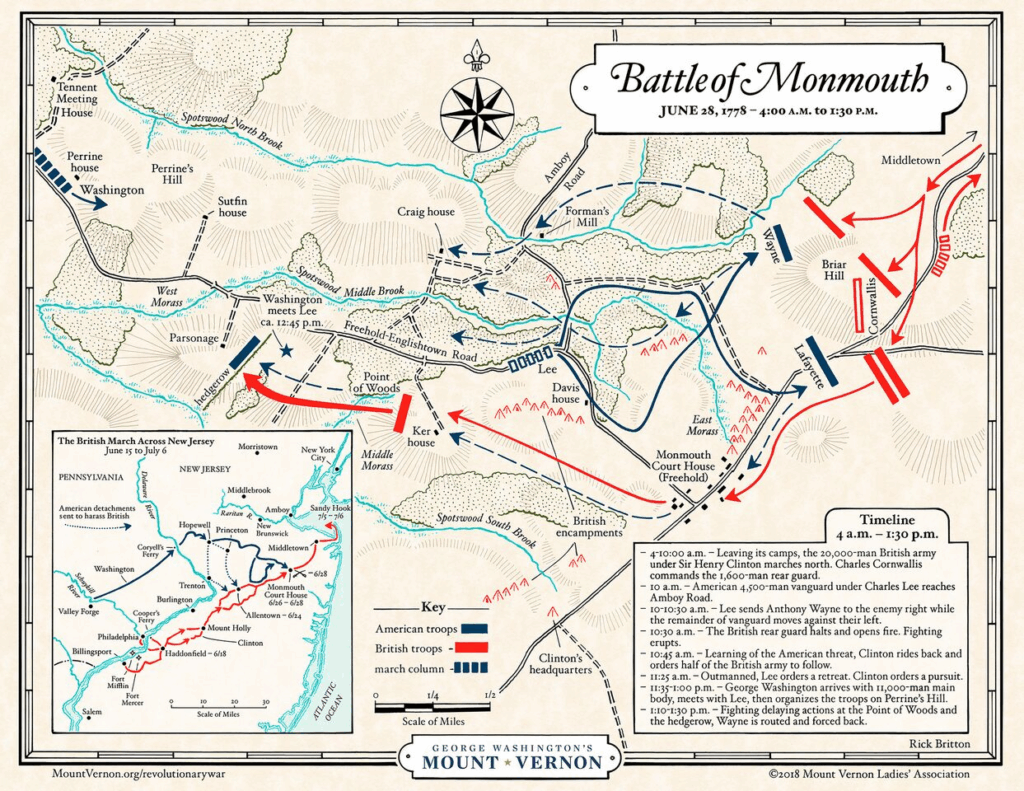
Washington decided to shadow the British as they withdrew across New Jersey. On June 28, 1778, Washington dispatched Major General Charles Lee to harass the British but as the British attacked Lee’s troops, he began a retreat.
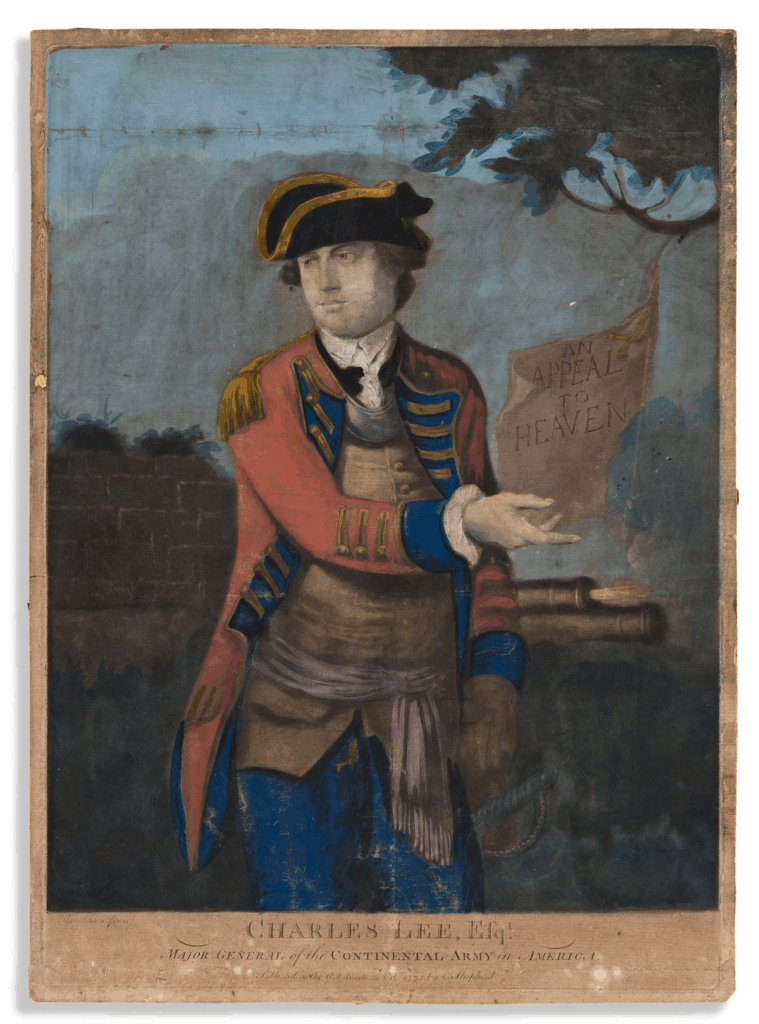
A furious General Washington rallied the troops, fired General Lee and established a strong position against the British counter attack.
As the British began to resume their withdrawal from Monmouth Court House an artillery duel commenced but the Americans held a more favorable position and Clinton withdrew his cannon and resumed his march to Sandy Hook, New Jersey, under the cover of darkness.
The “Battle of Monmouth Court House” ended with the British recognizing the efforts of Baron von Steuben’s efforts to train the Continental Army in European battle tactics.
General Washington had General Lee arrested and tried at court martial July 4, 1778; the charges against General Lee were: failure to follow orders; conducting an unnecessary, disorderly and shameful retreat and disrespect of his commanding officer.
General Lee was convicted August 12, 1778; even after his conviction, Lee continued to claim his innocence and to defame General Washington.
Congress eventually terminated Lee’s military career and dismissed him from the Army in 1780.
Walt Mow 2025