The American Revolution Part 13
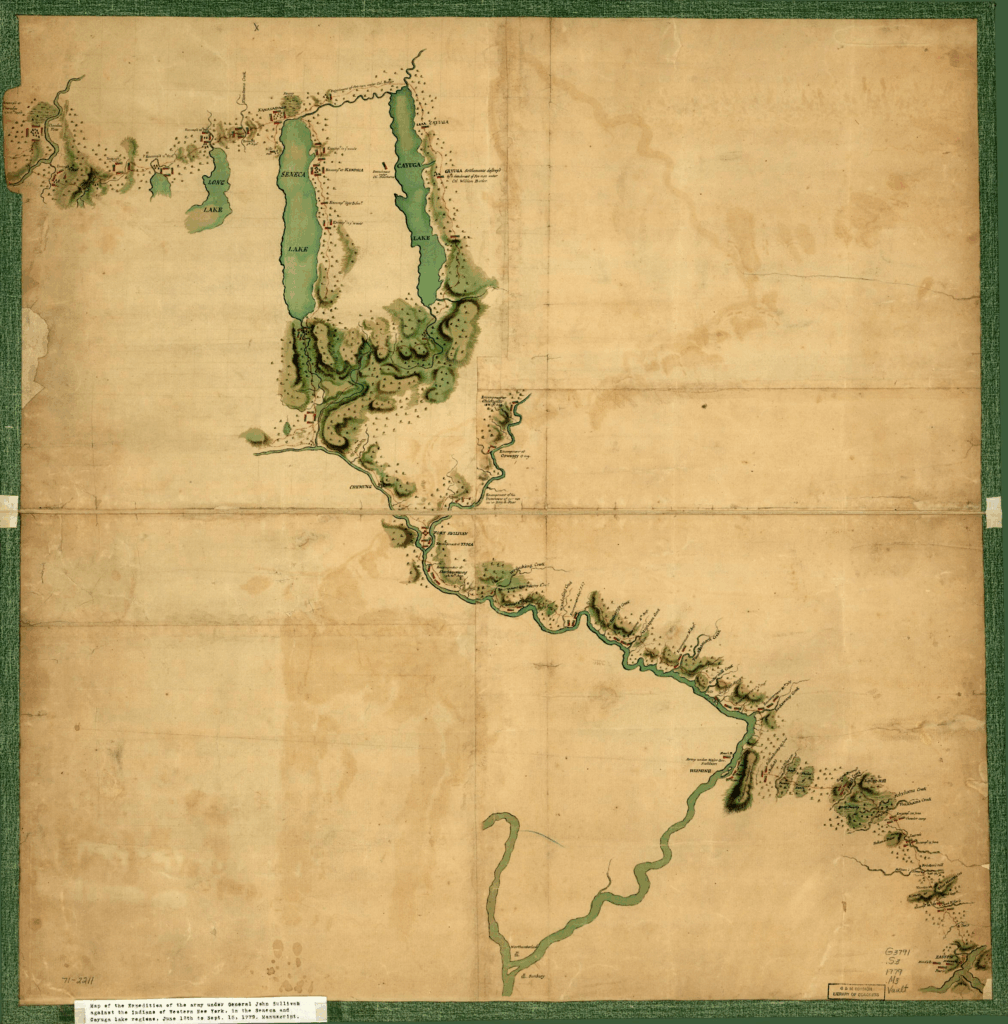
The ambush of a scouting party, part of Major John General Sullivan’s expedition in the Finger Lakes area of upstate New York, September 13, 1779, ended with the decapitation of Lieutenant Thomas Boyd and Sergeant Micheal Parker. 14 men of Boyd’s party were killed in the engagement by the American Loyalists commanded by Major John Butler and his Seneca Indian allies. Boyd and Parker were brutally tortured, ending with their beheading by members of the Seneca tribe. General Sullivan ordered the Seneca town of Chenussio burned to the ground and the fields of corn and other vegetables destroyed before turning his army around and heading back towards Seneca Lake.
In an effort to retake Savannah, Georgia from British forces, Count Casimir Pulaski was fatally wounded October 9 as he led an attack against the British defenses, in the failed siege that began September 16, ending October 18, 1779. The Americans were joined in the effort by French colonial forces commanded by Charles Hector, Comte d’Estaing. This was later considered one of the most consequential efforts by a foreign power during the American Revolution.
After the Spanish conquest of Fort Bute in what was then Spanish West Florida, Colonel Bernardo de Galvez, Governor of Spanish Louisiana took the initiative to take Baton Rouge from the British. In what turned out to be a 16 day siege beginning September 12, ending September 31, 1779, Galvez defeated the British defenders under the command of Lieutenant Colonel Alexander Dickson. As a result of his successful campaign, Galvez was promoted to Brigadier General, his exploited ended control of the lower Mississippi thereby aiding the American Revolution.
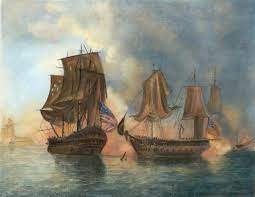
September 23, 1779 has long been considered an American victory by Continental Navy Captain John Paul Jones of the French vessel Bonhomme Richard and his historic battle with the British ship HMS Serapis commanded by Captain Richard Pearson. There is great controversy about this historic battle and in the quest for truth and not having enough information to make a solid judgment, I will leave it to others to decide the actual chain of events. Yes, Captain Jones did defeat Captain Pearson in what history has called, “The Battle of Flamborough Head”.
Author’s note: In order to be correct after reading conflicting reports, I decline to post much of this story.
Editor’s note: Walt wanted me to include his 2023 piece on some of the Continental Navy’s commanders. Click the link below to find that article.
Between October 6, 1779 and January 16, 1780, the British Royal Navy would contend with French and Spanish naval forces. These actions would help the Americans in their war with Britain in that it forced Britain to lessen its naval forces in American waters.
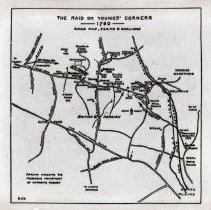
“The Battle of Young’s House” on February 3, 1780 was a raid conducted by the British against the American defenders in an area that had become a “no man’s land” between the British Army’s lines and those of the Continental Army. In a one sided affair, 550 British and Hessian forces overran 150 Americans killing 14, wounding 37 and capturing 76 while the attacking forces suffered 5 killed and 18 wounded. The American commander, Lieutenant Colonel Joseph Thompson, discounted reports of a superior number of the enemy marching against his post. The British under the command of Lieutenant Colonel Chappie Norton advanced despite marching in 2 feet of snow. British cavalry were able to cut down many of the Americans as they struggled in the snow to retreat from the area.
“The Battle of Van Creek” was another one sided affair in which 100 American militia tried to stop 600 Loyalist militia from crossing the Savannah River, American losses were one killed, 15 wounded and 17 captured while the Loyalist force lost around 100 men, many due to desertion.
In one of the costliest campaigns of the war, Britain lost 2,500 men to malaria, dysentery and yellow fever? in a disastrous campaign in Nicaragua. In an effort to cut Spanish America in half, “The San Juan Expedition”, despite early gains, stalled as the British force tried to advance up the San Juan River in an attempt to reach Lake Nicaragua. Under the command of Major John Polson, 3,000 men started but never reached the lake due to poor planning, the loss of supplies and disease that began to decimate the British force. British naval Captain Horatio Nelson was involved in a hand to hand combat situation but was cut down by malaria and was evacuated down river. The expedition began March 17, 1780 and ended with withdrawal on November 8, 1780.

The British were forced to surrender Fort Charlotte near present day Mobile, Alabama to Spanish forces under the command of Brigadier General Bernardo de Galvez during “The Siege of Fort Charlotte”, March 2-17, 1780. General Galvez wanted to attack the British outpost of Pensacola but was unable to do so until January? of 1781.
In what was one of the worst defeats for the Americans in the Revolutionary War, Major General Benjamin Lincoln surrendered the city of Charleston to British forces after a siege lasting 6 weeks, March 29 to May 12, 1780. “The Siege of Charleston” ended with the capture of 5,466, 138 wounded and 89 killed. Even though the British had taken Charleston, the countryside was to see a guerrilla war that the British found impossible to contain.
Walt Mow 2025