The American Revolution Part 14
The Battle of Monck’s Corner was part of the siege of Charleston and occurred April 14, 1780. For the Americans, the combatants included cavalry units under the command of Lieutenant Colonel William Washington; elements of Pulaski’s Legion under the command of Chevalier Pierre-Francois Vernier, and 500 troops under the overall command of General Isaac Huger.
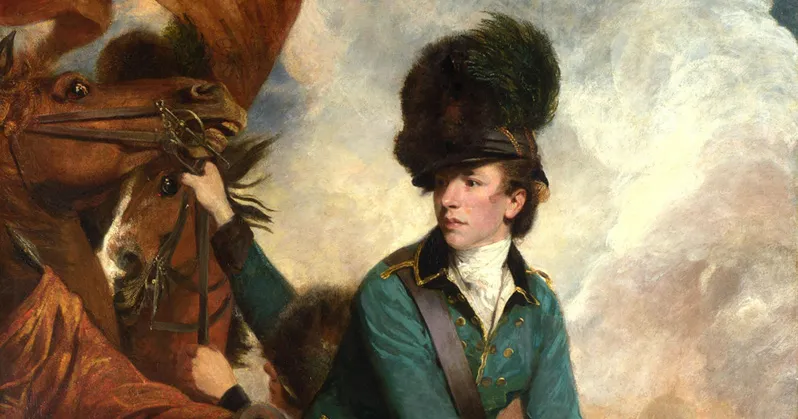

British General Sir Henry Clinton dispatched Lieutenant Colonel Banastre Tarleton, Lieutenant Colonel James Webster and Major Patrick Ferguson to cut the American’s supply train for the besieged Americans under the command of Major General Benjamin Lincoln.
The British intercepted a dispatch meant for Huger’s forces on the night of April 13 informed the attacking British of the disposition of Huger’s forces. Attacking in the early morning hours, they surprised the Americans, driving them to disperse in the swamps and capturing most of the Americans’ horses. Tarleton’s troops went on a rampage killing Vernier even after asking for quarter, giving rise to the term of “Tarleton’s Quarter”, a ruthless offense that incensed the Americans forcing their distrust of Tarleton and his legion throughout the rest of the war.
A naval battle that pitted the British against the French on April 17, 1780 in what was a blood bath for both forces with more than 400 killed and nearly 900 wounded. The ensuing battle was later considered inconclusive, but did allow the French to hold onto its possessions in the West Indies.
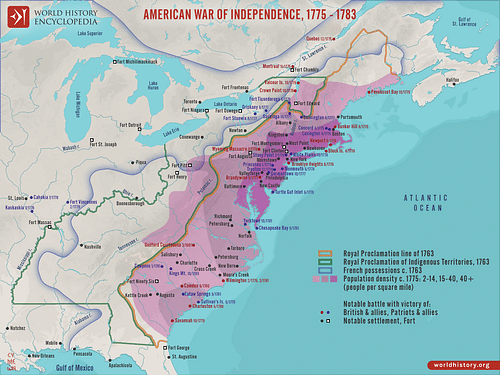
May 6, 1780 would see Lieutenant Colonel William Washington’s regrouped cavalry again routed by members of Lieutenant Colonel Banastre Tarleton’s Loyalist British Legion at the “Battle of Lenud’s Ferry on the Santee River. An unprepared Colonel Anthony Walton White had no scouts or pickets out when Tarleton’s troop arrived. Tarleton’s battle report would say: “being totally surprised, resistance and slaughter soon ceased…All the horses, arms, and accouterments of the Americans were captured. Colonels White, Washington, and Jamieson with some officers and men, availed themselves of their swimming, to make their escape, while many who wished to follow their example perished in the river”. Tarleton’s reputation would continue to grow.
In what turned out to be a failed campaign, Captain Henry Bird departed Fort Detroit in May 1780 with over 1,000 Indian allies and some 150 soldiers and militia with the intent of ending the Spanish control of the Mississippi River Drainage including the Ohio country. Despite limited success in the initial stages of the campaign, the specter of Captain George Rogers Clark so troubled Bird’s Indian allies that they refused to attempt to rout Clark from the territory of the Ohio. General John Campbell was to rout Spanish General Bernardo de Galvez in West Florida and unite with Bird at Natchez on the Mississippi. Campbell was so concerned with Galvez that he never attempted to take New Orleans.
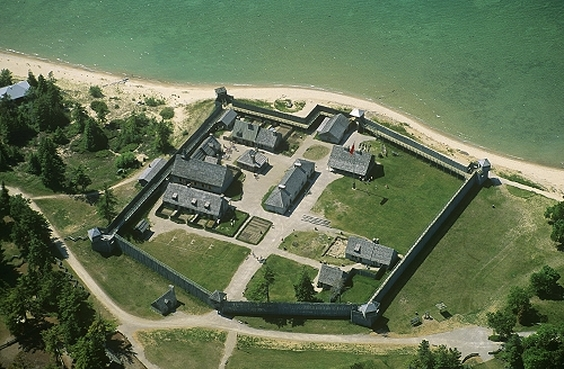
As part of this campaign, the military governor of Fort Michillimackinac, Patrick Sinclair, recruited various Indian tribes to attack Spanish held Saint Louis on the Mississippi River. Lieutenant Governor Fernando de Leyba, informed that a mixed force of Indian and fur traders turned militia were to attack Saint Louis, hastily constructed a small tower to defend the area. On May 26, 1780, as the mixed force drew near the Tower, Leyba fired one of his cannon at the Indians. The Indians were afraid to attempt to attack the small fort and withdrew leaving the remaining Indians and improvised militia without the manpower to take the small fort. Across the river a simultaneous attack on Cahokia was attempted, but the arrival of Captain George Rogers Clark so paralyzed the Indian attackers that the attack was called off. Thereby the entire campaign fizzled leaving Bird to return to Detroit in August of 1780.
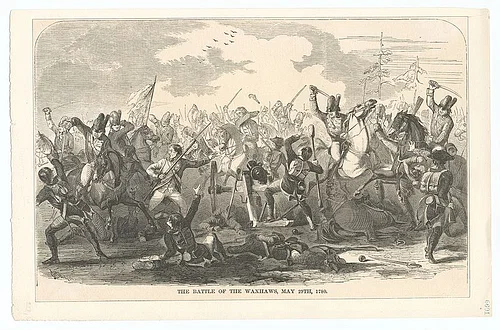
“The Battle of Waxhaws”, May 29, 1780, has become another chapter in what became a series of claims of savagery by Lieutenant Colonel Banaster Tarleton’s Loyalist British Legion. As the battle raged, Tarleton’s horse was shot out from under him, pinning him beneath. His troopers thinking him dead began a rampage of indiscriminate killing adding to the calls of “Tarleton’s Quarter’. That the battle was a British success cannot be denied given that Colonel Abraham Buford’s troop suffered 113 killed, 150 wounded and 53 captured while Tarleton’s casualties totaled only 5 killed and 12 wounded.
The savagery of the war in the southern colonies became riddled with claims and counter claims of “No Quarter” by either side, only adding to the savagery that defined the war in the south.
In what was an attempt to attack General Washington’s Army at Morristown New Jersey, Hessian General Wilhelm von Knyphausen’s mixed British and Hessian Army departed Staten Island, New Jersey June 6, 1780. He had been led to believe that Washington’s Army was suffering from low morale and that the civilian population of New Jersey were so war weary that they would not contend with his troopers.

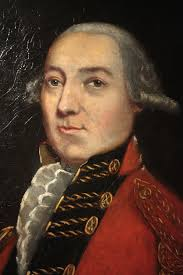
As this army moved westward, American snipers severely injured British General Thomas Stirling, creating much confusion among Knyphausen’s troops and delaying their march. As the sun rose on the morning of June 7, 1780, American militia men began a rearguard action that slowed the attackers. Fighting from the cover of an orchard until dislodged, slowly giving way to superior numbers until 08:00 when Brigadier General William Maxwell arrived with reinforcements.
They delayed the forward movement of Knyphausen’s Army, driving through the Connecticut Farms using houses and bushes for cover, never allowing Knyphausen’s Army to reach Hobart Gap, a pass that would have allowed his army access to Washington’s encampment at Morristown. As night fell, Knyphausen decided that he could not achieve his objective and decided to return to Staten Island, marking the end of major battles in the northern colonies except for minor engagements.
Walt Mow 2025