The American Revolution Part 18
January 7, 1781 would see the British attempt the recapture of Mobile from Spanish control. In a losing effort, the British lost 14 killed and 35 wounded. Included in the dead was the commander of a contingent of German mercenaries commanded by Johann von Hanxleden. This ill-fated expedition forced the British and what was left of the invading force to return to British held Pensacola in East Florida.
In the worst defeat for the British since Saratoga, American forces defeated British forces totaling 1,150 officers and men under the command of Lieutenant Colonel Banaster Tarleton at the “Battle of Cowpens”. Brigadier General Daniel Morgan commanded a force comprised of Continental regulars, 82 Continental dragoons under the command of Lieutenant Colonel William Washington and various militia groups totaling nearly 2,000.
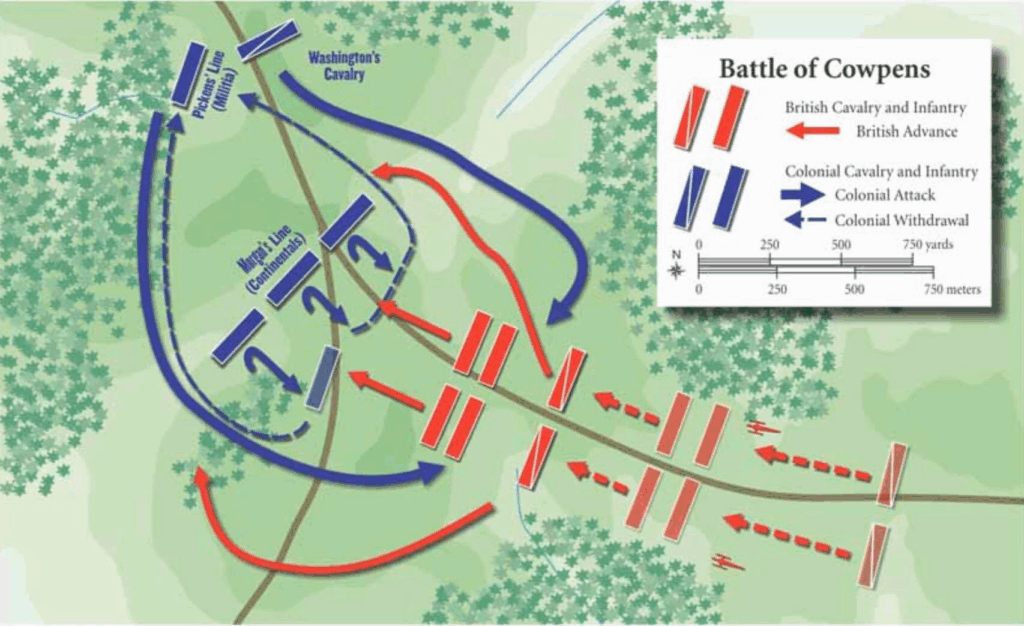
General Morgan place his most vulnerable militia in the center of his formation with his most experienced troops on the flanks along with Washington’s cavalry, plus a strong contingent of regulars behind the militia in the center. He instructed the militia in the center they had to fire two volleys at the British before they were to appear to be routed. As they pulled out and turned to the rear, the two flanks began to make their presence known along with Washington’s Dragoons.
In what turned out to be a total surprise for Tarleton’s forces, the battle turned against the British with British losses totaling 110 killed, 220 wounded and 712 captured plus the loss of their two artillery pieces.
The aftermath of the battle revealed that militia properly lead could contend with the highly trained British regulars, convincing American forces they could meet and defeat the most highly trained army in the world at that time.
“The Battle of Cowan’s Ford”, February 1, 1781 pitted some 800 militia against 2,240 British troops as the Americans tried to slow General Cornwallis and his army on the Catawba River in northwestern North Carolina.
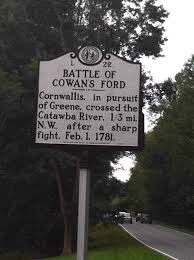
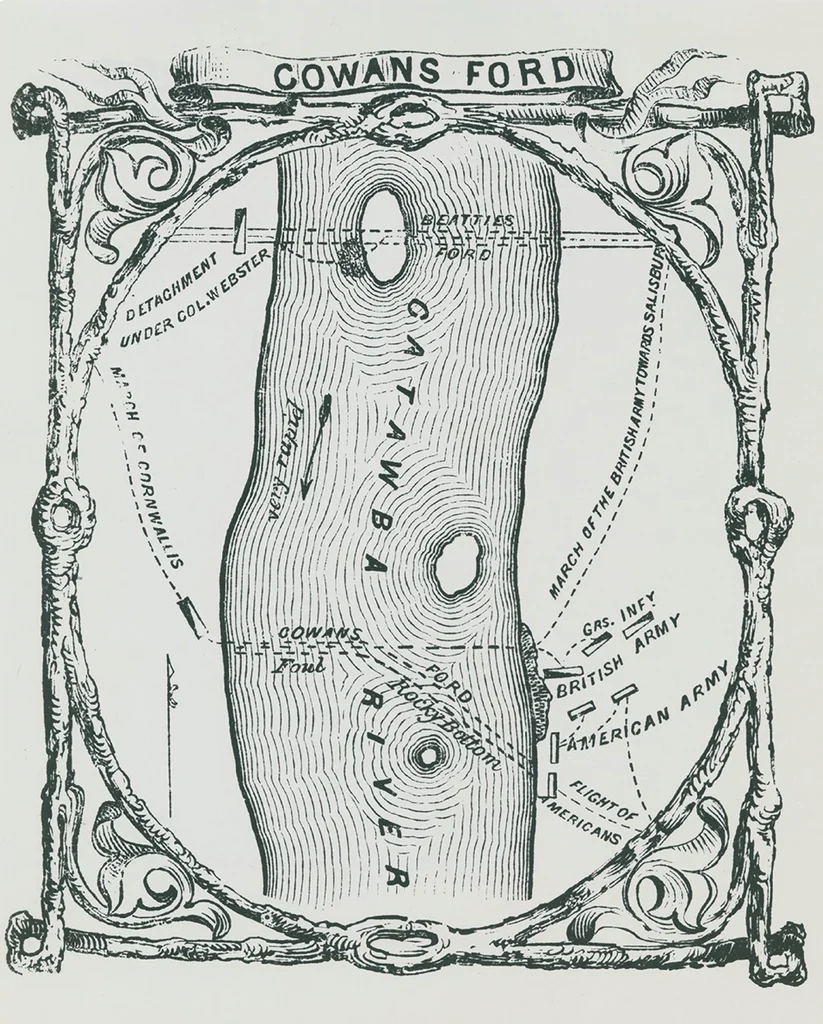
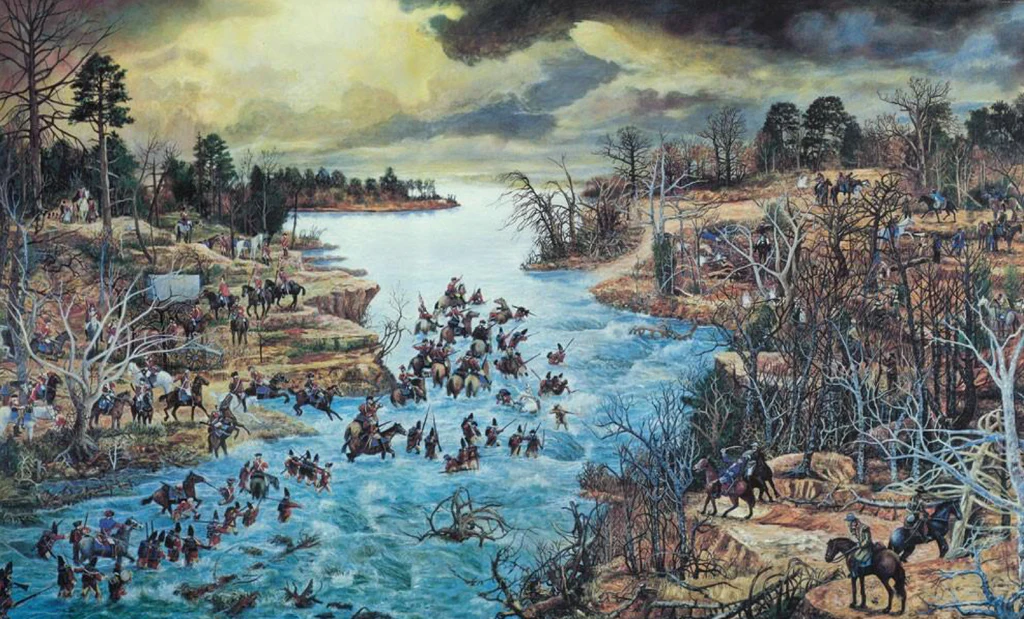
Patriots under the command of Brigadier General William Davidson confronted the British as they began to cross the river. Overwhelmed by the British, they began a slow retreat, firing as they fell back.
General Davidson was shot through the heart as he directed his small group against the British. The loses for both the Americans and the British totaled 4 dead each and a number of wounded. The battle was a British victory, but they did manage to slow the British advance, giving Major General Nathaniel Greene a chance to gather his scattered forces.
In a minor skirmish February 12, 1781, 14 year old bugler James Gillis of Colonel Henry Lee III’s (Light Horse Harry) cavalry troop was mercilessly cut down by members of Lieutenant Colonel Banastre Tarleton’s dragoons while begging for quarter. This so enraged members of Lee’s troops, they charged into Tarleton’s troopers, killing 7 immediately. Captain Cornet Miller of Tarleton’s troop arrived with reinforcements only to be captured and an additional 13 of Tarleton’s troopers to be killed in the mad melee that followed. Gillis was the only casualty for the Americans while 20 of the British paid with their lives for the cruel killing of Gillis.
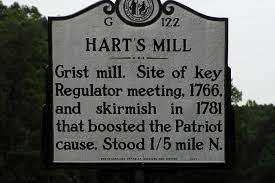
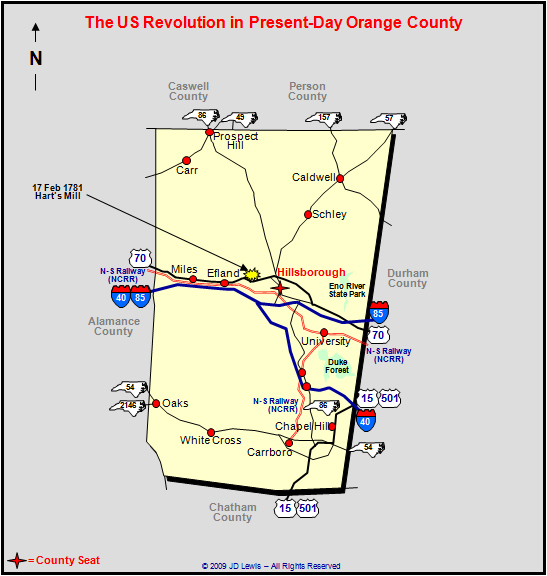
The “Battle of Hart’s Mill”, February 17, 1781 between Patriot militia and British regulars and loyalist militia was the culmination of Brigadier Andrew Picken’s search for British sympathizers in the vicinity of current day Hillsborough, North Carolina. As Picken’s scouts located the British camp, in a surprise attack, they killed 9 and captured several more while no patriots were lost in the engagement.
February 24, 1781 was an exceptional day for Colonel Henry Lee III (Light Horse Harry) as his militia was thought to be members of Tarleton’s British Legion. In the confusion, Lee’s militia attacked the loyalists, killing 93 and wounding 250 while Lee’s force suffered but 1 man wounded. This action severely damaged British efforts to recruit Loyalist sympathizers, giving the Americans a boost adding to the effectiveness of the guerrilla war in the Carolinas.
In an attempt to create a frame of government, the Second Continental Congress began the task of formalizing an agreement for the 13 colonies. On June 12, 1776, the 13 colonies appointed a committee to draft a Constitution for the several colonies. The committee consisted of 1 member from each of the thirteen colonies, The draft they constructed was finalized on November 15, 1777. The final draft was not acceptable to some of the colonies, what with the wrangling and distrust between the colonies, no agreement could be reached for some three plus years. The Continental Congress was twice forced to abandon its efforts and leave Philadelphia due to the incursion of the British Army. The delays and infighting finally came to an end with ratification on February 2, 1781 with an effective date of March 1, 1781. It would function as the Constitution of the United States until it was replaced by the current Constitution, March 4, 1789.
Walt Mow 2025