The United States and its Formative years… Part 2
The end of the Confederated Congress and the birth of the Constitutional Congress and the resulting Constitution of the United States.
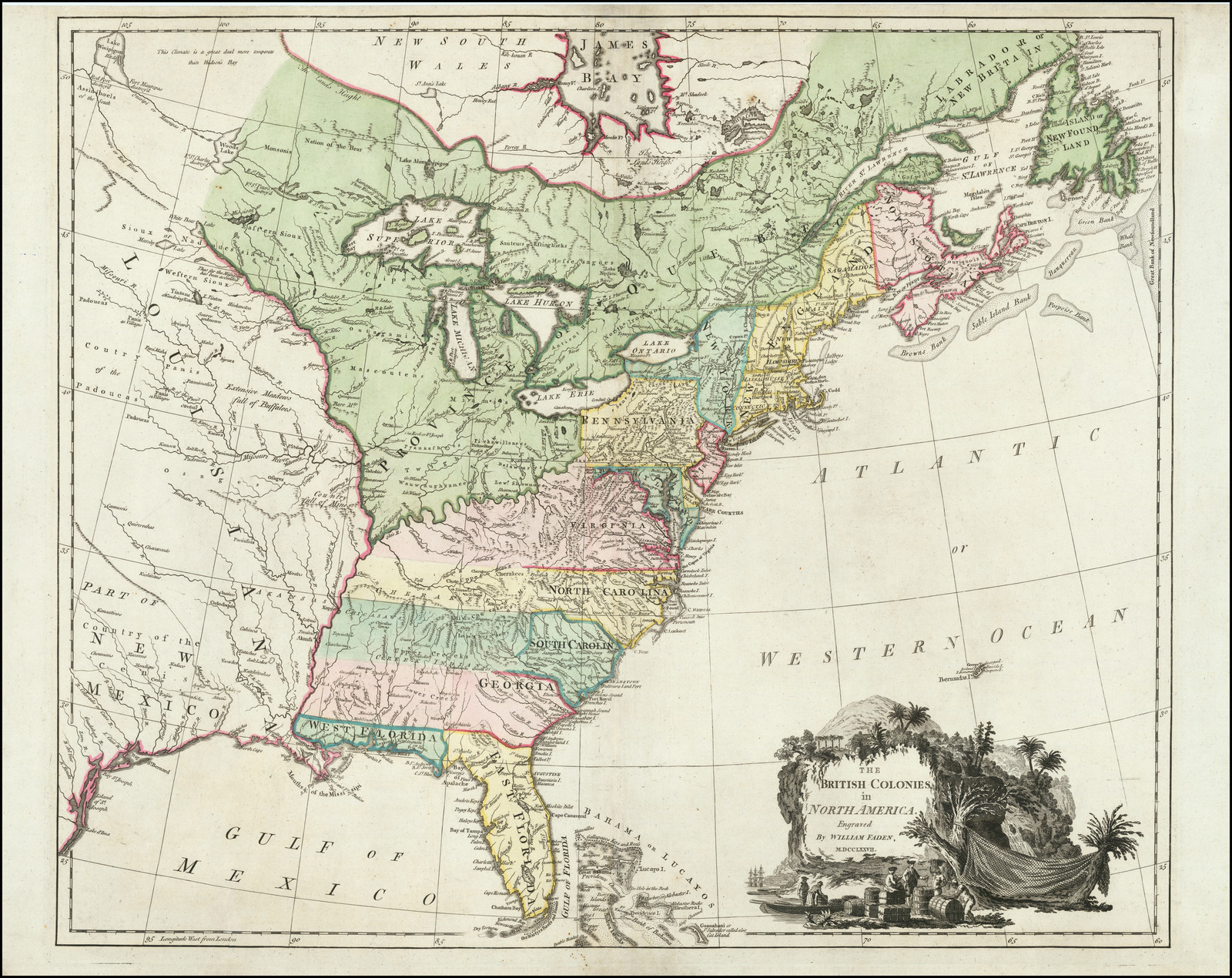
The Articles of Confederation were ratified March 1, 1781 and was the defacto Constitution of the United States until March 3, 1789. With the end of the Revolutionary War, the young nation looked forward to a period of growth and prosperity. The Treaty of Paris, signed September 3, 1783 was looked upon as the beginning of a period of restoration and prosperity, but some of the Articles of Confederation stood in the way of that dream. As the country saw the conflicts these Articles caused, the Congress began to look for ways to amend and refine the Articles of Confederation.
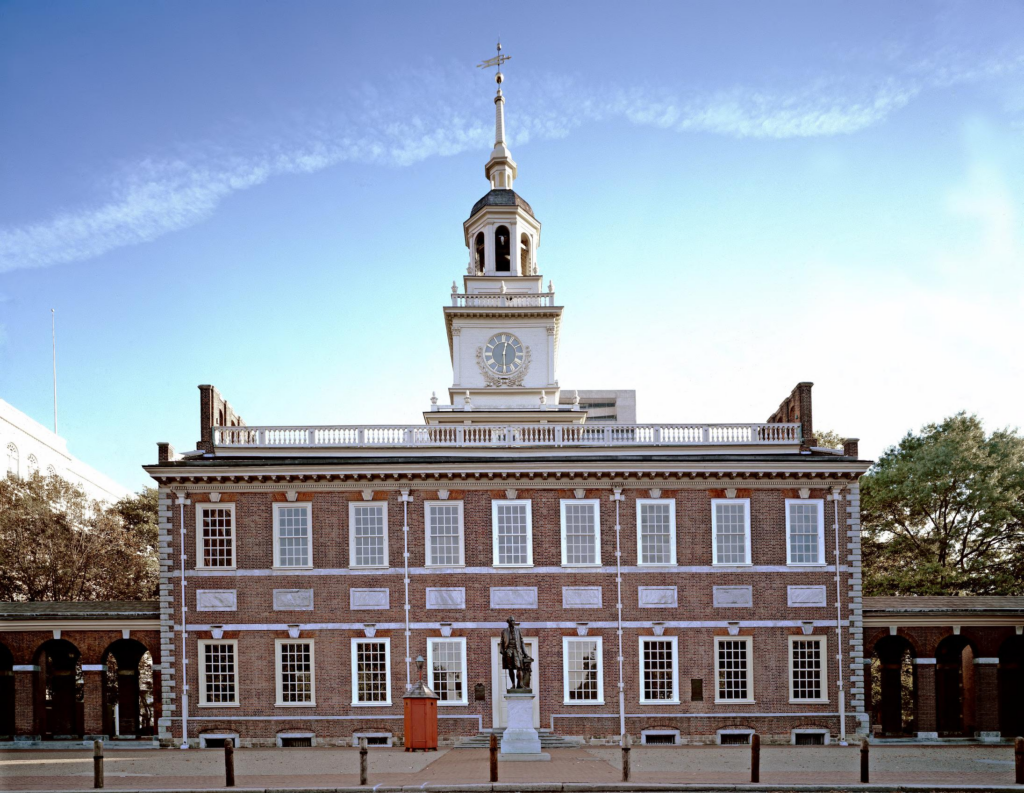
After much debate, it was decided that the Articles needed to be abolished and a new Constitution be written. Delegates to the Constitutional Convention elected George Washington to serve as President of the Convention.
After nearly 4 months of debate and discussion, (May 25, 1787 to September 17, 1787) the Constitution of the United States was finalized. On September 17, 1787 the current Constitution of the United States was signed by 39 delegates representing 12 of the states. Thus began the arduous journey to ratification.
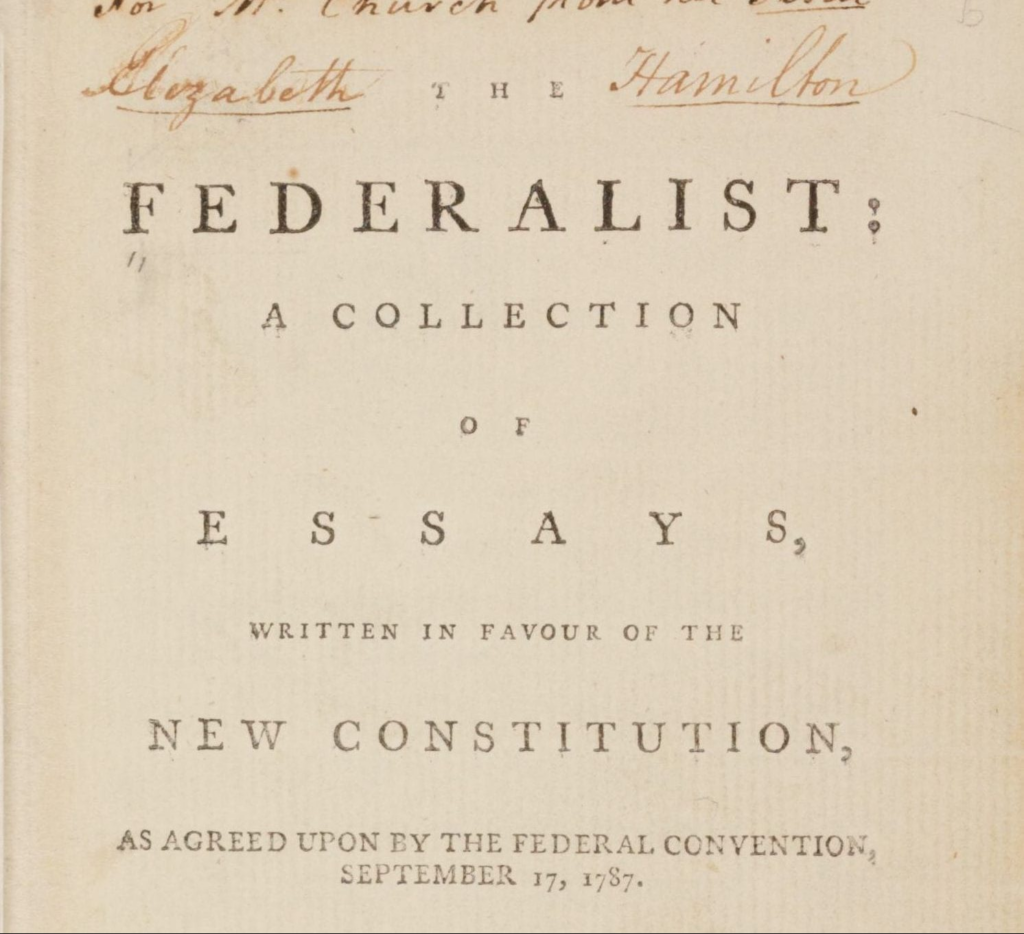
Three men began writing articles in the news papers to that end; Alexander Hamilton, James Madison and jurist, John Jay presented the arguments for ratification in a series of news paper articles that became known as the “Federalist Papers”. Ratification was finalized May 29, 1790.
James Madison became a central figure in the early stages of the convention, advancing several issues that became the backbone of the final Constitution. Among them was his belief that a strong central government was needed in order that issues such as taxation, trade, the printing of money and representation of the people be first and foremost in the formation of a new national government.
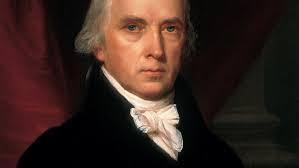
In his belief that a strong central government was needed, he was supported by Charles Pinckney of South Carolina. Pinckney also championed the idea of a bicameral legislature featuring a House of Representatives and a Senate, election of a President and a Federal Judiciary.
James Madison’s study of former republics and governments allowed him to formulate many of the articles he introduced to the final construction of the Constitution, the success of his endeavors can be found through out the Constitution. Among Madison’s works, we see his fear of the strength of majority. This convinced him of the need for Congress to have the power to veto state laws that allowed states with large populations to over-power the less populated states. This became the basis for some of the “checks and balances” of our current Constitution.
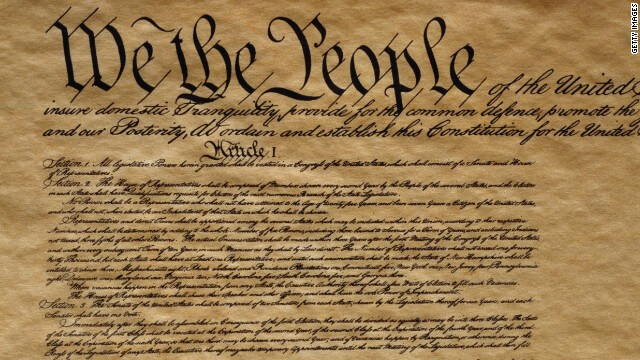
The Constitution of the United States consists of; a Preamble and Seven Articles.
The Preamble with its soaring prose begins with these immortal words:
We the People of the United States, in Order to form a more perfect Union, establish Justice, Insure domestic Tranquility, provide for the common defence, promote the general Welfare, and secure to ourselves the Blessings of Liberty to ourselves and our Posterity, do ordain and establish this Constitution for the United States of America.
It is followed by Seven Articles that lay out the Three Branches of government and the rules under which each branch is allowed to exist and govern, they are the; Legislative, Executive and Judicial.
Article 1, Section 1 of the Constitution states: All legislative Powers herein granted shall be vested in a Congress of the United States, which shall consist of a Senate and House of Representatives.
Article 2, Section 1 of the Constitution states: The executive Power shall be vested in a President of the United States of America.
Article 3, Section 1 of the Constitution states: The judicial Power of the United States shall be vested in one supreme Court.
Article 4 thru 7 consist of the enumerated powers allotted the Three Branches of the government.
Let every American, every lover of liberty, every wellwisher to his posterity swear by the blood of the Revolution never to violate in the least particular the laws of the country, and never to tolerate their violation by others. As the patriots of 1776 did to the support of the Declaration of Independence, so to the support of the Constitution and laws let every American pledge his life, his property, and his sacred honor. Let every man remember that to violate the law is to trample on the blood of his father, and to tear the charter of his own and his children’s liberty… let it be taught in schools, in seminaries, and in colleges, let it be written in primers, in spelling books and in almanacs, let it be preached for the pulpit, proclaimed in legislative halls, and enforced in courts of justice. And in short, let it become the political religion of the nation, and, in particular, a reverence for the Constitution. Abraham Lincoln
Walt Mow 2025