The United States and its Formative years… Part 3
Washington’s Presidency and the acts that he was able to construct…
(Authors Note) Although dates are necessary, the most important thing is What Occurred on that Date
George Washington was elected President of the United States as prescribed in the Constitution; the Electoral College elected him President February 4, 1789, he was inaugurated April 30, 1789 on which date he gave his first inaugural speech. This was the first act conducted under the newly authorized Constitution of the United States of America.
Washington immediately began the task of building a nation under the auspices of the Constitution. He was well aware that his responsibility to guide and construct the fledgling nation was directed by the Constitution.
On June 1, 1789 he signed the first act of the US Congress, the procedure that defined the administration of “The Oath of Office” for all elected and appointed officials of the United States.
On July 4, 1789 he signed “The Tariff Act of 1789” that established the protections for trade and he raising of revenue for operation of the new government.
July 27, 1789 he signed the act forming the Department of Foreign Affairs; this department would be renamed “The State Department” September 15, 1789.
August 8, 1789 he would sign acts creating “The Department of War” and “The Light House Act”.
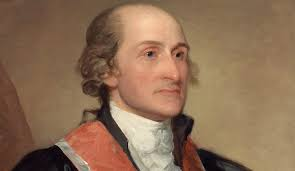
September 2, 1789 saw the establishment of “The Treasury Department”, followed by “The Official Records Act”, signs the act forming the “Judiciary” September 24, nominated John Jay the first “Chief Justice of the United States. Jay was confirmed in a unanimous vote September 26, 1789.
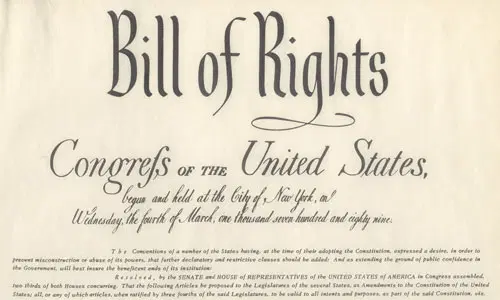
“The Bill of Rights” was adopted by the Congress September 25, 1789, the next day Washington nominated Thomas Jefferson as “The Secretary of State”. Washington rounded out the year 1789, declaring October 3, 1789 the first “National Day of Thanksgiving”.
January 9, 1790, Washington delivers the first “State of the Union Address”. Alexander Hamilton delivers a report on the state of “Public Debt” to congress, January 14, 1790. March 1, 1790 Washington signs an act establishing the “Census of the United States”; March 26, he signs an act establishing the rules for naturalization. March 10, 1790 Washington signs the first “Patent Act” followed by the “Copy Right Law” May 31, 1790. July 16, 1790 he signs the act establishing the “District of Columbia”. August 4 he signs an act assuming all debts incurred by the states during the Revolution. December 8, Washington delivers the second “State of the Union Address”. December 15, 1790, Hamilton delivers his second report on the National Debt and submits a recommendation for a “National Bank of the United States”.
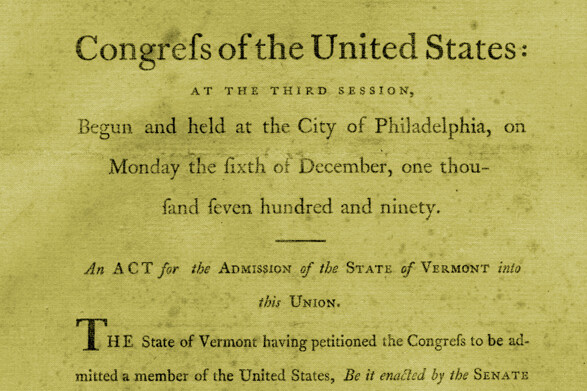
March 4, 1791, Vermont is admitted to the United Sates as the 14th US state. March 30, 1791, Washington orders the completion of a survey that establishes the boundaries of the “District of Columbia” as the permanent seat of government. September 9, 1791 the future city of Washington DC is named for the first president of the United States. October 25, 1791, Washington delivers the third “State of Union Address”. December 15, 1791, “The Bill of Rights” is ratified.
January 12, 1792, Thomas Pinckney is appointed as the first Minister to England. April 5, 1792 Washington vetoes an “Act of Apportionment of Representatives” citing a violation of the US Constitution, the veto was upheld April 6, 1792. June 1, 1792 Kentucky was admitted to the United States. November 6, 1792 Washington delivered the fourth “State of Union Address”. December 5, 1792 Washington is unanimously elected President.
March 12, 1793, Washington signs the “Fugitive Slave Act” and unilaterally declared the “Neutrality Proclamation” April 22, 1793. October 1, 1793 saw the relations between the US and Britain deteriorate after Britain ordered the confiscation of US shipping in the Caribbean for trading with the French. December 3, 1793 Washington delivers the “Fifth Annual State of the Union Address”. December 31. 1793, Thomas Jefferson resigns as “Secretary of State”.
In response to British Naval actions Washington signs an “Act to Provide Naval Armament” March 27, 1794. April 16, 1794 Chief Justice John Jay is dispatched to Britain to seek better relations with Britain. November 19, 1794 John Jay signed a “Treaty of Amity Commerce and Navigation” that also called for withdrawal of British troops from the Northwest Territories. On this date Washington would deliver the sixth “State of the Union Address”. December 1, 1794 Alexander Hamilton resigns as Secretary of the Treasury.
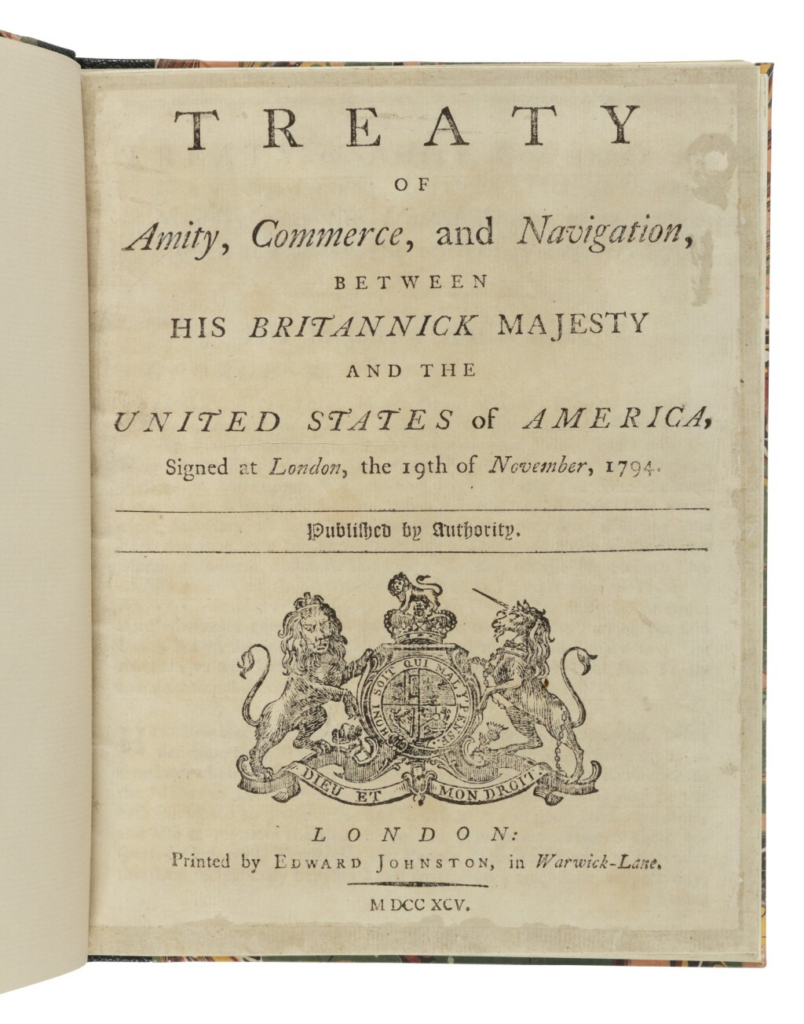
January 1, 1795 Washington signs a new bill of Naturalization and repeals the law of 1790. February 7, 1795 the 11th amendment to the Constitution is ratified. The Jay Treaty is submitted to Congress June 8 and is ratified by the Senate June 24, 1795. Washington would sign the treaty August 18, 1795. October 27, 1795 the “Treaty of San Lorenzo” would allow the US to ship goods through the Port of New Orleans without paying duties to Spain. December 8, 1795 Washington would deliver the seventh “State of the Union Address” to the Congress.
In a special message to the House of Representatives, Washington declines to provide certain papers to the house concerning the Jay Treaty March 30, 1796. June 1, 1796 Tennessee becomes a state. September 17, 1796 Washington pens his farewell address warning against foreign entanglements. November 4, 1796 Washington signs an agreement to pay an annual tribute to the Pasha of Tripoli in exchange for peaceful treatment of US shipping in the Mediterranean. December 7,1796 Washington delivers the eighth “State of the Union Address”. Also on this date, John Adams was elected the Second President of the United States.
February 28, 1797 Washington vetoes a bill to reduce any contingent of Cavalry to the US Army.
March 4, 1797 John Adams was inaugurated as the President of the United States.
Walt Mow 2025