The United States and its Formative Years… Part 6
James Madison and his administration
(Note) Dates are important, but they are like mile markers on a highway. They denote when something occurred, but what is of even more importance is what occurred on that date.
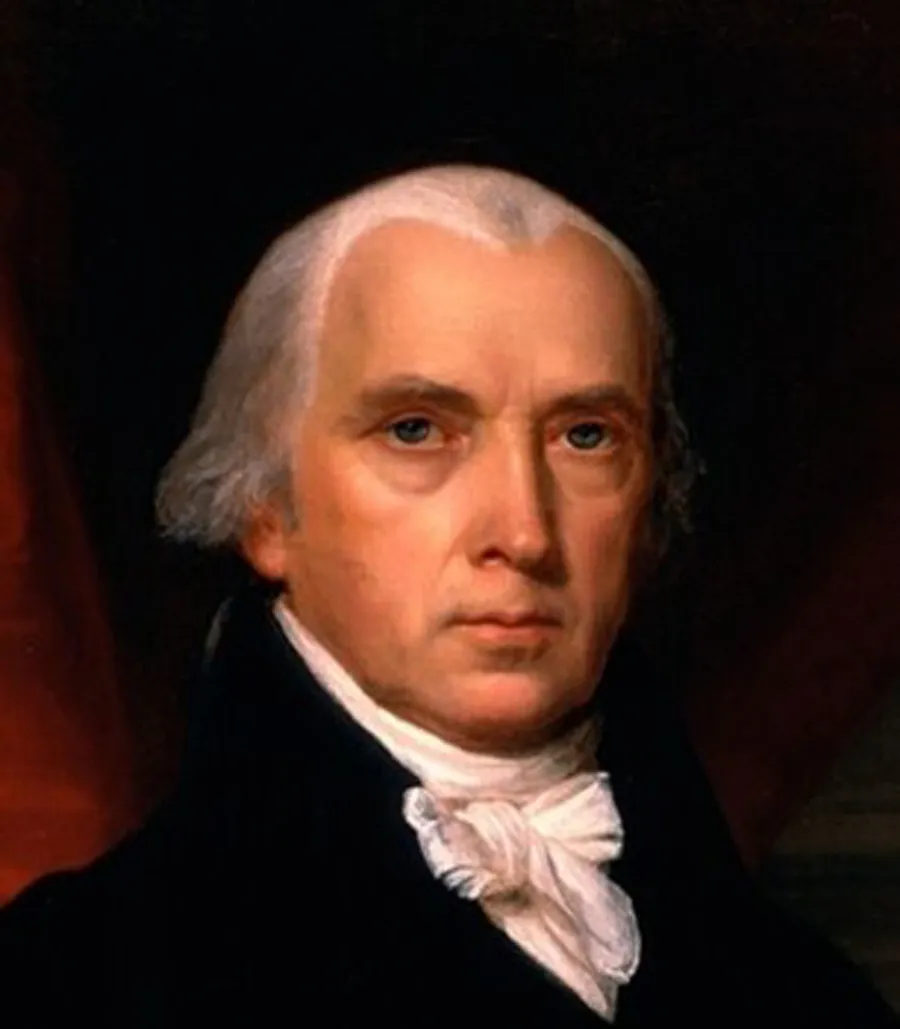
February 8, 1209 James Madison wins the election with 122 electoral votes.
March 1, 1809 Congress authorizes $13,000 to refurbish the White House.
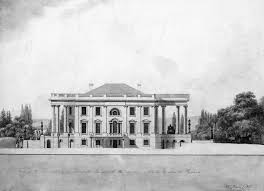
March 4, 1809 Madison is inaugurated 4th US President.
April 19, 1809 Madison revokes an embargo on British goods after negotiations with British envoy Erskine; upon learning that Britain has canceled the agreementMadison re-establishes the non-importation decree August 9, 1809.
August 1, 1809 Madison retains Albert Gallatin as Secretary of the Treasury despite congressional opposition and cabinet members disapproval.
January 3, 1810 Madison authorizes the call-up of 100,000 men for Army duty; establishes a force of 20,000 men for emergencies and re-activates elements of the US Naval forces.
April 16, 1810 the Supreme Court overturns Fletcher v Peck prompting Madison to resolve to add Republicans to the court.
May 1, 1810 Congress passes Macon’s Bill #2 restoring trade with England and France so long as European nations respect America’s trade rights.
August 5, 1810 the US issues the “Cadore Letter” that sets certain trade authorizations depending on British actions.
October 27, 1810 Madison authorizes the occupation of West Florida as Part of the Louisiana Purchase.
November 2, 1810 Madison accepts the French offer to stop confiscation of US ships and cargoes.
February 2, 1811 Madison reestablishes the Non Intercourse order against Britain.
February 21, 1811 Madison vetoes two bills, authorizing an Episcopal Church in Washington, DC; one on the 28th he vetoes a bill granting land to a Baptist group in Mississippi declaring both to be a violation of the non-establishment clause of the US Constitution.
March 3, 1811 the US Bank is closed due to the large British interests in the bank.
Arch 10, 1811 Madison replaces Secretary of State Robert Smith by appointing James Monroe.
April 16, 1811 a newspaper article states that Madison’s attitude towards Britain has hardened.
May 16, 1811, after being attacked, US Navy ship President fires on Britain’s HMS Little Belt.
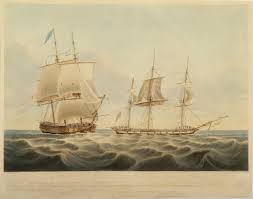
Lithograph Print; By J. Hassell after J.Cartwright; C. 1811
July 6, 1811 the new British minister advises Madison that should the non importation order stand, Britain would retaliate against American commerce.
July 24, 1811 Madison calls a special session of Congress for November 4th; on the 5th of November Madison advises the Congress of his shift of attitude with the option of a Declaration of War.
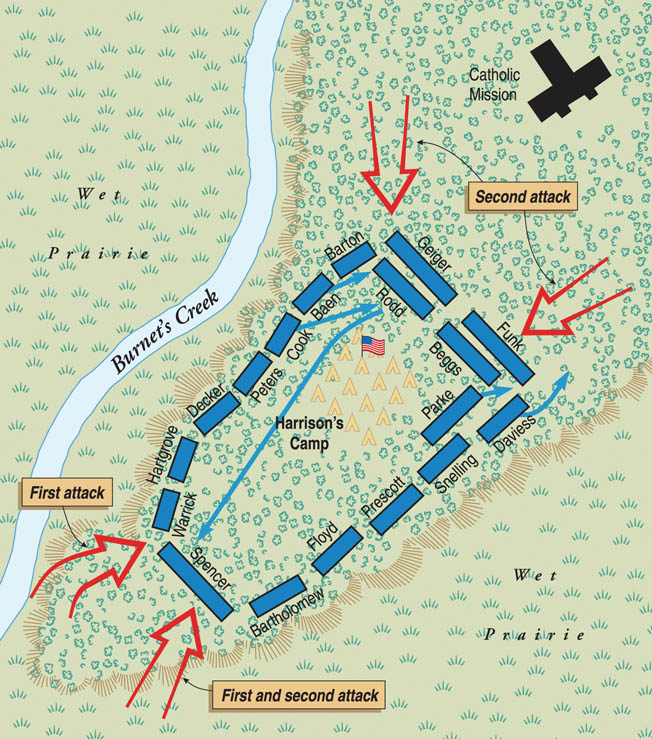
The “Battle of Tippecanoe” on November 7, 1811 is a victory that drives the Indian leader Tecumseh to flee to Canada in a prelude to the “War of 1812”.
November 11, 1812, James Monroe is confirmed as the Secretary of State.
November 29, 1811 the US Congress recommends legislation to strengthen the Army, increase the US Navy and allow for militia units to be brought under Federal control and arm merchant vessels.
January 10, 1812 Congress passes a bill to enlarge the second US Army to 25,000 men.
January 27, 1812, the House of Representatives refuse to enlarge the US Navy.
March 19,1812 Madison reveals letters of Canadian agent John Henry that the governor general of Canada is inciting rebellion in New England severely damaging relations with Canada.
March 21, 1812 the British minister informs Madison the “Orders in Council” will be continued.
March 23, 1812, news arrives that the French have sunk American ships carrying flour to British troops in Spain, leading many in Congress to call for war against France.
April 2, 1812 Congress orders an embargo effective through July 4 in order for US shippers to move their vessels to safety.
April 15, 1812 Louisiana is admitted to the US as the seventeenth state.
May 18, 1812 Madison is nominated for re-election as US President.
May 23, 1812 Madison begins drafting a message of war; June 1, 1812 Madison delivers an address to Congress asking for a “Declaration of War”.
June 4 the House of Representatives votes 79 to 40 for war; June 16 Britain revokes the “Orders in Council” in an effort to avoid war with the United States but the news arrives too late as the US Senate votes 190-13 for a Declaration of War June 17, 1812.
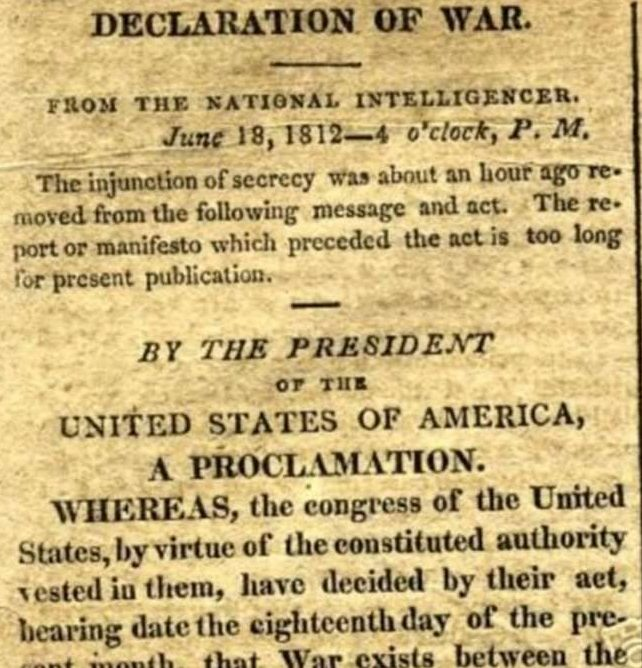
June 18, 1812 Madison issues a “Declaration of War” against Great Britain.
August 8, 1812 an Armistice is signed with the governor of Lower Canada that Madison rejects.
August 11,1812 Detroit is surrendered to Lower Canada on August 16 without firing a shot.
November 1, 1812 Madison is re-elected President with 128 electoral votes.
January 1, 1813 William Jones replaces Paul Hamilton as Secretary of the Navy.
January 18, 1813 General James Winchester surrenders at Frenchtown, Michigan after which some 60 Kentucky militia members were massacred by British Indian allies on January 22, 1813.
April 21, 1813 Albert Gallatin and James Bayard are dispatched to join John Quincy Adams as peace envoys in St. Petersburg Russia; the Senate rejects Gallatin as a representative July 19, but is later accepted when Madison declares Gallatin’s post as Treasury Secretary is declared void.
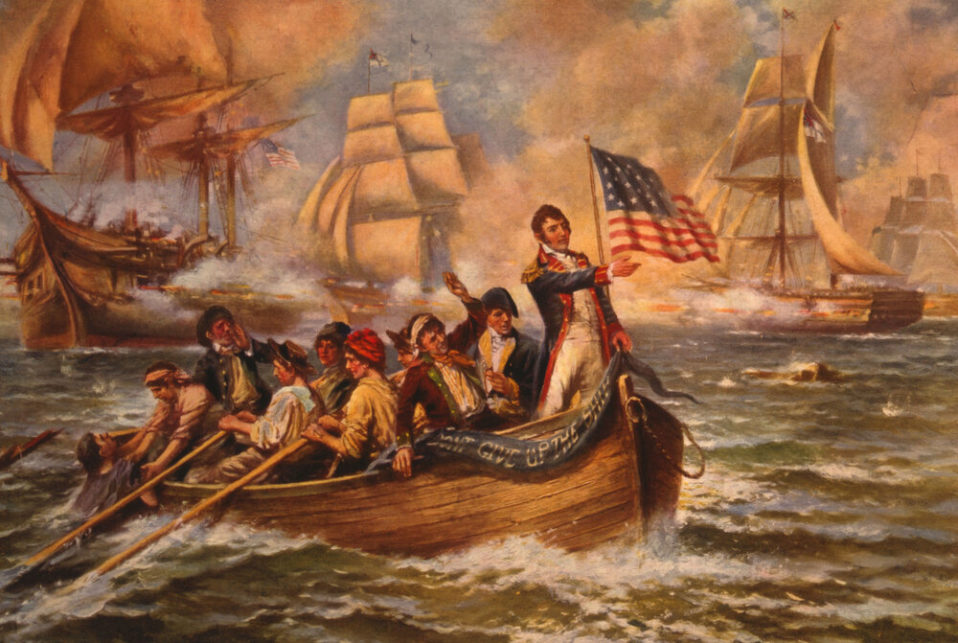
September 10, 1813 Captain Oliver Perry defeats British Naval elements on Lake Erie at Put-in-Bay.
October 5, 1813 General Harrison defeats the British and Indian leader Tecumseh is killed at the “Battle of the Thames’ ending British and Indian control of the Northwest Territories.
December 9, 1813 Madison calls for a total embargo on US exports and import of all British goods.
James Jackson of Virginia introduces a Constitutional Amendment in the House of Representatives establishing a National Bank January 28,1814 but Congress postpones consideration.
February 1, 1814 Madison appoints a commission to negotiate with Britain at Gothenburg, Sweden.
February 19, 1814 Madison appoints George Washington Campbell as Secretary of the Treasury.
March 3, 1814 Congress authorizes borrowing $25,000,000 to finance the War of 1812.
March 27, 1814 General Andrew Jackson defeats the Creek Indian Confederation and the “Battle of Horse Shoe Bend” ending the Indian obstacle to expansion towards the Gulf Coast.
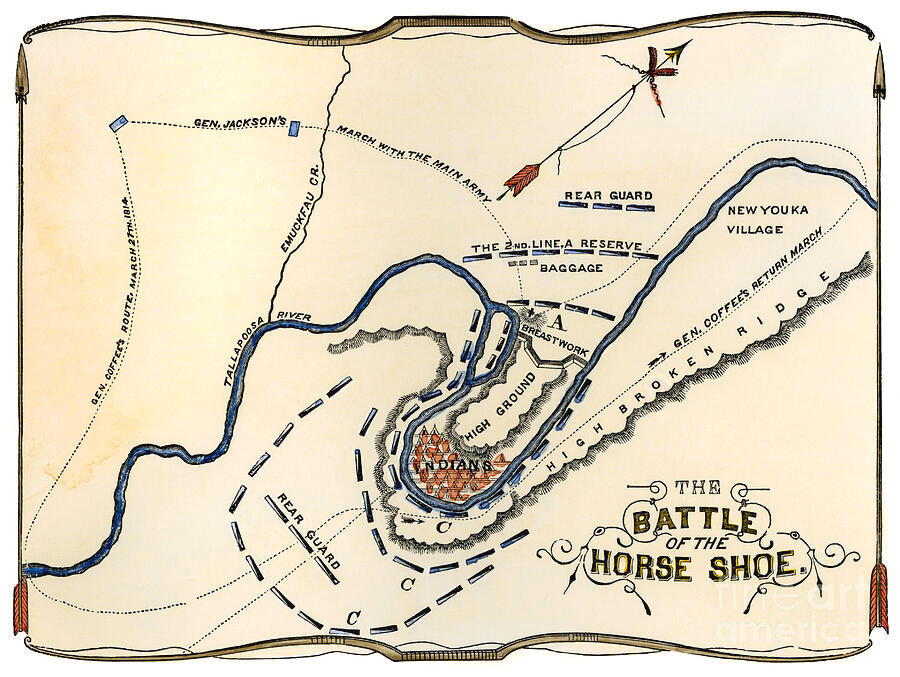
March 31, 1814 Napoleon’s European Empire collapses, Madison calls for the immediate repeal of all trade restrictions with neutral nations in a reassessment of war aims and strategies.
May 11, 1814 Andrew Jackson is made Major General of the Army against the wishes of Madison.
July 1, 1814 Madison establishes a military district for the defense of Washington and Baltimore placing it under the command of Brigadier General William Winder.
August 24, 1814 British troops burn much of Washington, DC. including the White House.
September 14, 1814 British naval and land forces are defeated at Baltimore.
September 27, 1814 James Monroe is nominated to be Secretary of War replacing John Armstrong.
October 5, 1814 Alexander Dallas replaces George Campbell as Secretary of the Treasury.
October 18, 1814 several New England states begin to seriously consider secession from the US.
November 7, 1814, Major General Jackson takes possession of Spanish held Pensacola.
December 24, 1814 the US and Britain sign the “Treaty of Ghent” officially ending the War of 1812.
January 8, 1815 Major General Andrew Jackson defeats the British at the “Battle of New Orleans”. February 13, 1815 news of the Treaty of Ghent arrives in Washington with rectification February 16.
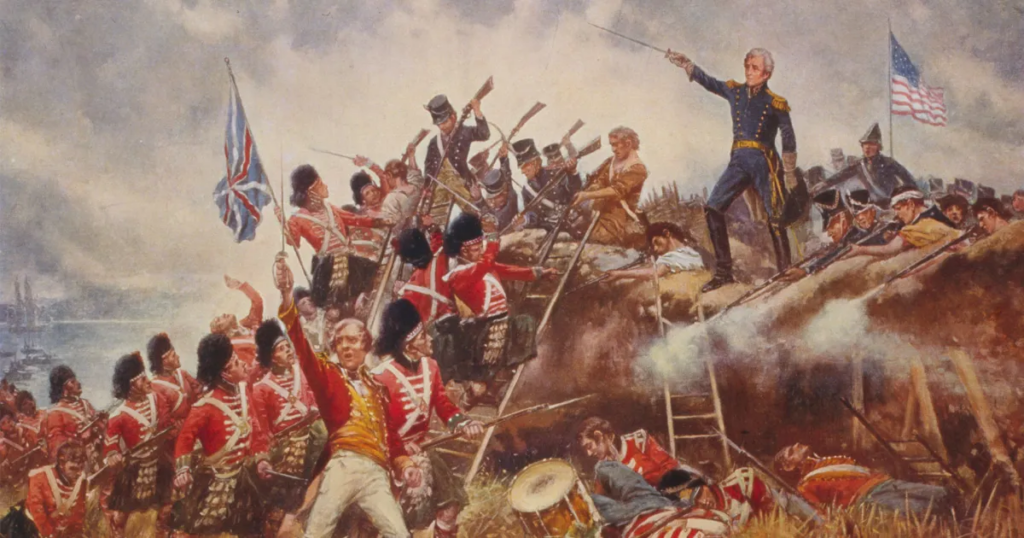
Published: c1910
May 10, 1815 Captain Stephen Decatur defeats the Algerian pirates, Algeria surrenders June 30.
June 1,1815 Albert Gallatin negotiates a commercial convention with Britain as the US continues to play a larger role in international trade and industrialization.
December 1, 1815 Madison presents his Seventh State of the Union Address calling far a streamlining of the US military, a new National Bank and tariffs to protect and promote industrialization.
April 10, 1816 Madison signs a bill re-characterizing a new National Bank set for 21 years.
April 19, 1816 Madison signs a bill allowing Indiana to become a state.
November 1, 1816 James Monroe is elected President with 183 electoral votes.
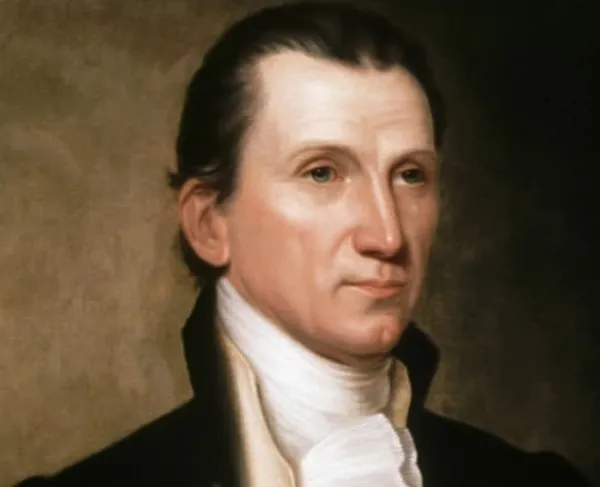
December 3, 1816 James Madison delivers his 8th State of the Union Address calling for the restructuring of the judiciary and executive branches and internal improvements.
March 3, 1817 on his last day in office Madison vetoes Henry Clay’s improvements “Bonus Bill”.
Walt Mow 2026