Ploesti … 1, 2, 3…
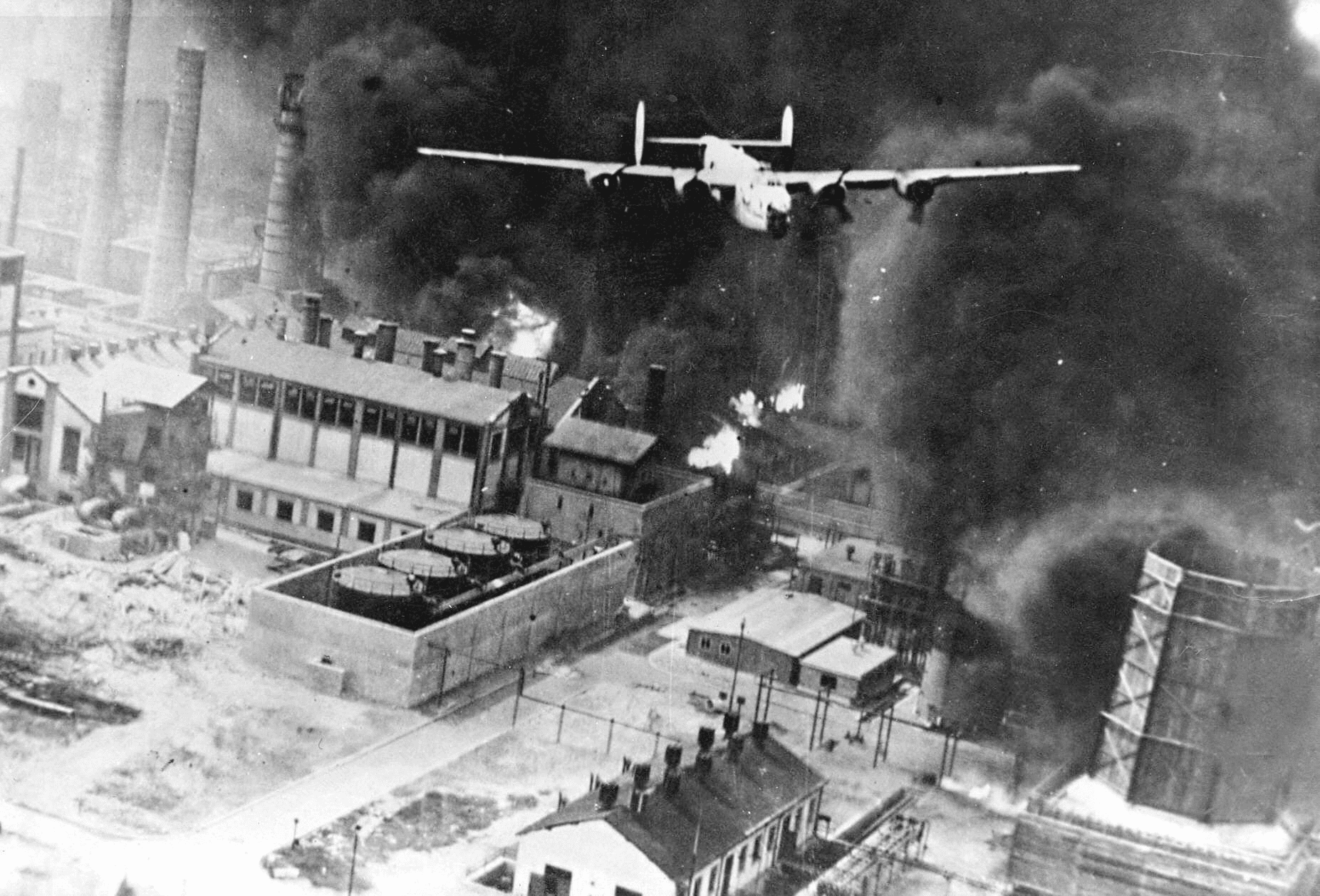
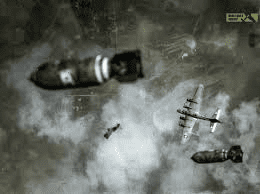
A B-24 flying over a burning oil refinery at Ploiesti, Romania. 1 August 1943
Romania’s Ploesti oil fields supplied between 30 to 60 % of the petroleum products necessary to lubricate and fuel Germany’s war machine. This is a tribute to the courage and dedication to duty by the officers and men of the United States Army Air Force in its efforts to bring Nazi Germany to defeat.
Ploesti 1…
June 11-12, 1942 the United States Army Air Corps as part of the “Halverson Project” entered the battle against the Axis Powers, sending 13 B-24 Liberators to attack Romanian oil facilities from Fayid, Egypt. 12 aircraft attacked the facilities but only 7 aircraft survived to return to a base in Syria.
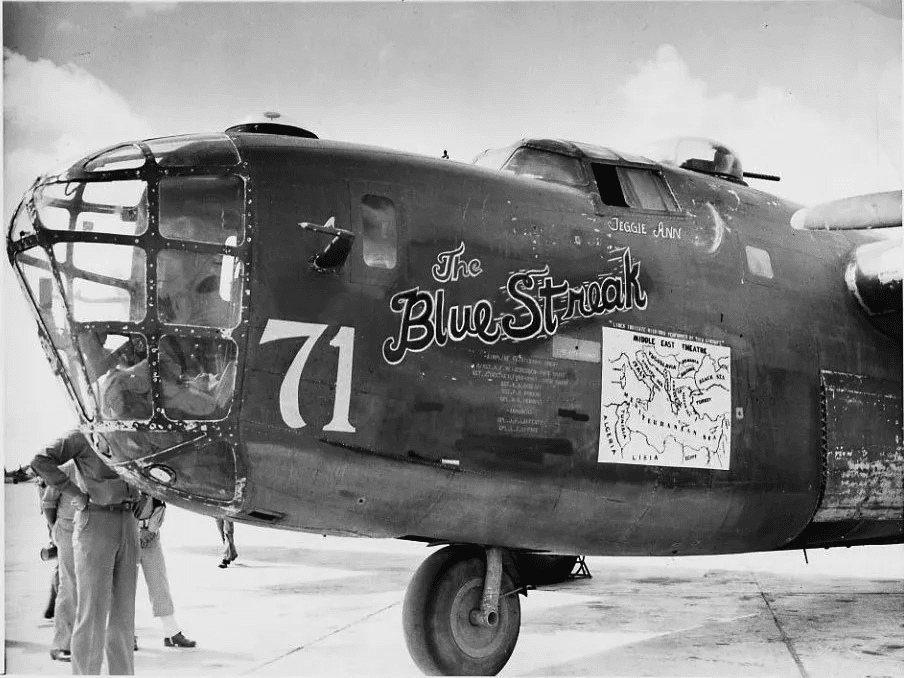
The raid did minimal damage to the facilities, but German and Romanian forces realized the refineries and oil stage facilities were at serious risk from aerial attack by bombers.
They began to make the refineries and storage facilities the most heavily fortified area against air attack of any outside the Third Reich by placing anti-aircraft batteries, barrage balloons and fighter aircraft to protect these vital resources from air attack.
This was the first US air action in the European Theater of World War II.
Ploesti 2…
Planning for Operation Tidal Wave began almost immediately after the abortive raid of June, 1942, but the lack of available aircraft and the need to strike targets and facilities in western Europe took precedence.
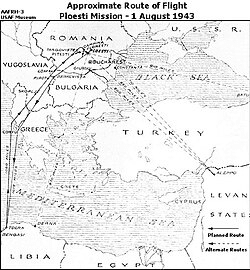
Planning resumed in April of 1943 when General Henry H. Arnold ordered his staff to continue to develop plans for a resumption of raids on the Ploesti oil facilities. Due to the distance involved, Liberators were the aircraft of choice, but the addition of bomb-bay fuel tanks was necessary for the planes to have enough fuel to attack Ploesti and return to the base in Libya.
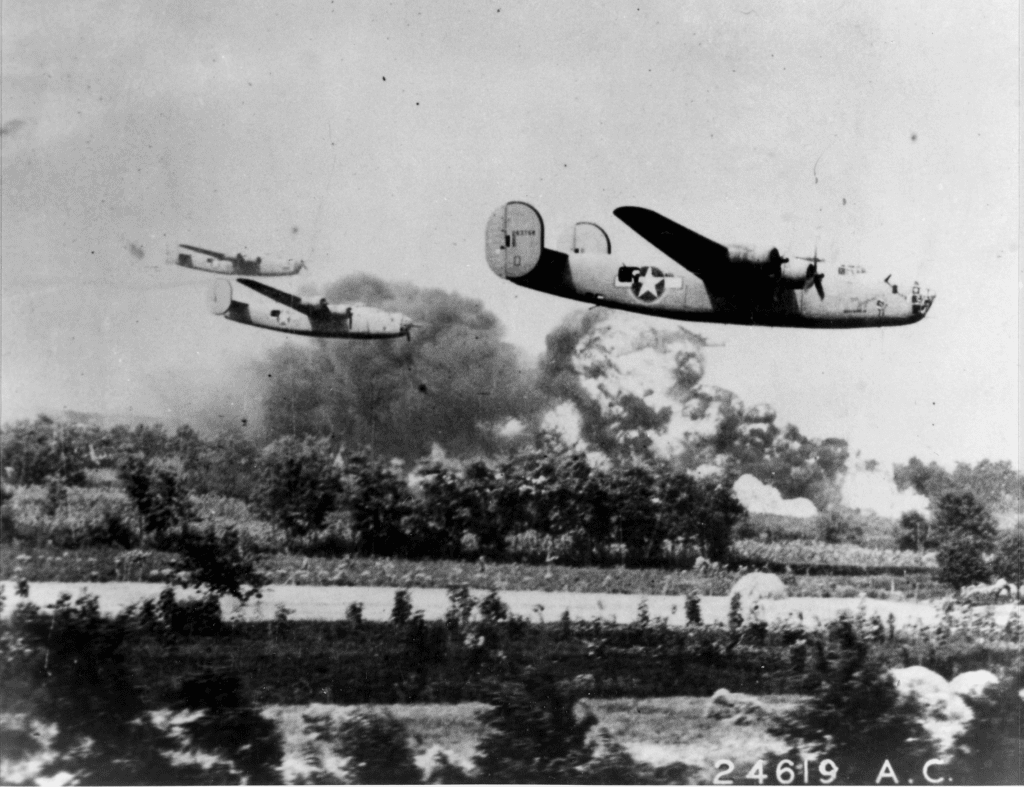
On August first, 1943, 177 B-24s began the flight to Ploesti, 162 actually arrived over the target. Of that number only 88 returned to the base, of the 88 that returned, 55 had battle damage. 310 airmen were killed or missing with an additional 190 airmen captured or interned for a devastating total of 500 airmen lost to the raid.
A number of factors contributed to the tremendous loss of airmen and aircraft; an order to maintain radio silence, navigational errors, the loss of cohesiveness due to heavy cloud cover, mechanical failures, a tactical decision to conduct the raid at low altitude and finally, discovery by German radar.
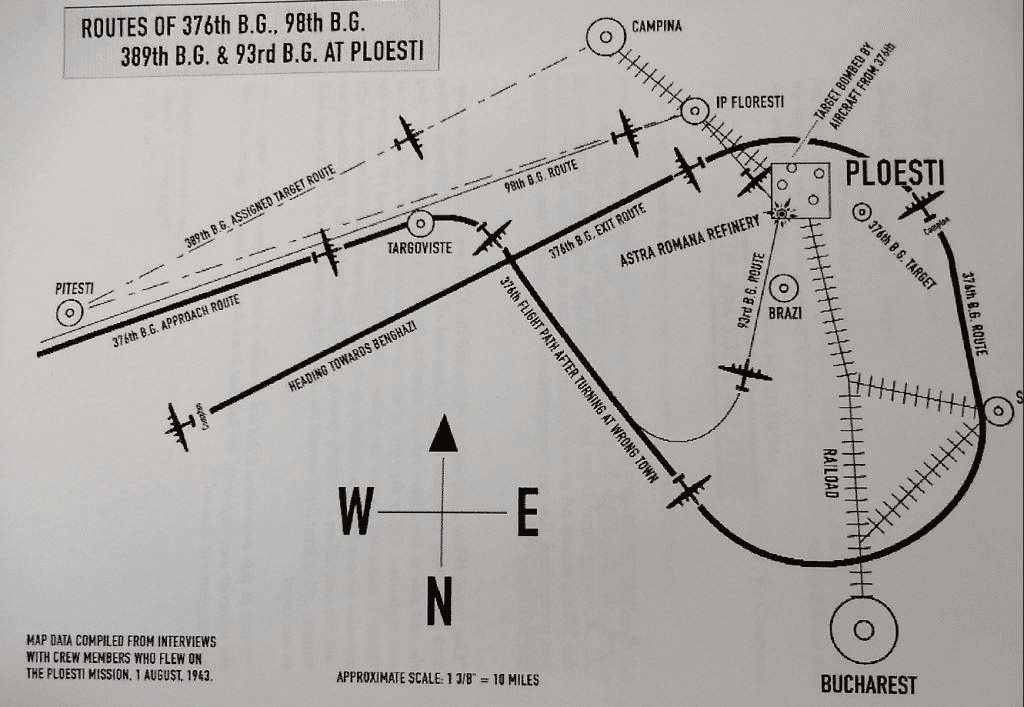
With the defenders knowing they were coming, the low level flight, the need to fly straight and level in order to drop their ordnance accurately and not all aircraft arriving at the target at the same time, decimated the overall effectiveness necessary to destroy and or reduce the refinery output.
A reconnaissance flight on August 3rd to assess bomb damage and an additional recon flight conducted on August 19 revealed that little reduction of refinery output had been achieved.
Ploesti 3…
Ploesti 3 was a series of raids against the oil production facilities beginning April 5, 1944 continuing until August 19, 1944. The raids of 1944 were not small raids, they continued to grow in the number of aircraft involved utilizing both B17s and B 24s and nearly 60,000 airmen. The total number of bombers in the raids ranged from 400 to over 700 in the spring and summer of 1944.
By April of 1944 the raids began utilizing captured air fields in southern Italy that substantially shortened the flight time and flew over large stretches of open water. This also allowed the Allies to use fighter aircraft to fly cover for the bombers, but losses still mounted with Bomber Command losing a total of 350 heavy bombers and 3,000 casualties.
Fighter pilots began to ask to be included in the Ploesti raids as “that was where the fight was”. Their contribution to the overall campaign cannot be overlooked. Bomber crews hailed the fighter escorts as allowing more airmen to not only drop their bombs where they were needed, but allowed many to return to the bases where the flights originated.
By the end of the campaign over 13,000 tons of bombs had been dropped on the Ploesti oil facilities. The conclusion of the air campaign against Ploesti would witness the end of the Marxist government of Romania and the capture of the fields by Soviet troops in late 1944.
These raids, conducted over three years, 1942, 1943 and 1944 produced numerous acts of valor, Medals of Honor, Distinguished Service Medals, Silver Stars, Bronze Stars and Purple Hearts, some being awarded posthumously.
That the Allies sought to curtail fuel and lubricants from Romania definitely helped to shorten the war in Europe and hastened the end of Hitler’s reign.
American industry and its capacity to manufacture aircraft and deliver them to the theaters of war is to be commended. Without their efforts, the war may have dragged on for years.
Author’s Note: I choose to concentrate on the raids themselves rather than the individuals during these dangerous and deadly raids.
Walt Mow 2026