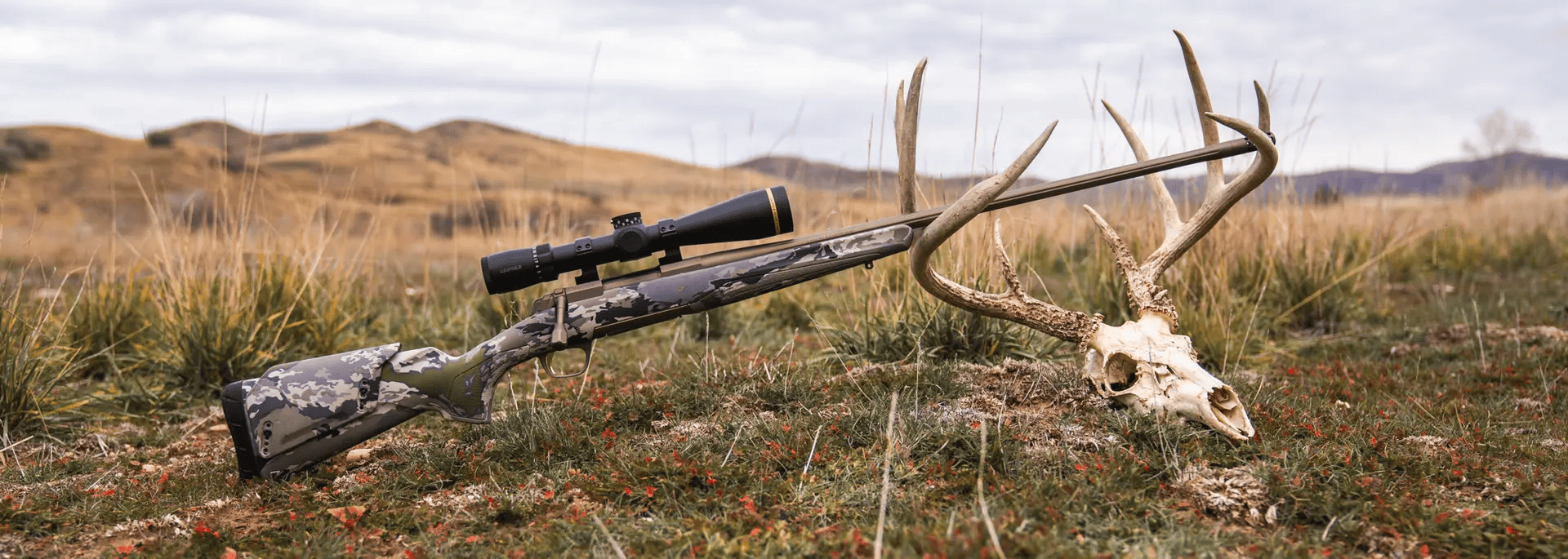
Big Game Rifles
I recently spent a couple of hours helping a new huntress pick out her first big game gun. The experience inspired me to write this piece.
We’ll start with a definition of big game. The Oxford English Dictionary tells us that big game is a noun phrase defined as large animals hunted as game.
For practical purposes here in the North America that means whitetail, black tail, sitka and mule deer, caribou, elk, moose, Pronghorn, the various sheep and goat species, bison and the three bears – white, brown and black. I suppose I should throw muskox in as well even though 99% of that harvest is done by natives. Some lists will include wolves and felis concolor – the puma or mountain lion.
What is a big game rifle? I suppose the common definition is any rifle that you can legally use to harvest big game in an ethical manner. That said, one size does not fit all. Are you chasing whitetail in the North East? Your choice there will be far different to what you would use for the same quarry in West Texas.
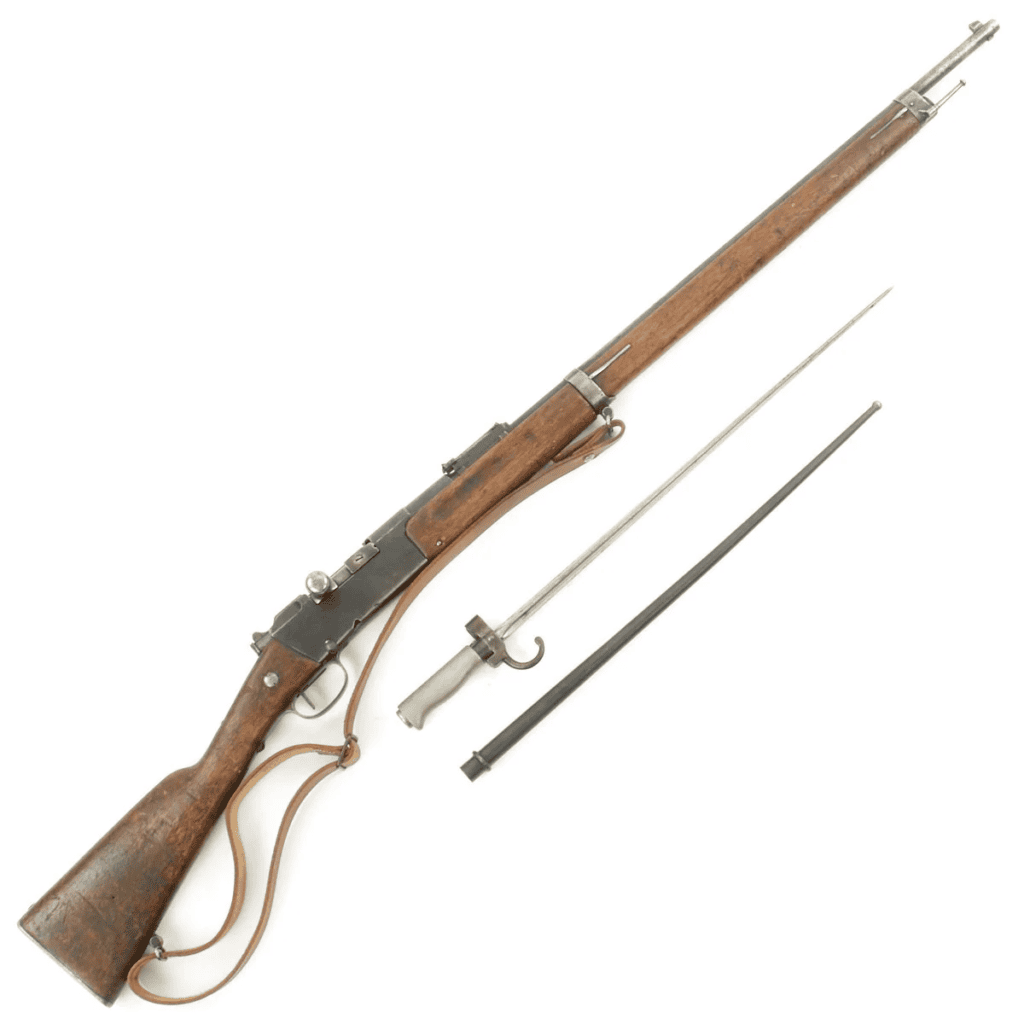
Those of you who have followed my firearms and hunting writing over the years know I am – generally speaking – firearm agnostic. I typically do not care about what kind of action the firearm is as long as it is safe to use and effective at the task. If you tell me your favorite rig is a bubba’ed err sporterized 1886 Lebel, all I have to say is great, how well does it shoot? Am I privately judging you? A little, but more because you let bubba at a gun than the fact you hunt with it. I have said this before: use what you have.
Now, are there better choices out there? Most indubitably. Lets take a look at the most common types of rifles for big game hunting. For most of us, there are 4 choices: Bolt action, semi-auto, lever action and single shots. You might be able to find an old slide or pump action rifle like the Remington 760/7600 but I wouldn’t go looking for one. And there are double rifles around, but they are a) expensive and b) typically chambered in African calibers that are unsuitable for most North American game. Your editor has hunted with all of them – including double rifles – at some point in his life.
Each of the action types have pros and cons. Bolt action rifles tend to be more accurate than their semi-auto and lever cousins but take longer to cycle for a follow-up shot. The same can be said for the single shot rifles. Semi-autos are -usually- accurate enough for hunting and offer lightning quick followups, but they are not legal everywhere. Lever guns tend to be pretty quick on the follow-up, but not particularly accurate. Levers, mostly because of the cartridges they chamber, aren’t all that useful at longer ranges. (As always, there are exceptions).
At this point, the vast majority of hunting rifles being sold are bolt actions. Why? While I cannot say for sure, a lot of it has to do with the accuracy piece. In the immediate post WWII era right up until the 1990s, the best accuracy you would see out of a factory sporting rifle came from bolt actions.
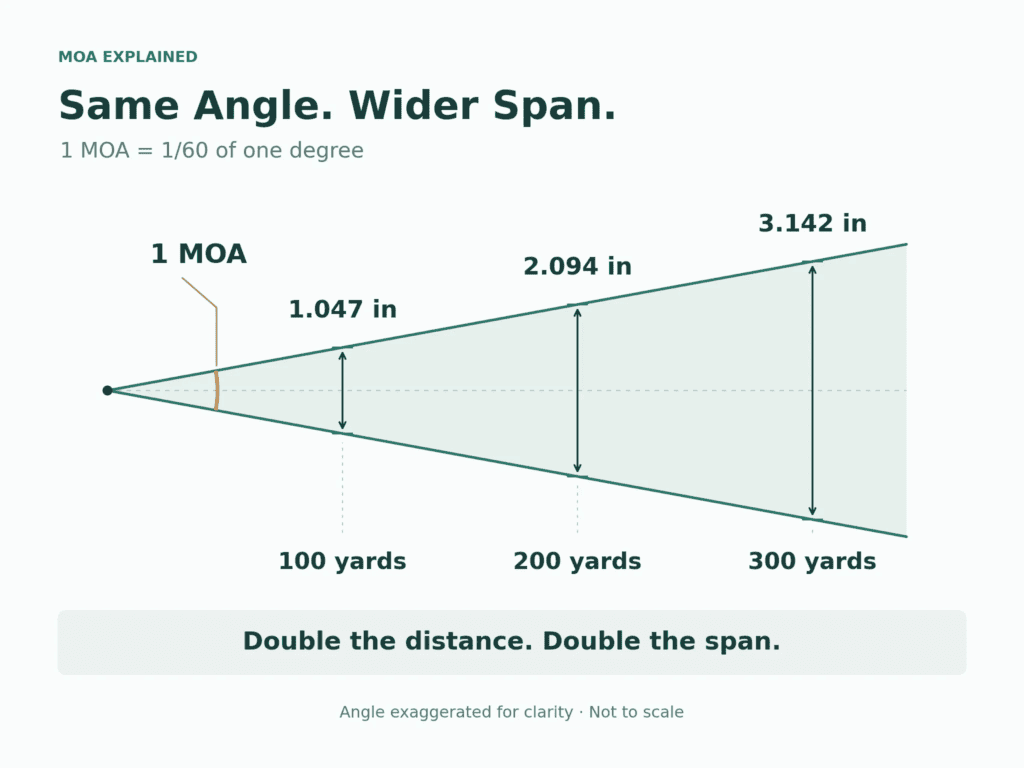
I suppose I need to define what MOA is. Minute of Angle is the most common measurement of shooting accuracy used today. 1 MOA is equal to a spread of 1.047 inches at 100 yards. Most shooters round that down to 1 inch at 100. At 200 yards, a one MOA group is equal to 2″, 3″ at 300 and so on. You may occasionally see accuracy (angular distance) described in mils or milradian. They measure the same thing, but do it differently. 1 mil is equal to 3.6″ at 100 yards or 10cm at 100m. For 99.99% of you reading this article, forget about mils. I include it because you may see mil adjustments on optics. They have become more and more common over the past 10 or so years.
Back to the previous point, until recently, bolt actions were typically the more accurate choice. Today that remains mostly true. Lever and semi auto guns are typically less accurate. As with everything, there are exceptions. However, of the dozen or so lever actions in this editor’s gun safe, none shoots better than 4moa even on a good day, and some are considerably worse. I have hunting semi autos that will shoot 1-2moa and I have hunting semi autos that shoot 4moa+. Of the bolt guns that I own and would use to hunt, meaning not anything from my considerable collection of milsurps, the worst shooter I have does 3moa consistently. It is a Winchester Model 54 chambered in .270 Winchester with a 1930 production date. Most of the bolt action rifles produced in the last 15-20 or so years that have passed through my hands is capable of shooting groups half that size or smaller.
What am I saying? If – and it is a big if – you are looking for a new big game rifle look for a bolt action.
Much ink has been spilled on what caliber is best for what game in what situation. However, there seems to be a consensus about how much energy is needed. The common number you will see for medium game – the deer species, sheep, goats and pronghorn – is 1000 ft-lbs of energy on the target. You’ll see 1500-2000 ft-lbs for elk and black bear and 2500 for moose and brown bears bandied about commonly.
Are those numbers the be-all end-all? No, not even close.
Lets take a look the venerable .30-30. That cartridge is responsible for more meat in the larder than most other calibers combined and it falls short of even the 1000 ft-lb number awfully quickly. You can see from this chart, the 170gr Federal Powershok load falls below that threshold by 200 yards.
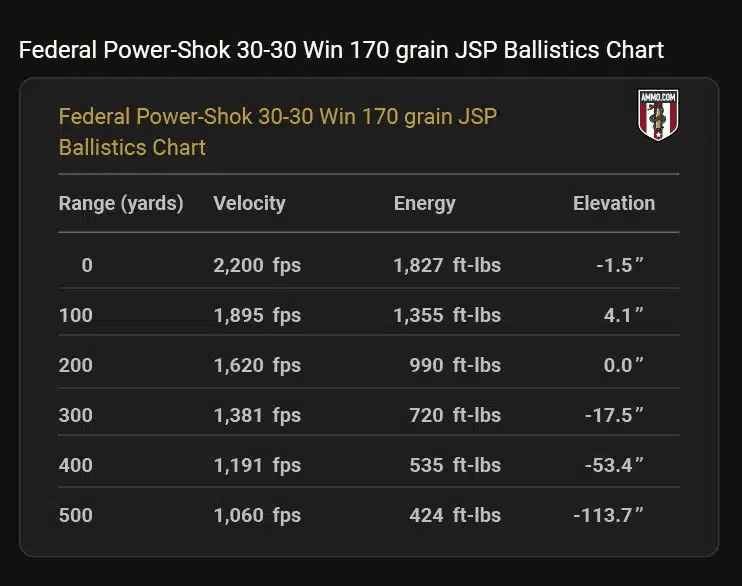
Despite that, thousands of whitetail, muley, elk, moose and black bear fall to this round every year. Does that mean you should run put and pick up a .30-30? No, there are far more effective cartridges (in better platforms) available.
My caliber recommendations are going to vary according to what and where the person intends to hunt. Whitetail and black bear anywhere east of the Mississippi? 7mm-08 or .308. Mule deer in the west, same calibers and maybe add .30-06. Elk? 280 Ackley Improved is the lightest I’d go, but I’d look at one of the magnum .30 calibers. Grizzly and brown bear (yeah, they are the same critter genetically) get a .338 magnum or larger. Same with moose.
I am going to go out on a bit of limb here and make a definitive statement about what a new hunter should look at for their first big game rig. It should be a bolt action with a synthetic/laminate stock. It should wear a mid-priced ($200-300) variable optic in the 3-9 to 4-12 power range. If you are budget minded, the Savage Axis II is a fine choice in the sub $600 range. For a bit more money, the Tikka T3 and Bergara B14 are good choices in the $900 range.
For the record, the rifle I reach for 90% of the time when I am going deer or bear hunting here in NY is a Tikka T3 wearing a Meopta Meopro 4-12×42. It’s stainless in a laminate stock and chambered in 7mm-08. I have cleanly killed whitetail out to 500m (I could do so a bit further with this setup, I just haven’t had an opportunity.) and black bear out to 275. The other 10% of the time I grab a Browning X-bolt chambered in .280 AI. That rifle wears a Vortex Venom 3-15×44. Are either of those choices the right one for you? Maybe, but not necessarily. They work for me.
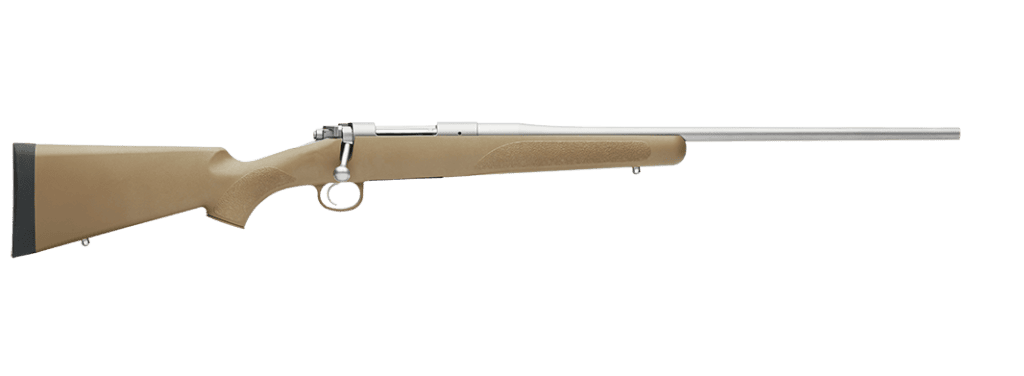
Oh, and the young lady that inspired the article? We found a very lightly used Kimber 84M Hunter chambered in .260 Remington. I mounted a Vortex Diamondback 4-12×42 I had laying around. All in it cost her less than $600.