The American Revolution Part 15
“The Battle of Mobley’s Meeting House”, June 8, 1780, Colonel William Bratton, leading a small contingent of American militia surprised a group of Loyalist militia that had been terrorizing local patriots and taking the property of the locals. Though there were few casualties, some of the Loyalists were injured during the encounter when they decided to go down a steep embankment to the Little River. Much of the seized Patriot belongings were recovered and returned to the rightful owners. A number of the Loyalists were captured and sent to North Carolina to be held as prisoners of war. This was a minor engagement, but it gave the flagging Patriots and the Continental Army a boost in morale.
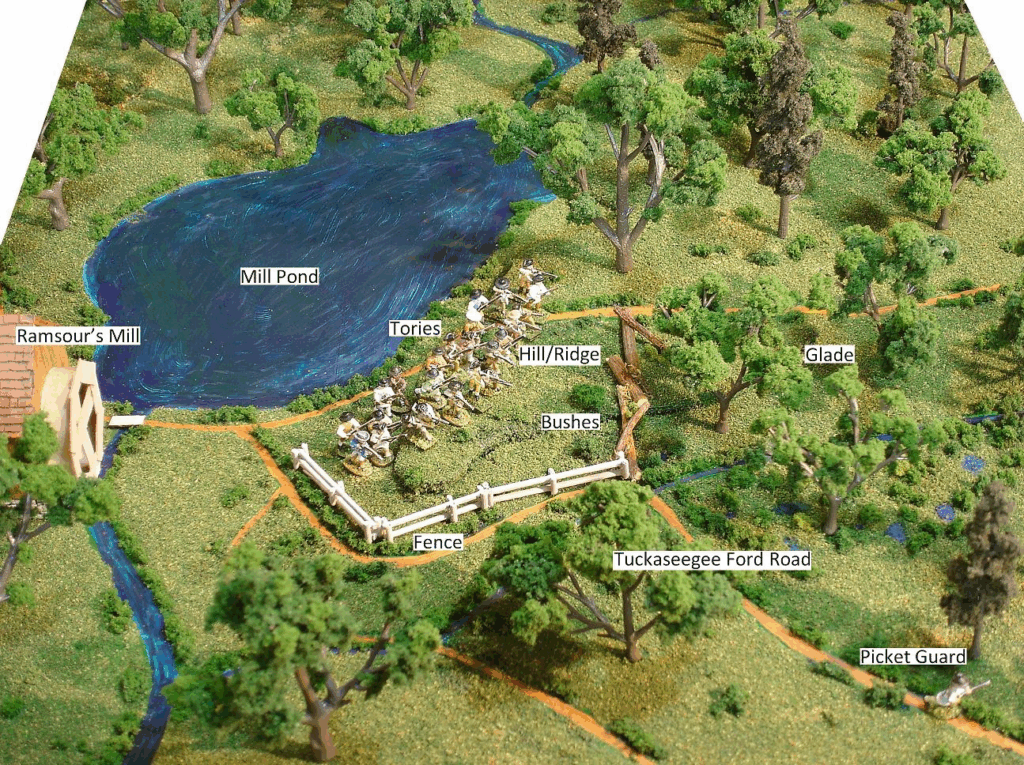
A foggy morning, June 20, 1780, saw an outnumbered group of Patriots defeat a group of Loyalists in a fight that saw many of the combatants battle members of their own family. Fratricide was not uncommon in this most unusual engagement near present day Lincolnton, North Carolina. The battle would later be called “The Battle of Ramsour’s Mill”. It highlighted the rancor that much of the population felt for members of their own family throughout much of the southern colonies, something that was not as prominent in the northern colonies.
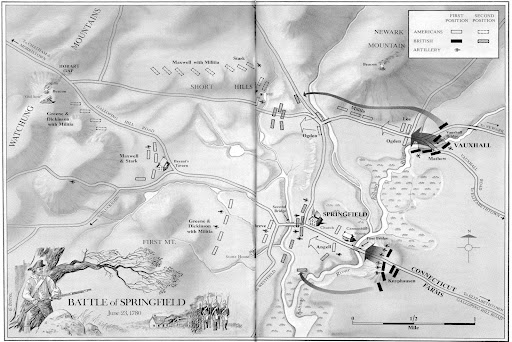
In a second attempt to lure General Washington’s troops out of Morristown, New Jersey, Hessian General Knyphausen once more attempted to drive his troops to Hobart Pass, thereby forcing General Washington into an engagement that gave the mixed Hessian and British force an advantage. They were foiled in this desperate attempt by Major General Nathaniel Greene commanding a force numbering about 2,000 by ordering the removal of planking of two bridges across the Rahway River.
As the battle advanced, the number of Patriot militia continued to grow, forcing Knyphausen and his stalled attack to reconsider his attack plan and began to withdraw on June 23, 1780 allowing the Americans to claim another victory against a force of superior numbers at “The Battle of Springfield”.
In a major turn of events, patriot militia defeated Captain Christian Huck, a member of Tarleton’s Loyalist Legion, in an early morning surprise due to Huck’s slack security details. This July 12, 1780 action was a turning point in the war in that patriot militia began to gain the upper hand in what was increasingly a guerrilla war that the British found they were unprepared for.
Captain Huck’s ruthless tactics were a driver of the growing resistance by roughing up the wives of supporters of the rebellion, threatening to hang any he found to not support the Crown, not leaving the families with enough food stuffs to survive and stealing horses and draft animals the citizens needed in order to farm. Many of the southern patriots began to join Thomas Sumpter and Francis Marion in the growing guerrilla war. This action was the first of a string of partisan militia victories in South Carolina.
“The Battle of Bull’s Ferry” was an attempt by Brigadier General Anthony Wayne’s troops to destroy a block house that defended British activities in the area. Nearby, they kept a herd of cattle to feed the British soldiers in nearby New York. In a two day siege (July 20-21, 1780) of the block house, Wayne was not able to take the stockaded position, but Major “Light Horse” Harry Lee was able to capture the herd of cattle and drive them away. The war in the northern colonies had become a series of small raids as the majority of the war was conducted in the southern colonies.
This time frame in the Revolution became known as the doldrums in the northern colonies.
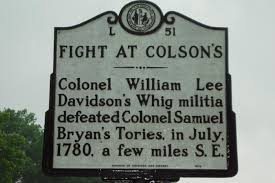
Another victory for American militia happened on July 21, 1780 when Colonel William Lee Davidson with a force of 250 militia defeated a Loyalist force of 400 at “The Battle of Colson’s Mill”. Although Davidson was severely wounded, his second in command, Colonel Francis Locke rallied the patriots and drove the British Loyalists from the field.
The British outpost at Hanging Rock, South Carolina was surprised on the morning of July 31, 1780, by a group of mounted dragoons under the command of Major William Davie in order that the command of Colonel Thomas Sumter could attack the British outpost at Rocky Mount, South Carolina. While Davies’s part of the plan went on without a hitch, Sumter’s attack of August 1, 1780 was not a success. But it did make the British aware that the back country of South Carolina was not safe for the British Loyalist militias.

A few days later, newly commissioned Brigadier General Thomas Sumter attacked the British outpost at Hanging Rock on August 6, 1780. In what turned out to be a hard fought 3 hour battle that left many without ammunition, Sumter was unable to capture the outpost. It was still an American victory as Sumter’s 800 militia bested 1,400 British Loyalists. American losses were 53 killed and wounded versus 200 Loyalists killed and wounded. Sumter’s reputation had just begun.
Walt Mow 2025
–