The American Revolution… Part 20
“The Siege of Augusta” began May 22, 1781 and ended June 6, 1781. Brigadier General Andrew Pickens and Lieutenant Colonel Henry “Light Horse Harry” Lee joined forces to place the garrison holding Augusta by loyalist Lieutenant Colonel Thomas Brown under siege by building a 30 foot tower that allowed Patriot forces to fire into Fort Cornwallis, the major defensive position guarding the city of Augusta. Brown surrendered the fort to General Pickens who then took possession of the city along with Colonel Lee.
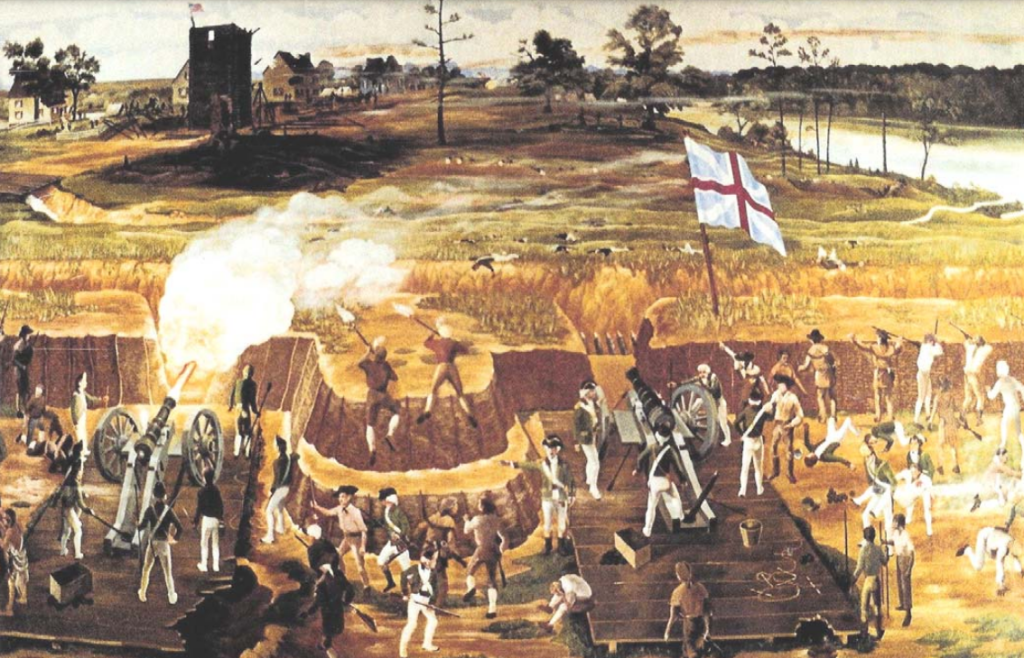
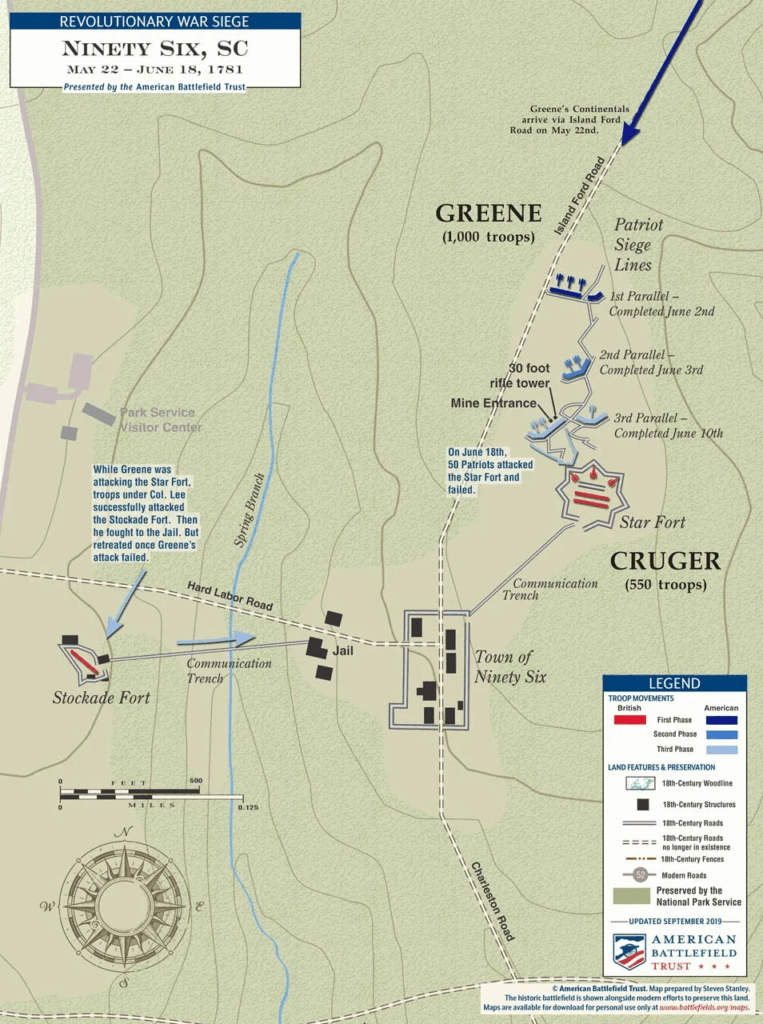
The back country of South Carolina would come under Patriot control due to the efforts of three militia leaders, namely Thomas Sumter, Marion Francis and Andrew Picken’s. The British held a precarious hold on the colony of South Carolina with the post called Ninety Six and the port of Savannah. Major General Nathaniel Greene placed the post of Ninety Six under siege May 22, 1781 but was unable to dislodge the British garrison and ended the siege June 19, 1781. leaving the post in the hands of British forces. Had patriot engineer Colonel Kosciusko had time to finish his plans, Ninety Six might have fallen to Greene’s troopers but the advance of Lord Rawdon’s numerically superior force forced Greene to abandon the siege.
A minor skirmish between loyalist and patriot militias on June 8, 1781 that would later be called “The Battle of Cox’s Mill” saw the loyalist routed by the patriots, forcing the loyalists to withdraw to the Deep River in Randolph County, North Carolina.
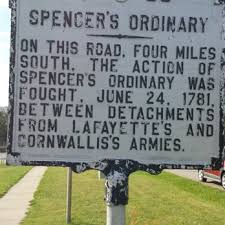
“The Battle of Spencer’s Ordinary”, an inconclusive action on June 26, 1781 was conducted by elements of Generals Cornwallis and Lafayette’s army’s. As neither side could drive off the other, they both withdrew to the safety of the larger armies.
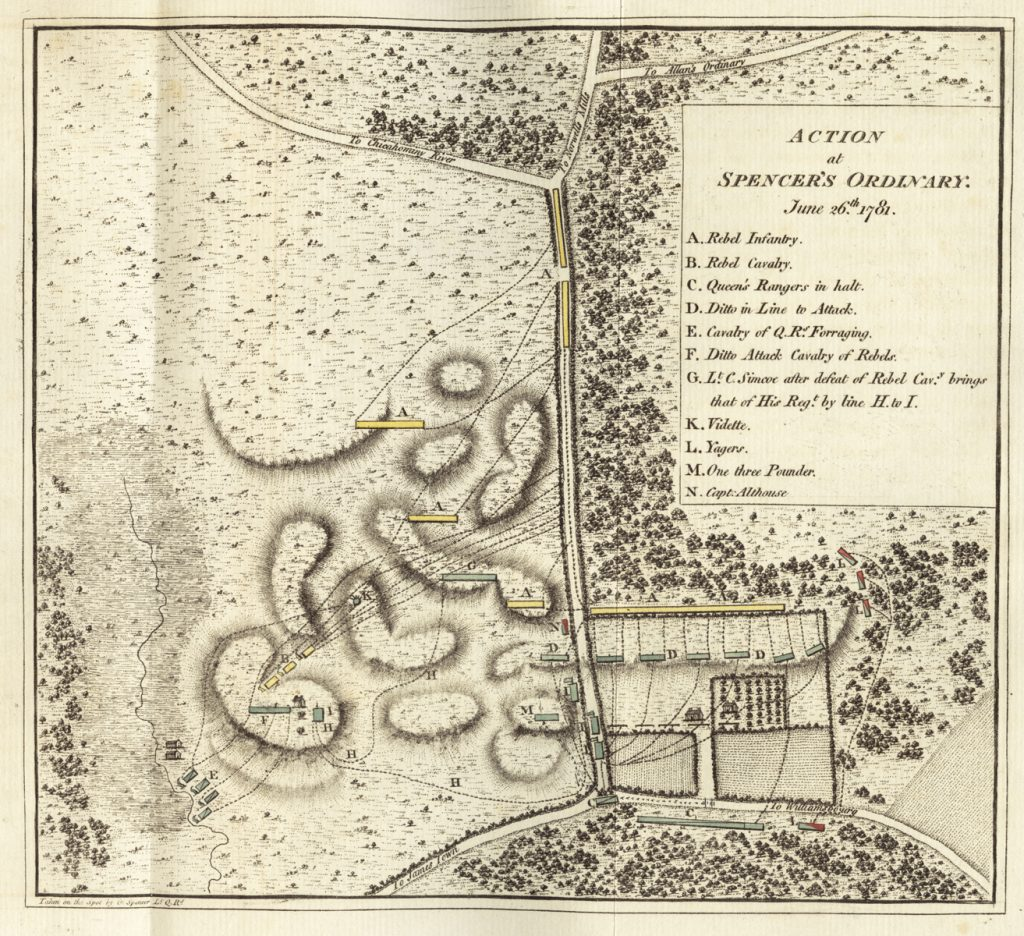
John Graves Simcoe’s map of the action at Spencer’s Ordinary. (Norman B. Leventhal Map & Education Center, Boston Public Library)
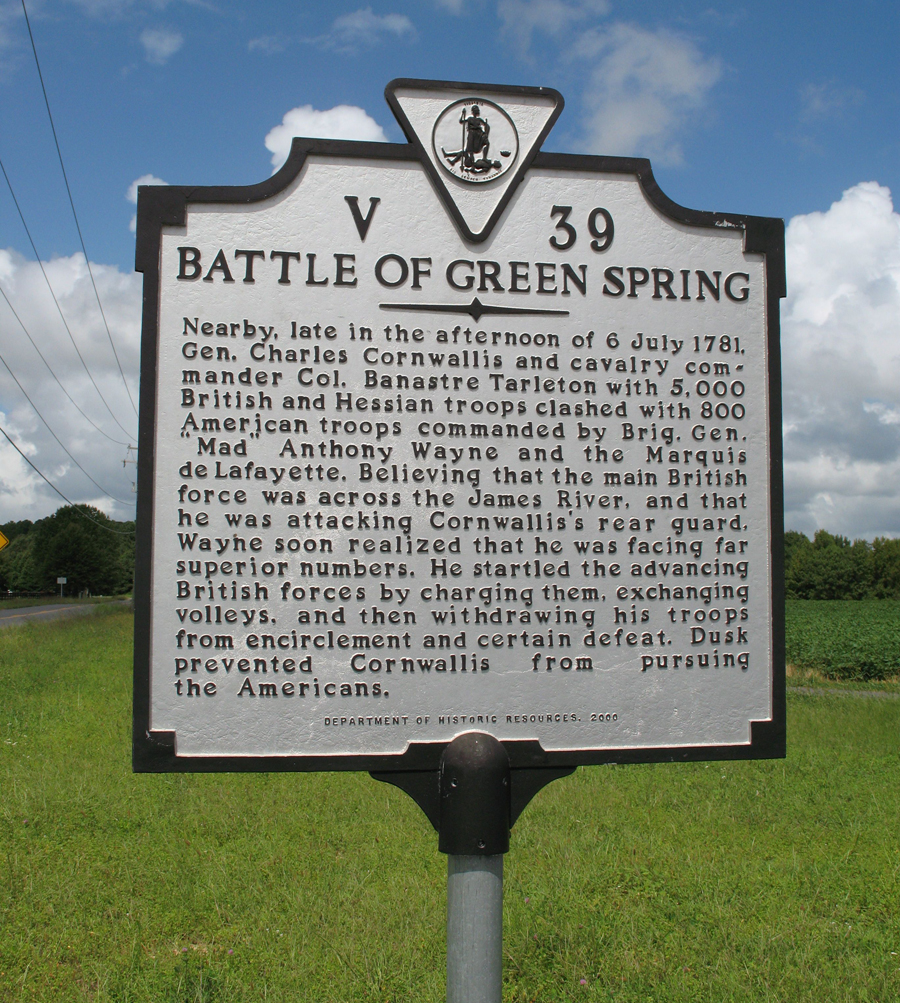
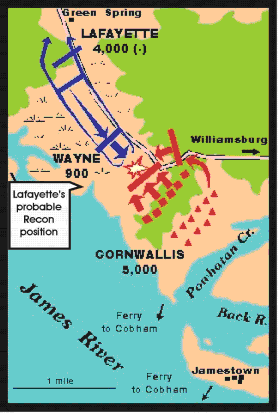
“The Battle of Green Spring”, July 6, 1781 was the last large engagement between Cornwallis and Lafayette before the siege of Yorktown. As Cornwallis maneuvered to cross the James River in Virginia, Lafayette sent Brigadier General Anthony Wayne to contest the crossing. Cornwallis had set a trap but in a bold move, general Wayne ordered a bayonet charge against the numerically superior British force, but the ferocity of Wayne’s attack forced the British to back away. The overall battle was a British victory but the British suffered 75 killed and wounded while the Americans suffered 28 killed. The British would be harassed continually by the Americans, keeping their foraging troops in a continual state of confusion while denying them the forage they needed for their troops and horses.
August 24, 1781 saw the decimation of a patriot militia force under the command of Archibald Lochry by various tribes under the command of Joseph Brant. The Indians successfully ambushed Lochry’s men killing nearly 40 and capturing another 60 while not suffering any casualties at what became known as “Lochry’s Massacre”. This defeat brought to a close, General George Rogers Clark’s campaign to capture Detroit.
In a predawn attack, 69 patriot militia men crossed the Cape Fear River in the dark and advanced to the loyalist encampment in stealth. When a Tory guard fired his gun to arouse the loyalists, the patriots fired on the groggy loyalists, mortally wounding the commanders and driving the rest of the loyalists to retreat leaving 17 dead while suffering but 4 wounded in what has come to be known as “The Battle of Elizabethtown” August 27, 1781.
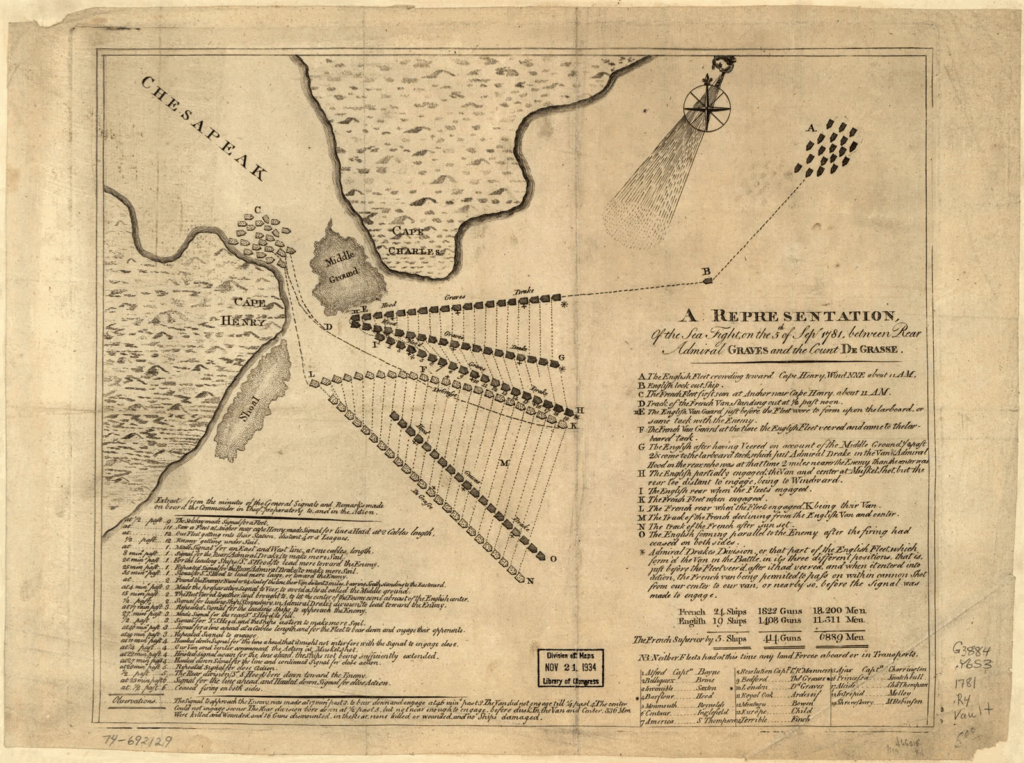
In a naval battle, “The Battle of the Chesapeake”, September 5, 1781, French naval forces defeated British naval forces allowing the French to deliver siege equipment to American and French forces that had driven Cornwallis to the peninsula where he was trapped on the York River.
“The Battle of Groton Heights” on September 6, 1781 was designed to keep General Washington from joining forces with Lafayette on the Yorktown peninsula where British general Cornwallis was besieged. Lieutenant General Sir Henry Clinton dispatched the traitor Brigadier general Benedict Arnold to raid New London Connecticut in an effort to divert Washington from marching his troops to Yorktown. The raid was a success, but Fort Griswold was stubbornly defended by American troops, but when over run they were still killed by Arnold’s troops even as they surrendered. Washington devised a ruse in order that he could move his troops to Yorktown and was successful until September 2, 1781 when Clinton realized he had been duped by Washington’s stratagems. These two engagements marked the end of major engagements of the war in the northern colonies.
Walt Mow 2025