The United States Formative Years… Part 9
The Administration of Andrew Jackson
March 4, 1829 Andrew Jackson is inaugurated the Seventh President of the United States. Jackson’s inaugural address was rather short and to the Point. He promised to end the national debt, keep the size of the federal government small and to fight corruption and to seek needed reforms. Little was heard from Jackson his first year in the presidency. His grief after the death of his wife Rachel was probably the main reason for his quiet demeanor that first year. His niece Emily Donaldson would act as hostess during his presidency.
December 8, 1829 Jackson delivers the State of the Union: address to the 21st US Congress.
April 13, 1830 Jackson would feud with his vice President, John Calhoun when Calhoun stated that the state of South Carolina would defy and nullify federal law concerning a tariff on cotton. Jackson threatened the use of Federal troops against what Calhoun called an act of nullification.
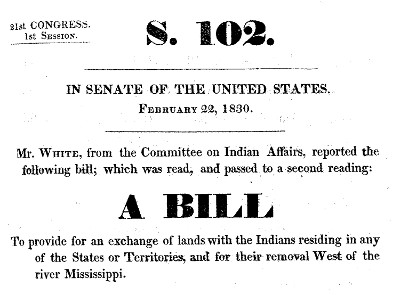
May 26, 1830 Congress passes the “Indian Removal Act” allowing the forcible removal of the Creek, Cherokee, Chickasaw, Choctaw and Seminole Indians to lands west of the Mississippi River.
May 27, 1830 Jackson vetoes the “Marysville Road Act” calling the proposal a local concern.
May 28, 1830 Jackson signs “The Indian Removal Act” allowing the removal of 5 Indian tribes.
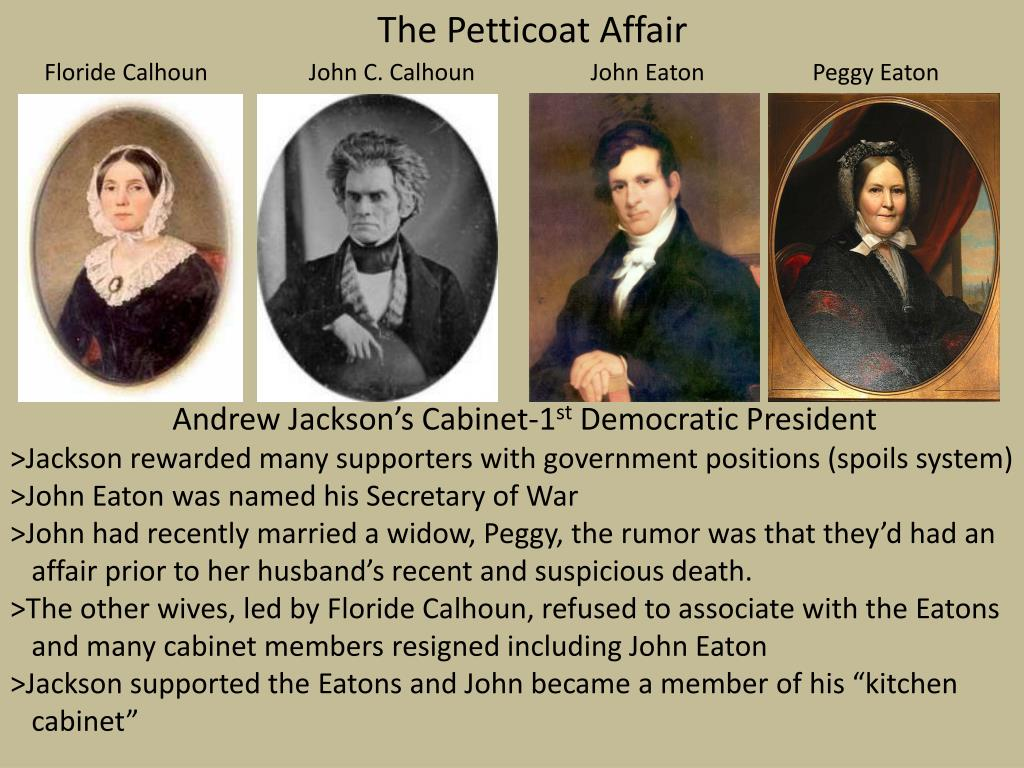
April 1, 1831 Jackson’s cabinet becomes involved in a scandal concerning one Peggy Eaton, accusing the lady of scandalous behavior when her first husband dies infuriating Jackson.
July 4, 1831 the French government agrees to reimburse the US for spoliation claims in the amount of 5 million dollars dating back to the Napoleonic Wars, then later denying payment.
July 10, 1832 Jackson vetoes a bill that would renew the Bank of the United States. Southern and Western states felt the bank was more favorable to the interest of the Northern states.
November 1, 1932 Jackson is firmly reelected with a total of 219 electoral votes.
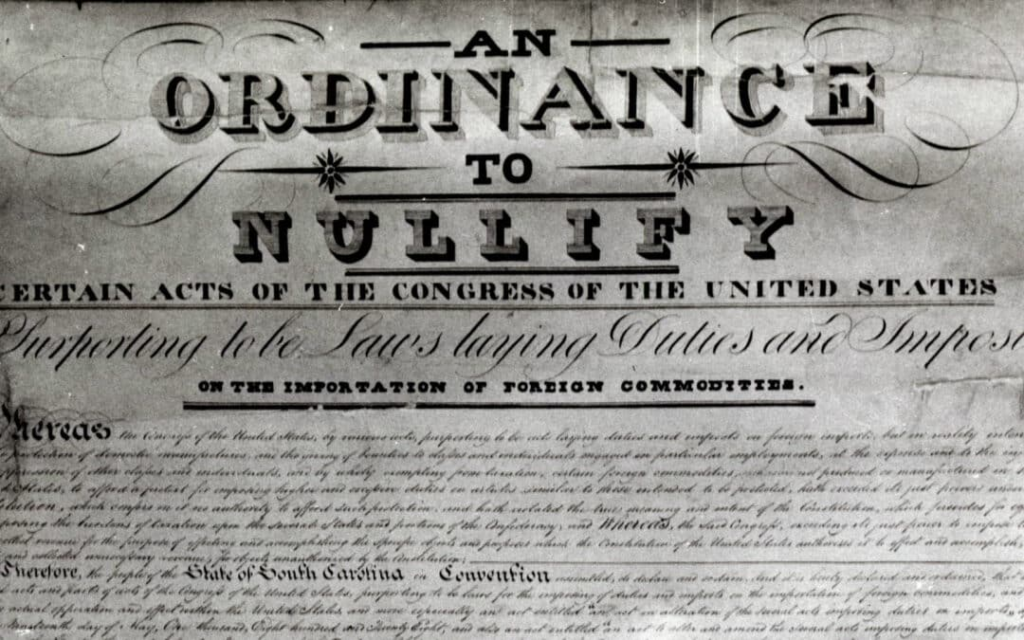
November 24, 1832 the legislature of South Carolina issues an “Ordinance of Nullification” that reiterates the states determination to nullify certain tariffs and levies on foreign commodities.
December 10, 1832 Jackson issues “The Nullification Proclamation” that forbids states and municipalities from nullifying any duly enacted federal law.
March 1, 1833 Congress authorizes the “Force Act” that allows Jackson to use force against the state of South Carolina to enforce the “Nullification Proclamation”.
March 20, 1833 Jackson commissions Edmund Roberts as a special agent to the United States for the purpose of negotiating trade deals with Asian nations.
March 28, 1834 Jackson issues an order to the Treasury Department to begin withdrawing all federal deposits from The United States Bank and place them in states banks.
December 1, 1834 Jackson declares he will terminate the national debt. Freeing the country from debt to foreign nations. (Note) It is the only time in US history that there has been no national debt.
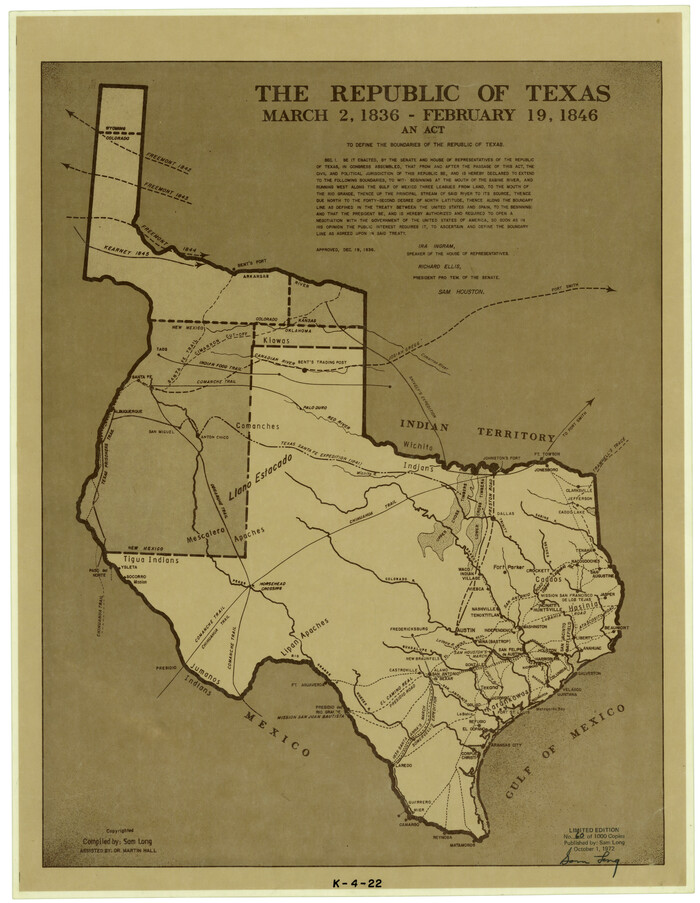
March 2, 1836 Texas declares itself a Republic freeing it from Mexico.
July 11, 1836 Jackson along with Treasury Secretary Levi Woodbury introduce “The Specie Circular’ noting that land payments must be made with Gold or Silver to end land speculation.
March 1, 1837 Jackson recognizes Texas independence but declines to call for annexation to the United States in order to allay war fears with Mexico.
Walt Mow 2026