The loop
Sippin coffee, what the loop looks like, or you sum up President Trump’s address to the nation

Took a ride never went fishin, wanted to, no way was I wearing a mask on the river, to way, no wind, no bird song just nothing
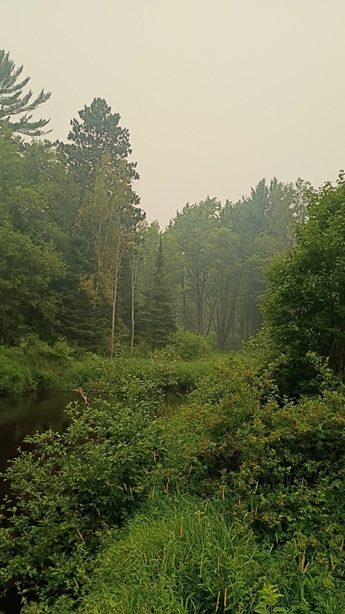
Whare I was, well, you just mind where I was, there’s an apple tree which always offers apples just shy of a grapefruit, not really apples, they are sweet enough but can used for pies.
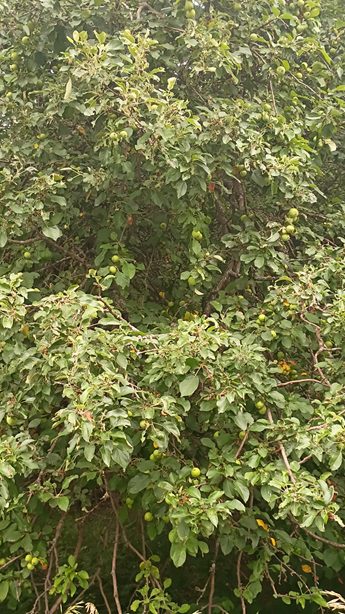
It’s not really weird to have Mount Tobora to come to mind while seeing the sky and the apples. Just what you right, a story having nothing to do with politics
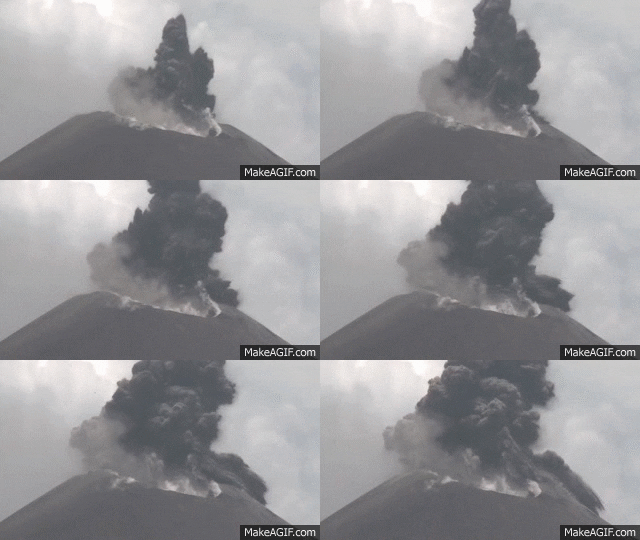
Have you ever heard of the Year Without a Summer? The largest eruption in recorded history—of Mount Tambora, in what is now Indonesia—caused so much ash in the atmosphere that global temperatures dropped in the summer of 1816, causing usual cold and food shortages. According to legend, The Old Farmer’s Almanac founder actually predicted snow that summer.
A 13,000-foot-high volcano on the island of Sumbawa, near Bali, Indonesia, was the primary cause of the Year Without a Summer. The eruption happened in April of 1815 and was one of the greatest volcanic eruptions in history. Its toll: perhaps as many as 90,000 lives.
Mt. Tambora ejected immense amounts of volcanic ash into the upper atmosphere, where it was carried around the world by the jet stream. The volcanic dust covered Earth like a great cosmic umbrella, dimming the Sun’s effectiveness during the whole cold year. This resulted in a further reduction in solar irradiance, which brought record cold to much of the world during the following summer. Such an eruption would explain the appearance of the 1816 Sun as “in a cloud of smoke.”
- May frosts killed off most crops in upstate New York and the higher elevations of Massachusetts, New Hampshire, and Vermont.
- On June 6, snow fell in Albany, New York, and Dennysville, Maine.
- In Cape May, New Jersey, frost was reported five nights in a row in late June, causing extensive crop damage.
- Lake and river ice was observed as far south as northwestern Pennsylvania in July, with frost reported as far south as Virginia on August 20 and 21.
- Rapid, dramatic temperature changes occurred frequently, as temperatures sometimes went from above-normal summer levels to near freezing within hours. U.S. grain prices at least quadrupled, and oat prices increased almost eightfold.
- Famine, riots, arson, and looting occurred in many European cities, while China suffered from massive crop failures and disastrous floods, and a disruption in the Indian summer monsoon season spread a cholera outbreak from the River Ganges all the way to Moscow.
Now you know what it looks like, outside the loop

there’s music for that picture, of course my thinkin might be different than yours seeing the stick